
Back in Buenos Aires, we settled into a new apartment in a new neighborhood. Home base for the next few days is a studio apartment in a tower (on the 11th floor, with great views of the city) in the trendy neighborhood of Palermo Soho. Our orientation included lots of role playing (tourists vs. pick-pockets), helpful tips about how to not get robbed, and lots of other overwhelming big city information.

The view from our balcony.
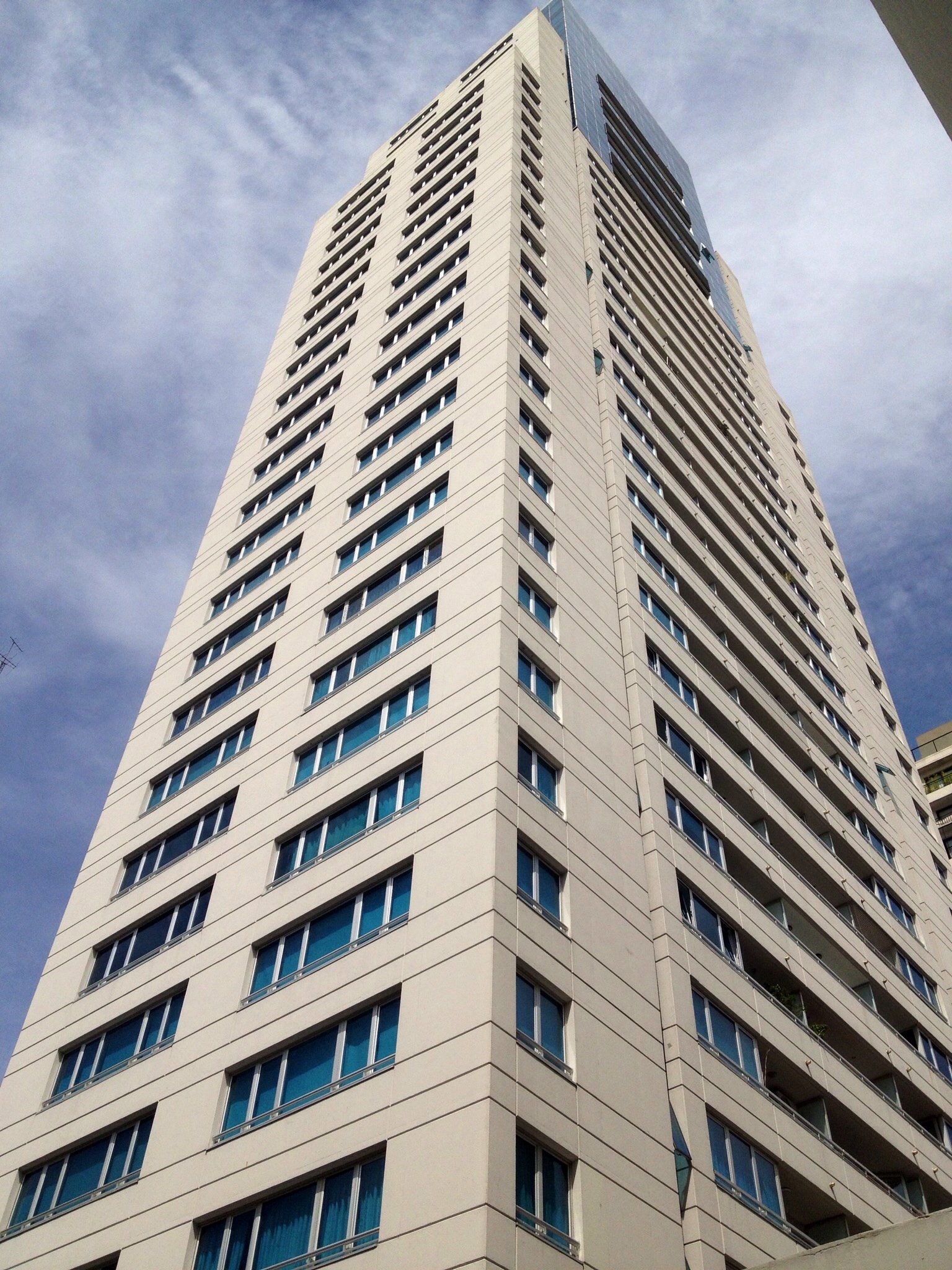
Our apartment building in Palermo
Palermo has become the hotspot for young travelers and young locals, with lots of parks, shops, and cafes to pass the daytime hours and lots of restaurants, bars, and clubs for after dark. We spent quite a bit of time just wandering around the streets of Palermo, admiring the eclectic sidewalks, antique doors, bright colors, and interesting graffiti that give the neighborhood a very boho-chic appeal. Palermo is trendy, classy, trashy, and fun all at the same time; an odd combination of superlatives that just seems to work for this neighborhood.
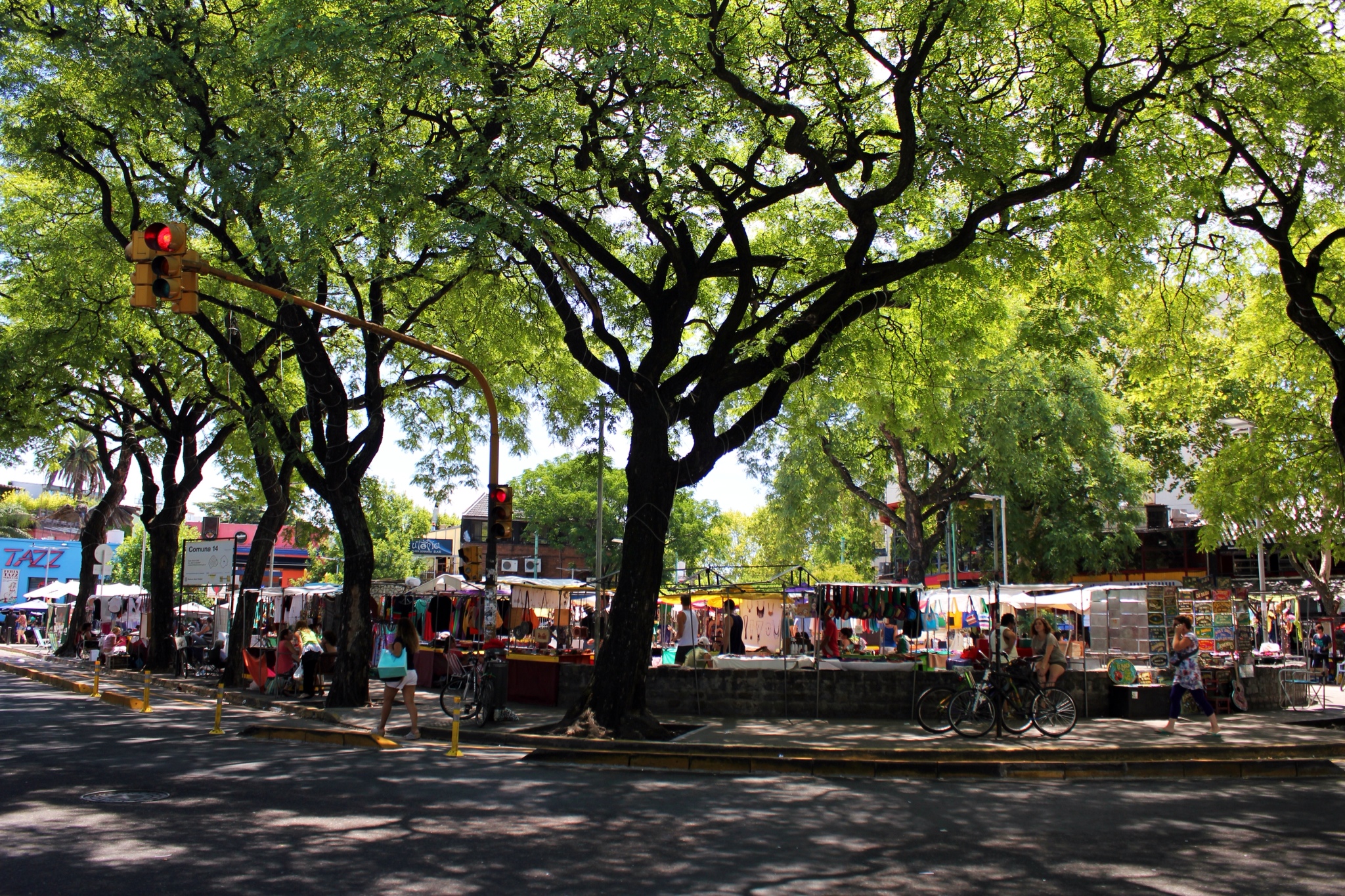
So shady and so green
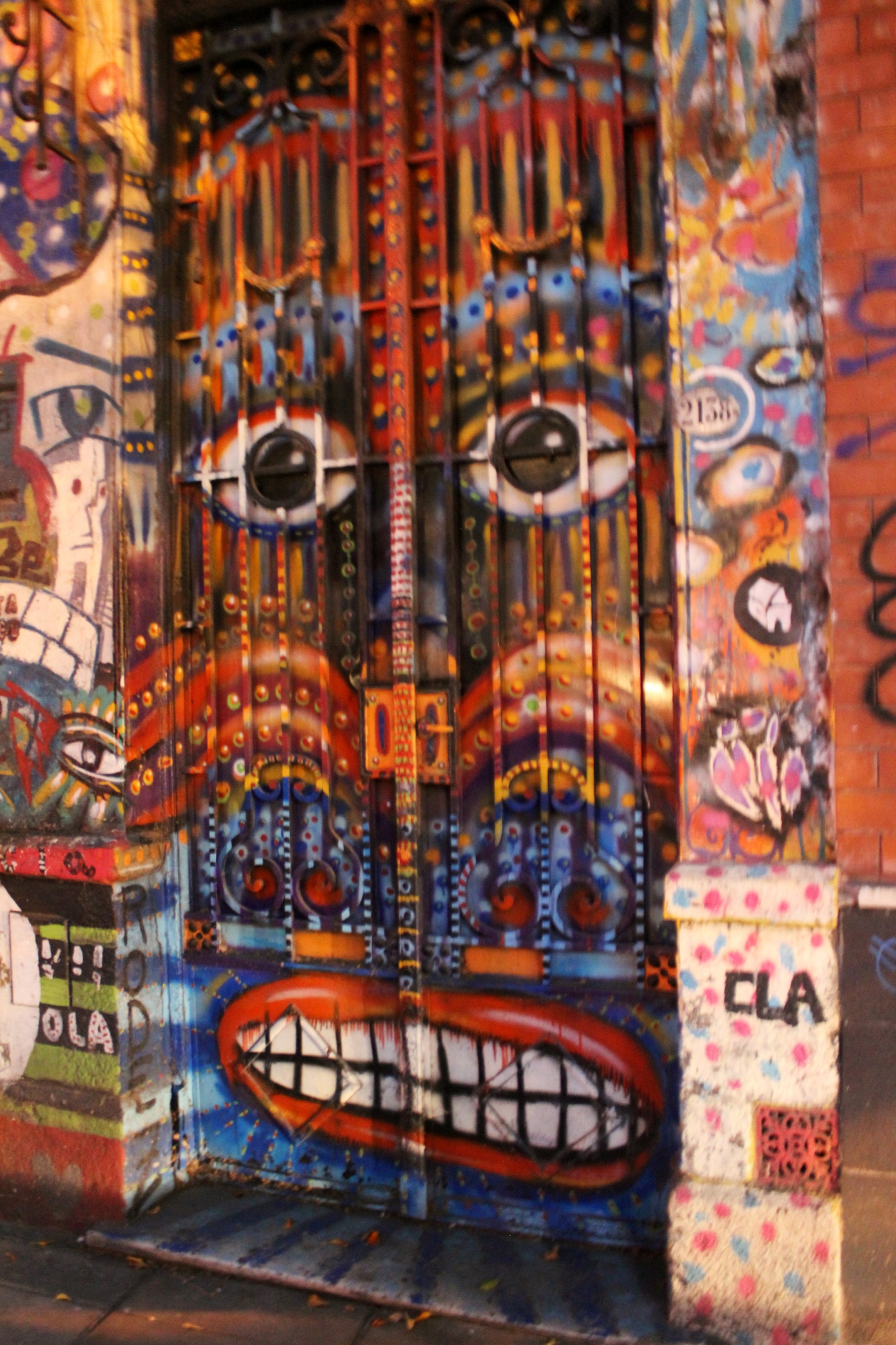
Most of the graffiti in B.A. is ugly and gross. But some of it, like this door, is just so cool!
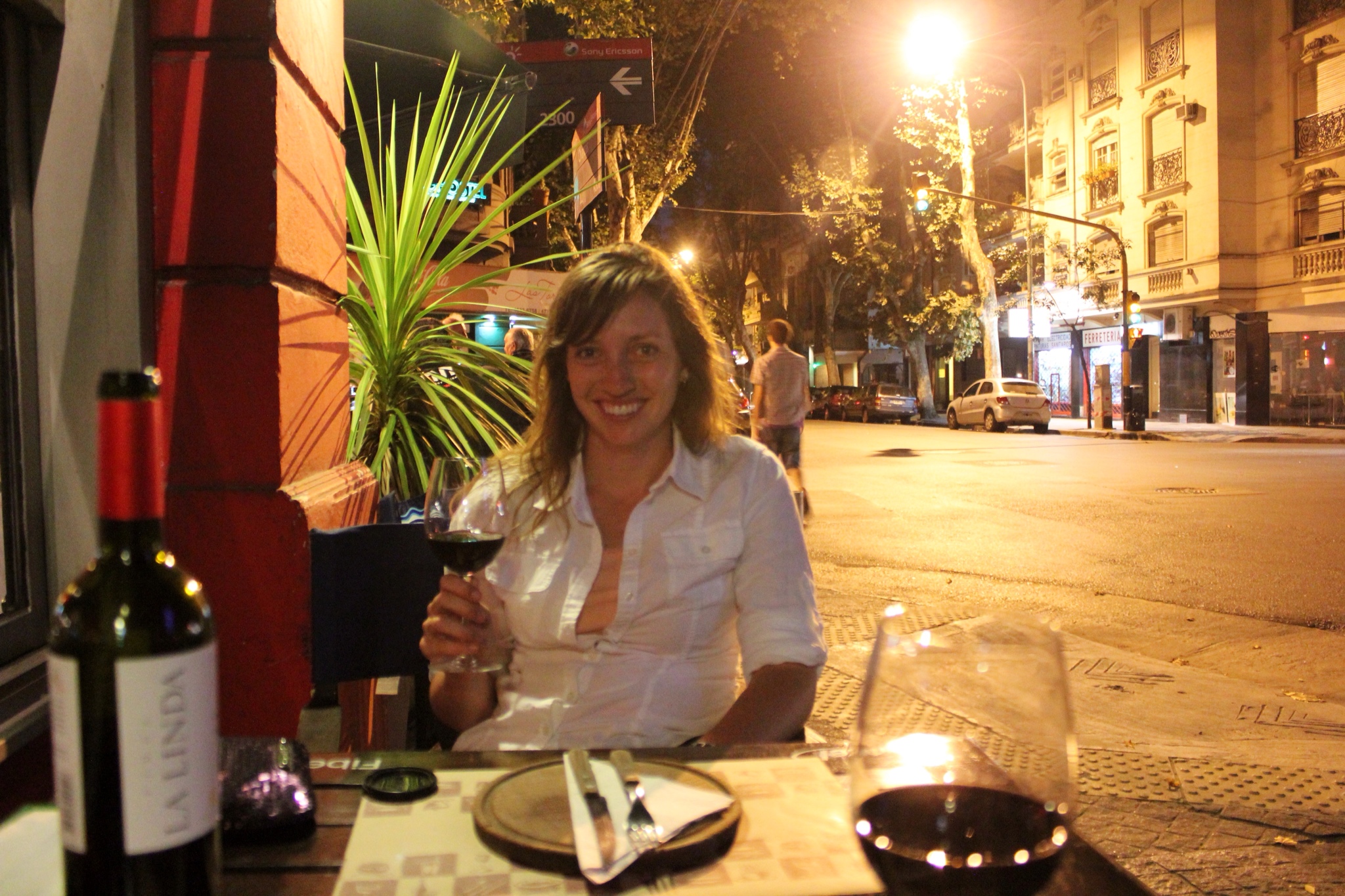
Our first night in Buenos Aires took us to the trendy parrilla Miranda. Located on a corner in Palermo Hollywood, Miranda is all concrete with soaring open ceilings and solid wood tables and chairs. Buzzing with Friday night activity, the tango music and sizzling sounds of the traditional indoor grill added to the ambiance. We slowly ate and drank our way through another lovely barbecued dinner. The best part about dining in Argentina: no one will ever rush you to leave the restaurant. You can slowly make your way through cocktails, multiple dinner courses, wine, dessert, coffee, and whatever else you can think to order. And when you're finished eating and drinking your way to oblivion, you can just sit. For as long as you like. In Argentina, you have to ask for the check. And there's no rush. It's wonderful!
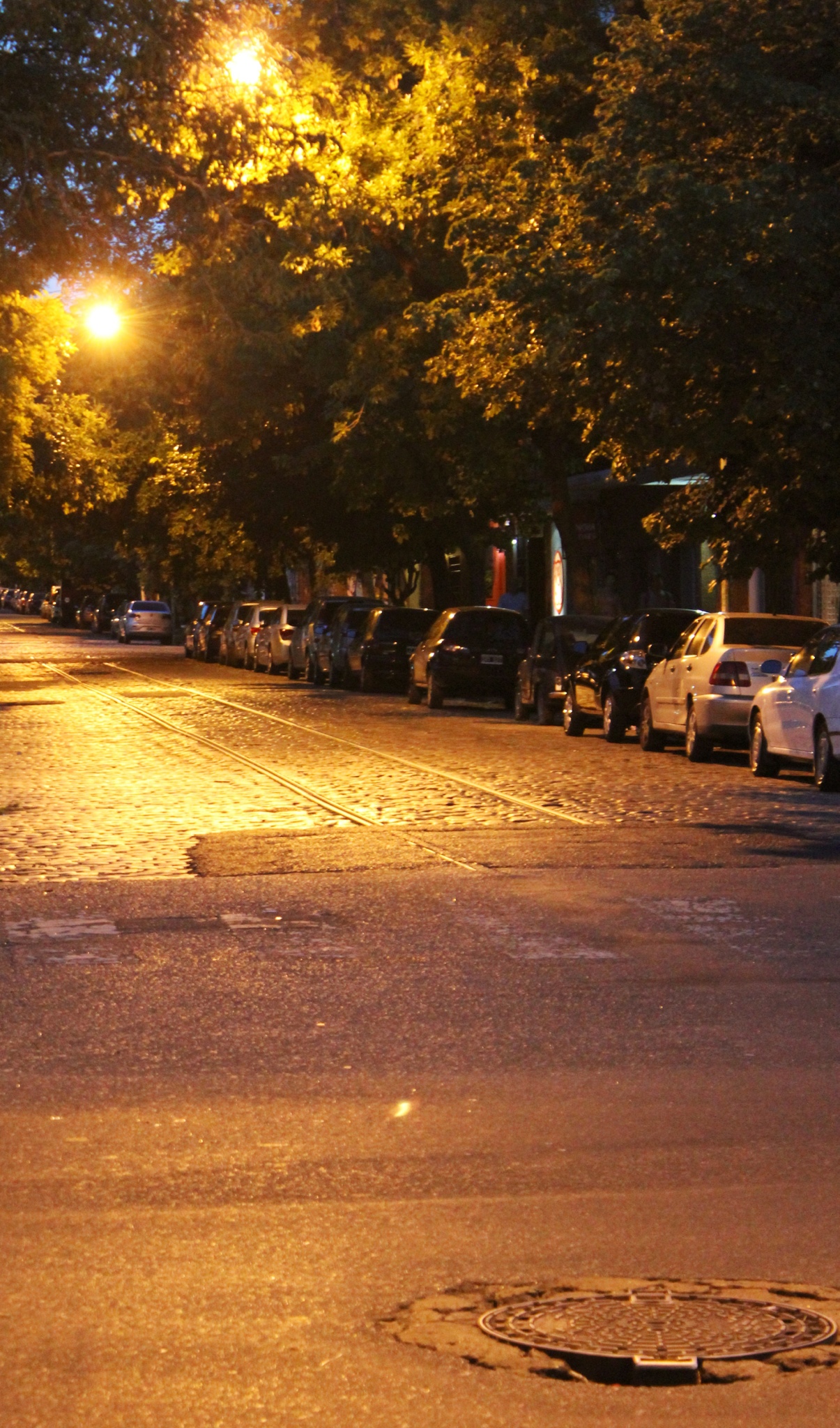
Palermo by streetlight
On Saturday, we ventured out from the streets of Palermo into the parks of Palermo. I guess we should have expected this, but we were shocked at how many people were out and about in the parks: roller blading, cycling, jogging, paddle boating, wandering, laying in the grass, playing pick up games of soccer and roller hockey… people were everywhere! It was a beautiful Saturday morning.
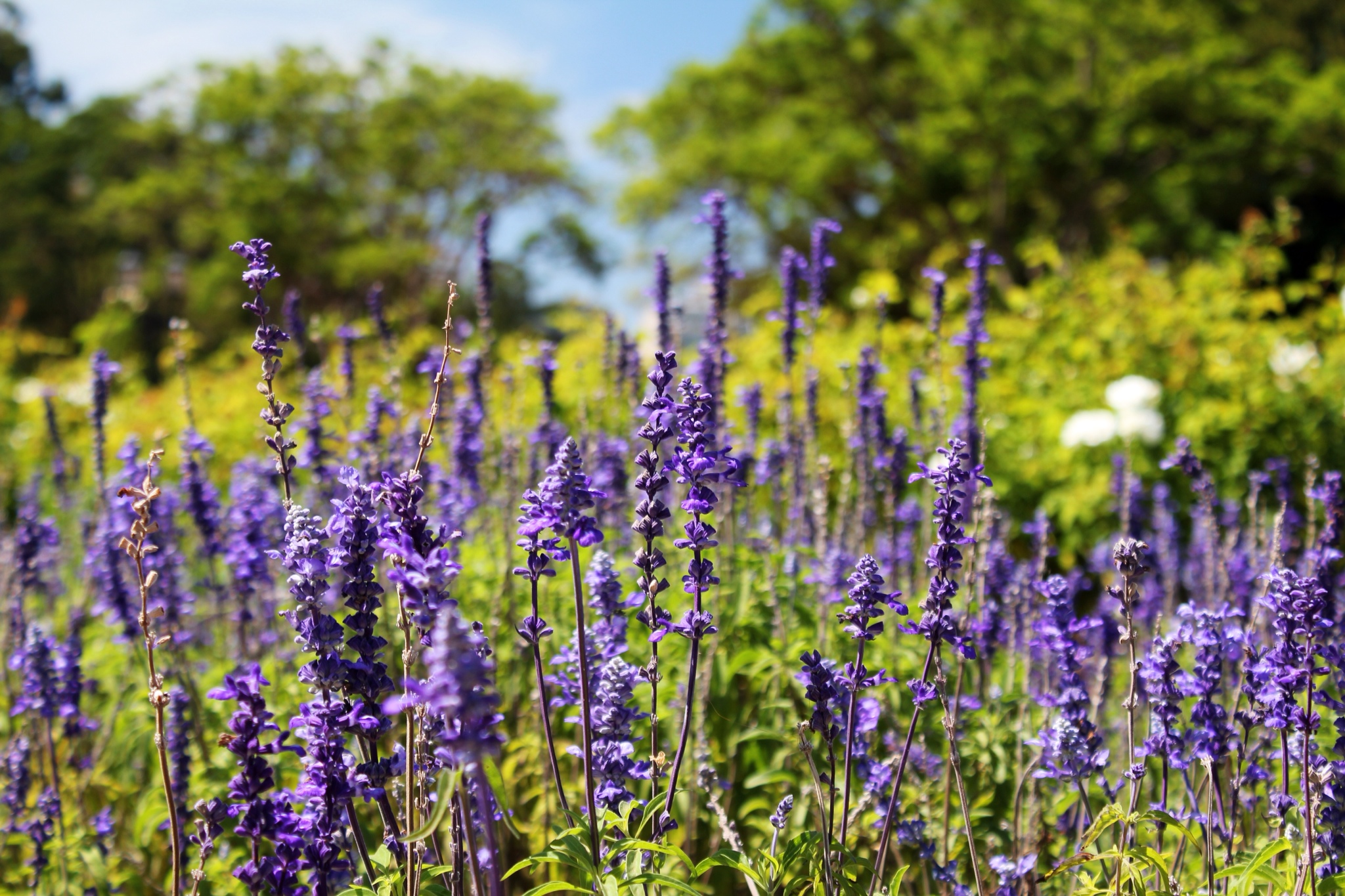
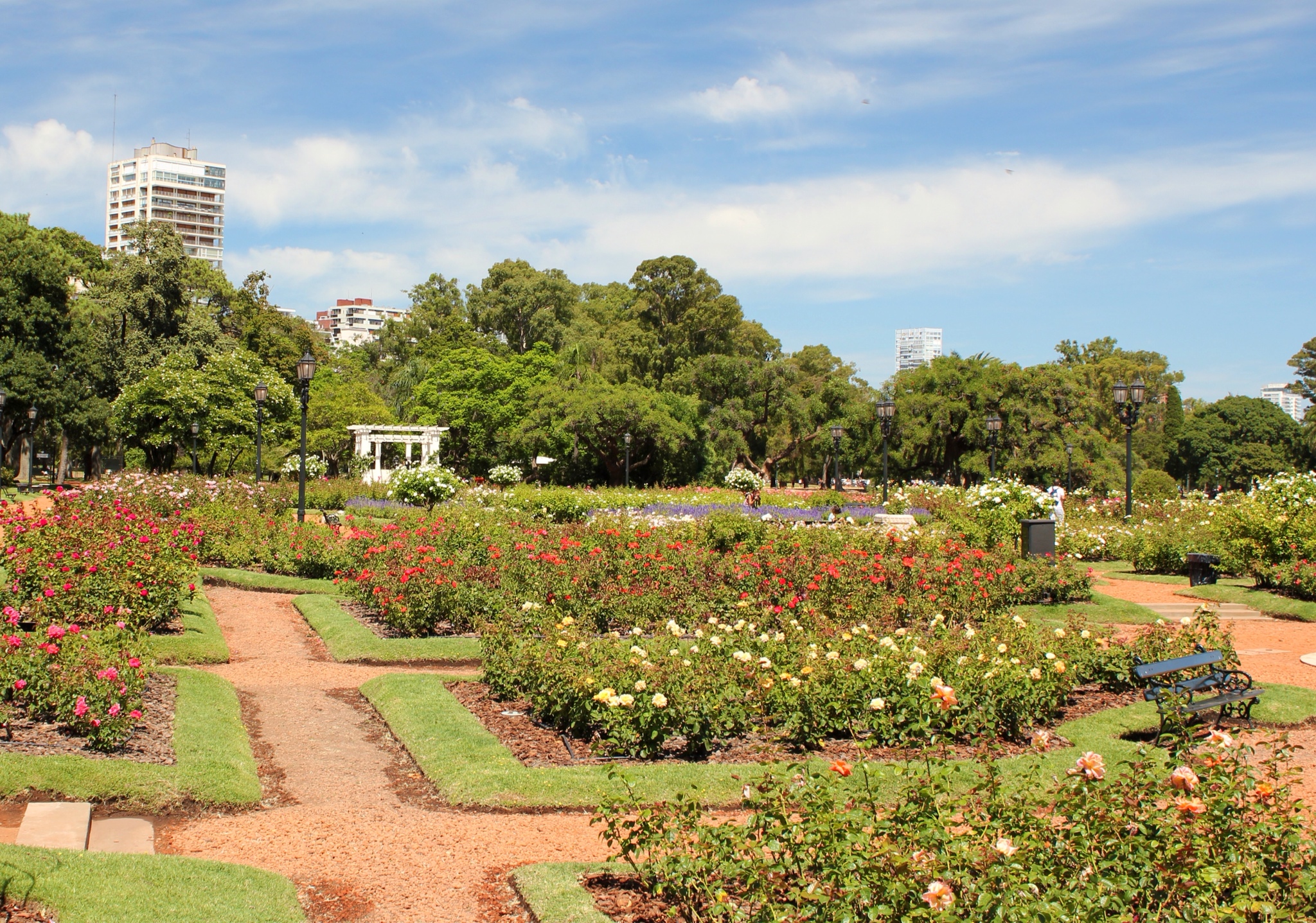
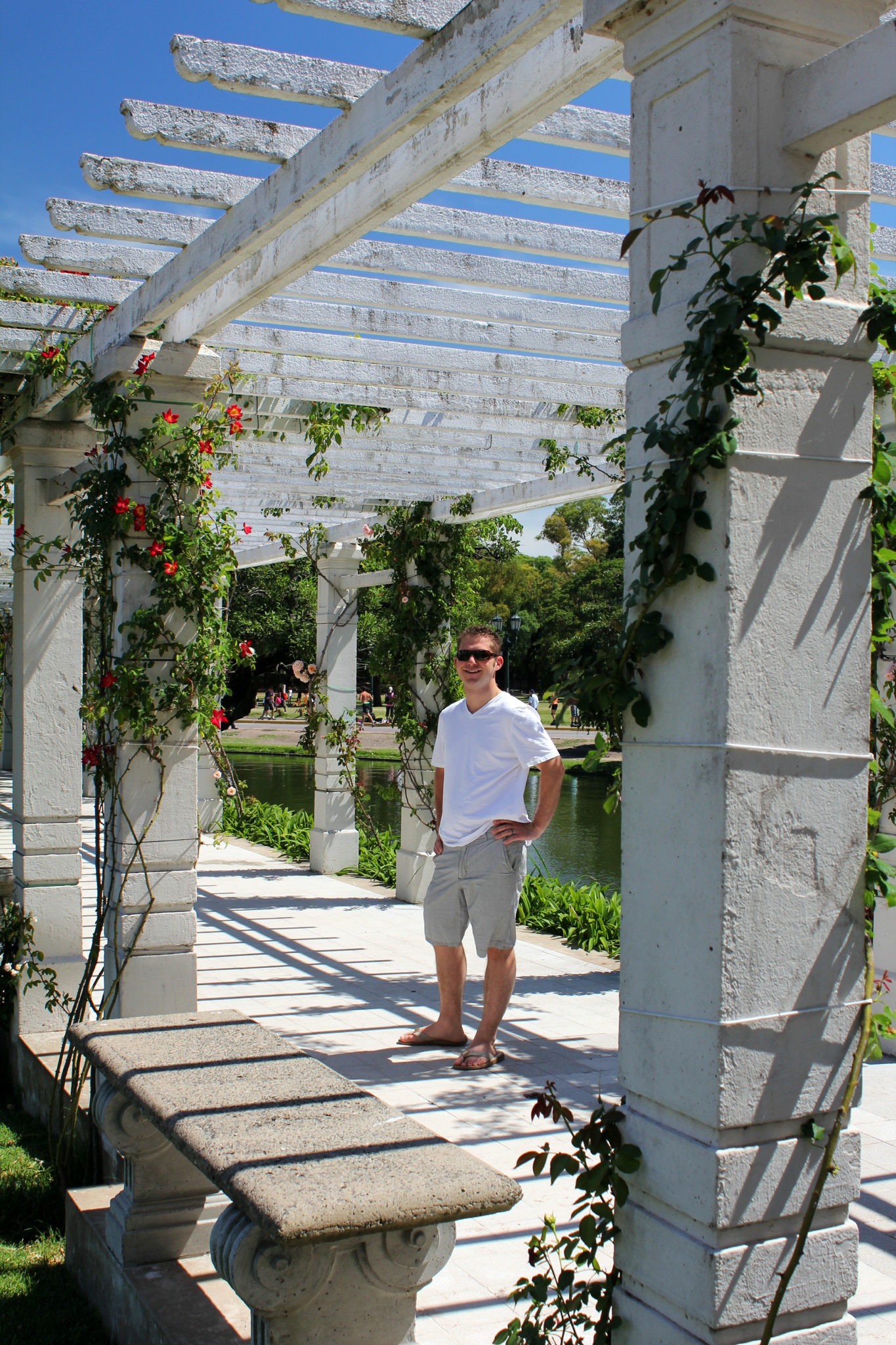

The roads through the parks are closed on the weekends, and the streets become a mass of exercising humans. Yes, a mass. We wandering through the mass, feeling slightly guilty about our lack of exercise. But then we realized how epic the people watching was, and our guilt quickly evaporated. You can't feel guilty and highly entertained at the same time! We wandered through the rose gardens, laughed at a father rowing his family of eight in a tiny boat on a tiny lake, and discussed the techniques of roller blading (of which, there are many more than I ever thought possible).

The perfect people watching spot!
After a few hours of park shenanigans and copious amounts of sweat, we decided it was time for some air conditioning and headed to the one museum in Buenos Aires we had agreed to go to: the MALBA. The MALBA is the Modern Arts museum in Buenos Aires, equally famous for its interesting construction as for the exhibits it contained. We reveled in the air conditioning and admired the sometimes interesting, sometimes odd artistic talents of South American painters, sculptors, and photographers. Overall, it was a very nice museum, but paled in comparison to the museums of San Francisco and Chicago. Good thing the entry fee was less than five dollars.

Inside the MALBA
After more wandering, more cafes con leche, and more ice cream, we made it back to our apartment with a few hours to spare before our next adventure took us into new territory. We spent those hours lounging by the pool, reading, and siesta-ing.
 Posted with Blogsy
As previously mentioned, Mendoza is wine country. And how can you visit wine country without going wine tasting? You can't. You just can't. So, we had originally planned to take a bus from Mendoza out to Maipu, rent bikes, and tour the wineries, chocolate factories, and olive oil farms in the area. Then we realized it was supposed to be about 110 degrees… not really suitable for bike wine tasting.
In a last minute frenzy, we found a wine tour company (where tours are conducted in English!) and booked ourselves a tour. The tour would take us to Lujan de Cuyo, a valley approximately half an hour south of Mendoza, and would offer English tours and tastings at each of four wineries and a gourmet, paired five course lunch at winery #4. Sounded absolutely perfect, and it turned out to be a wonderful day.
We got picked up from the apartment and got to know the other six tour goers on the way to the first winery, Alta Vista. One of the special things about wine tasting in Lujan de Cuyo is the backdrop: from all of the wineries, you can see the snow-capped peaks of the Andes above the clouds. Couple that with the lush green vineyards, and you can't really go wrong.

Our tour guide at Alta Vista told us about the soil types and irrigation practices at the winery (and I was probably the only one interested), before taking us into the wine making facility and cellar. Alta Vista is one of the oldest wineries in the region, built in 1889 and producing wine ever since. A common practice in Mendoza that was completely new to us Californians is aging wine in large cement vats instead of stainless steel tanks. The practice dates back to the earliest wine makers in the area: due to the crazy temperature fluctuations in Mendoza, the only way to regulate the temperature of the wine while it aged was to store it in 5,000 to 15,000 liter concrete vats with walls approximately two feet thick. This practice is still used today, but the concrete vats now have temperature regulation built into them. The tasting room at Alta Vista is actually a 300,000-liter concrete vat that has been converted. How cool is that?! Very, very cool!

Concrete wine tanks

Door to the 300,000 liter wine tank / converted tasting room. Built in 1912. So cooool!
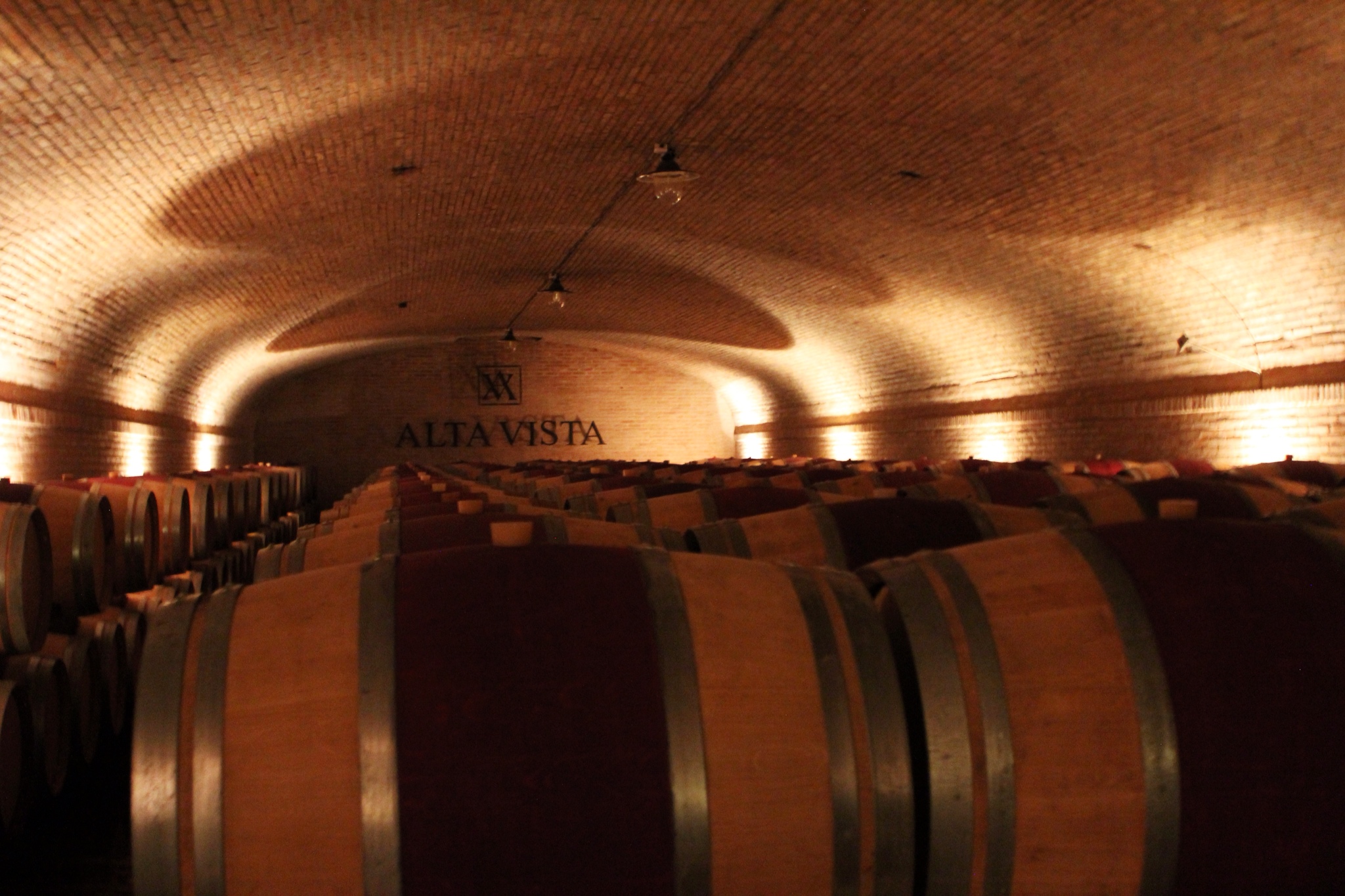
Inside the cellar. They stain the middle panel of each barrel so you can't see the drips from the winemakers' tastings. Yes, I asked.
The tasting at Alta Vista was wonderful. We were invited to taste in the professional tasting room, with lots of sun and glasses and good wine. We had our first introductions to the local specialties Torrontes (a dry white wine with a deceptively sweet nose), Bonarda (a very soft, mellow red, kind of similar to a Pinot Noir), and Malbec (a powerhouse red with lots of subtle spicy notes). All in all, it was a great start to the day and we left feeling our first few glasses!

Inside the fancy shmancy tasting room

First wines before 10 am. Great start to the day
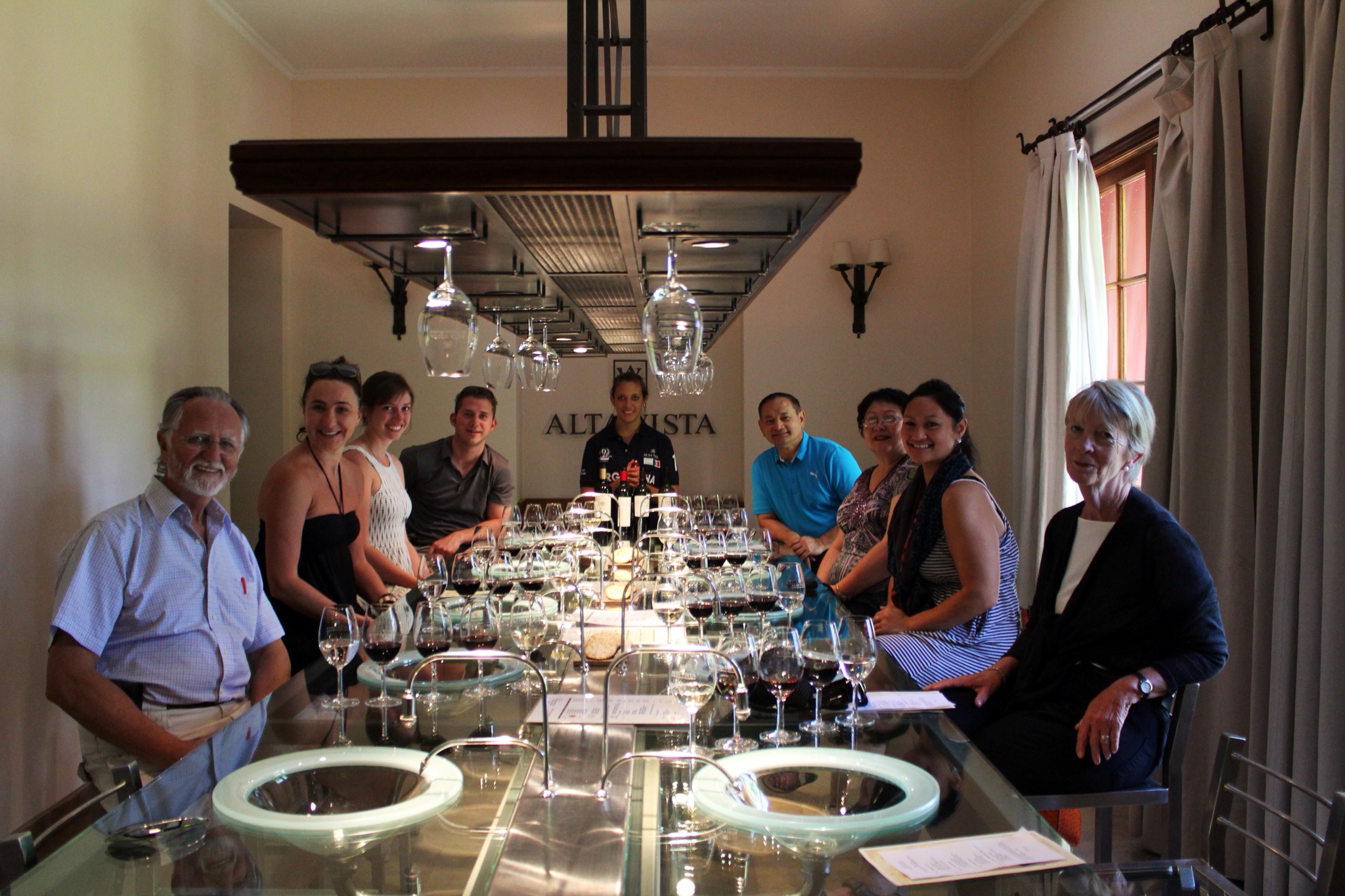
Our fearless tour group. We drank, we ate, we survived!
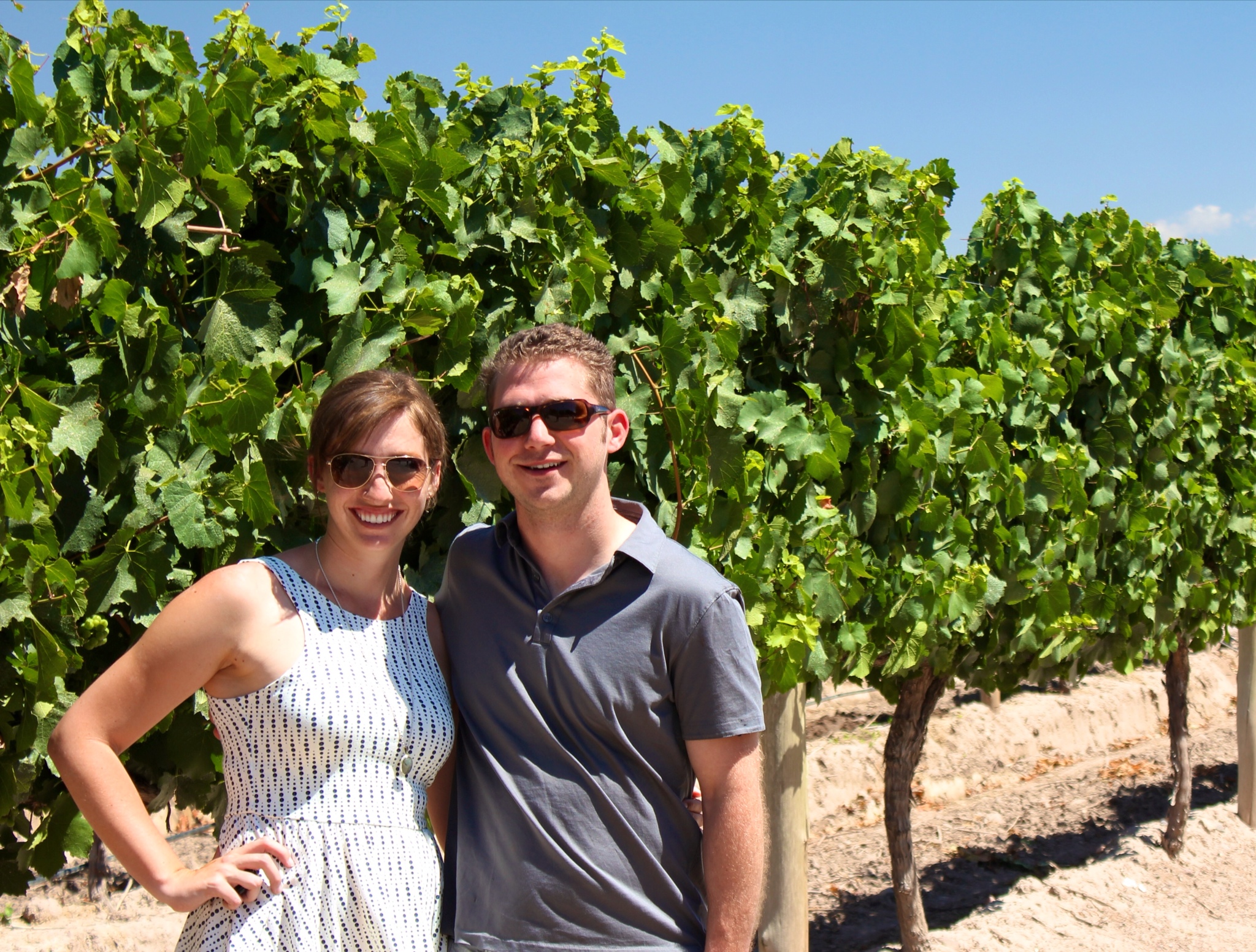
Stop #2 was Pulenta Estates, with more gorgeous views, concrete vats, and a lesson in Mendoza weather. Apparently, Mendoza has common hail storms in the summer months, just prior to harvest. To prevent damage from the hail storms, most wineries cover the vines with what looks like bird netting. We were told that during a hail storm, any vines without these net coverings would be completely ruined. And here we thought they were to prevent birds from eating the berries! There are actually so few birds in the desert-like Mendoza that this has never been an issue.

Chardonnay grapes
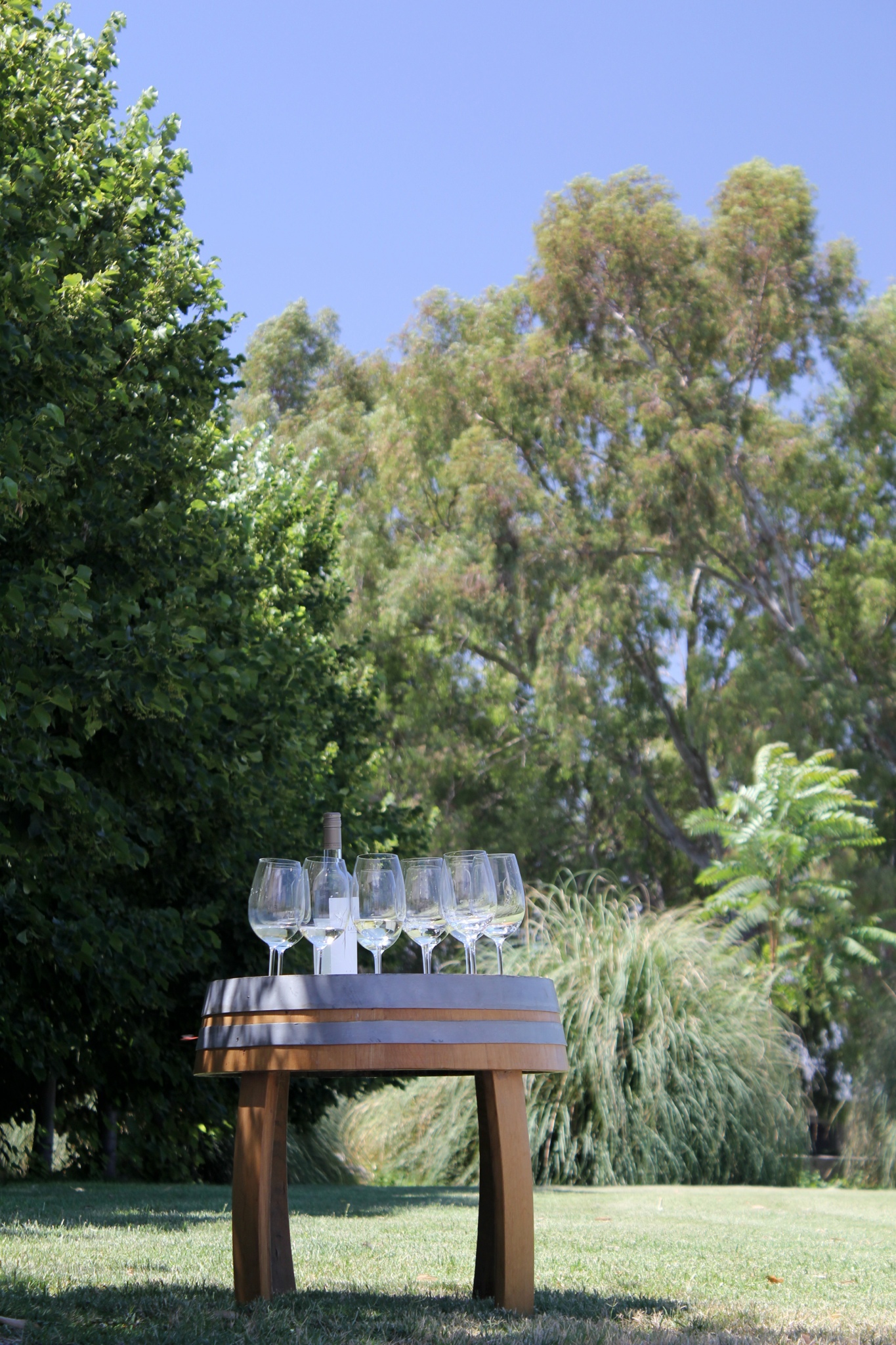
Beautiful little table made from a wine barrel
The tasting at Pulenta was just that: tasty! A very light Sauvignon Blanc while we toured the vineyards, and yummy Merlot, Malbec / Cab Sauv blend, and Cab Franc while we enjoyed the tasting room. The Cab Franc was the most interesting wine here: it smelled just like bell peppers, but tasted nothing like them! We also got better acquainted with our new friend Oksana from London, who told us about her favorite places in Buenos Aires that we must visit.

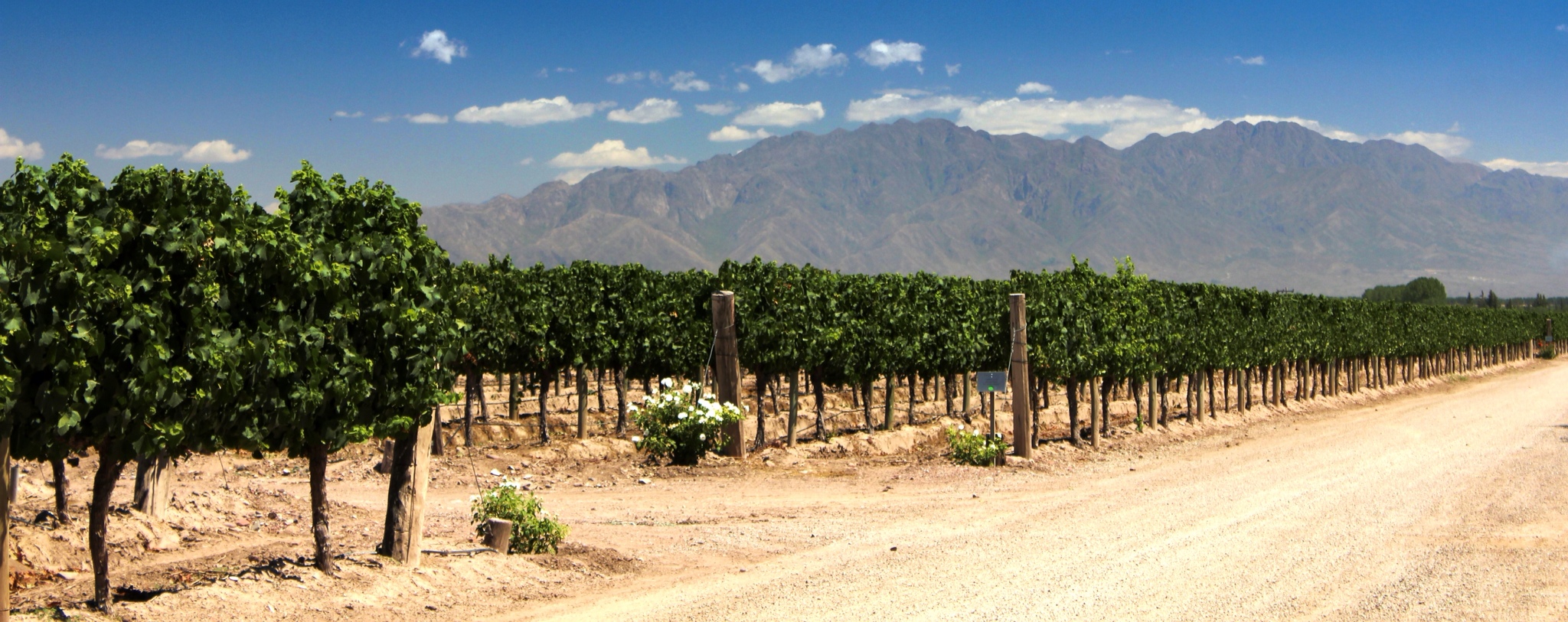
Pretty vines, pretty sky, pretty Andes

Malbec. Yes please
Caelum was next, a much smaller boutique winery specializing in whites, desert wines, and pistachios. My favorite from here was definitely the pistachios! I guess my palette isn't refined enough for desert wines, but they did make a very nice, light, and crisp rose that I surprisingly enjoyed. Here, we got to know Malen a little better, a nice woman from the states who has been working in Buenos Aires for almost two years. She gave us the insider scoop on Buenos Aires.
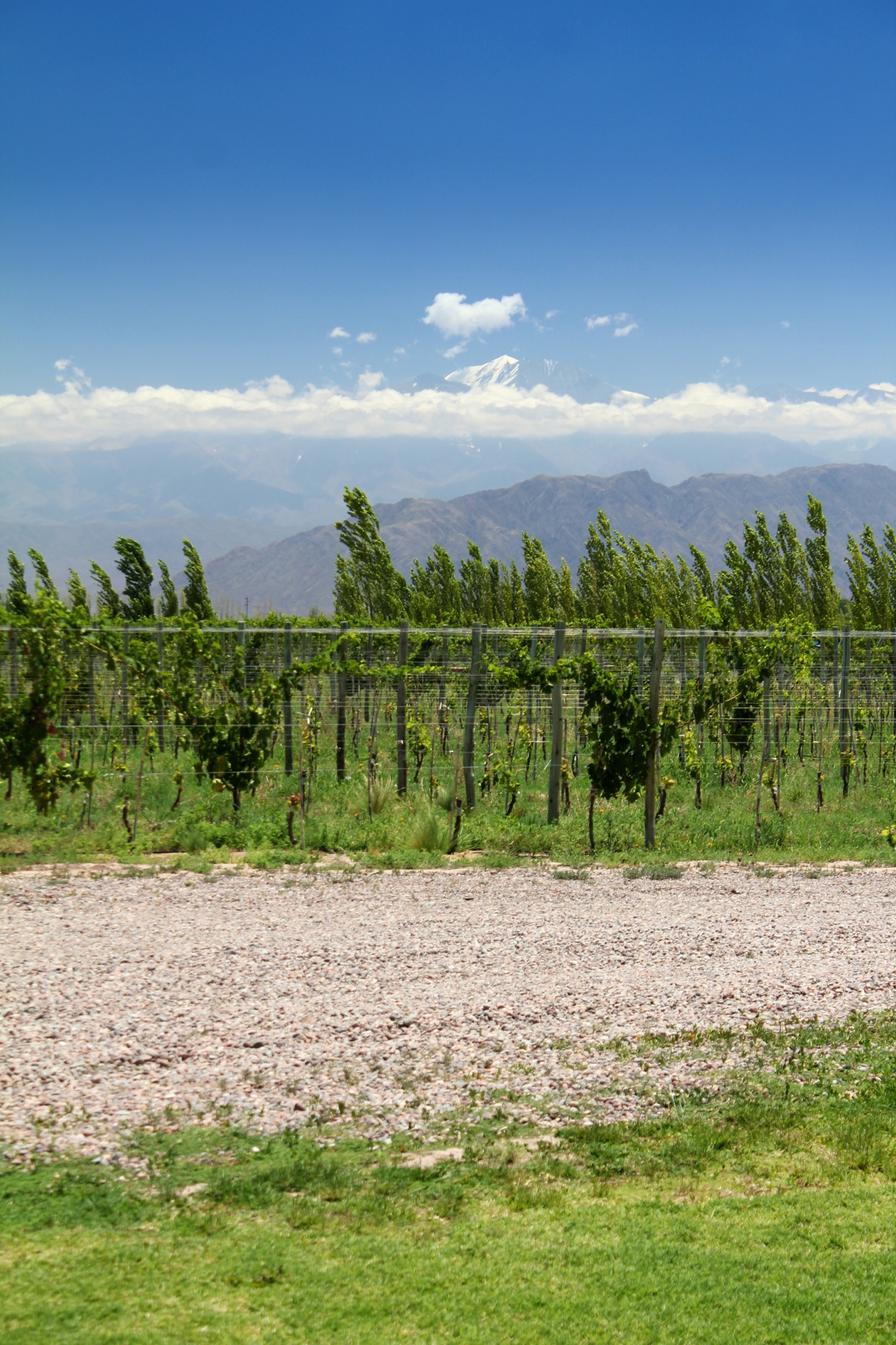

Notice the focus on the pistachios here...

Our last stop was Ruca Malen, where we had an amazing lunch and wine pairing adventure. We were treated to all local foods paired with Ruca Malen wines for a superb and highly entertaining meal; the second best we've had on this trip (La Salamadra still holds that title). Through lively conversation and lots of drinking, we enjoyed fresh bread, goat cheese tarts, beet salad, carrots three ways, sausage, ojo de bife, and lots of other goodies that are slipping my mind. After a few hours of shenanigans at Ruca Malen, we headed back into Mendoza with plans to meet up with Malen and Oksana later in our trip.
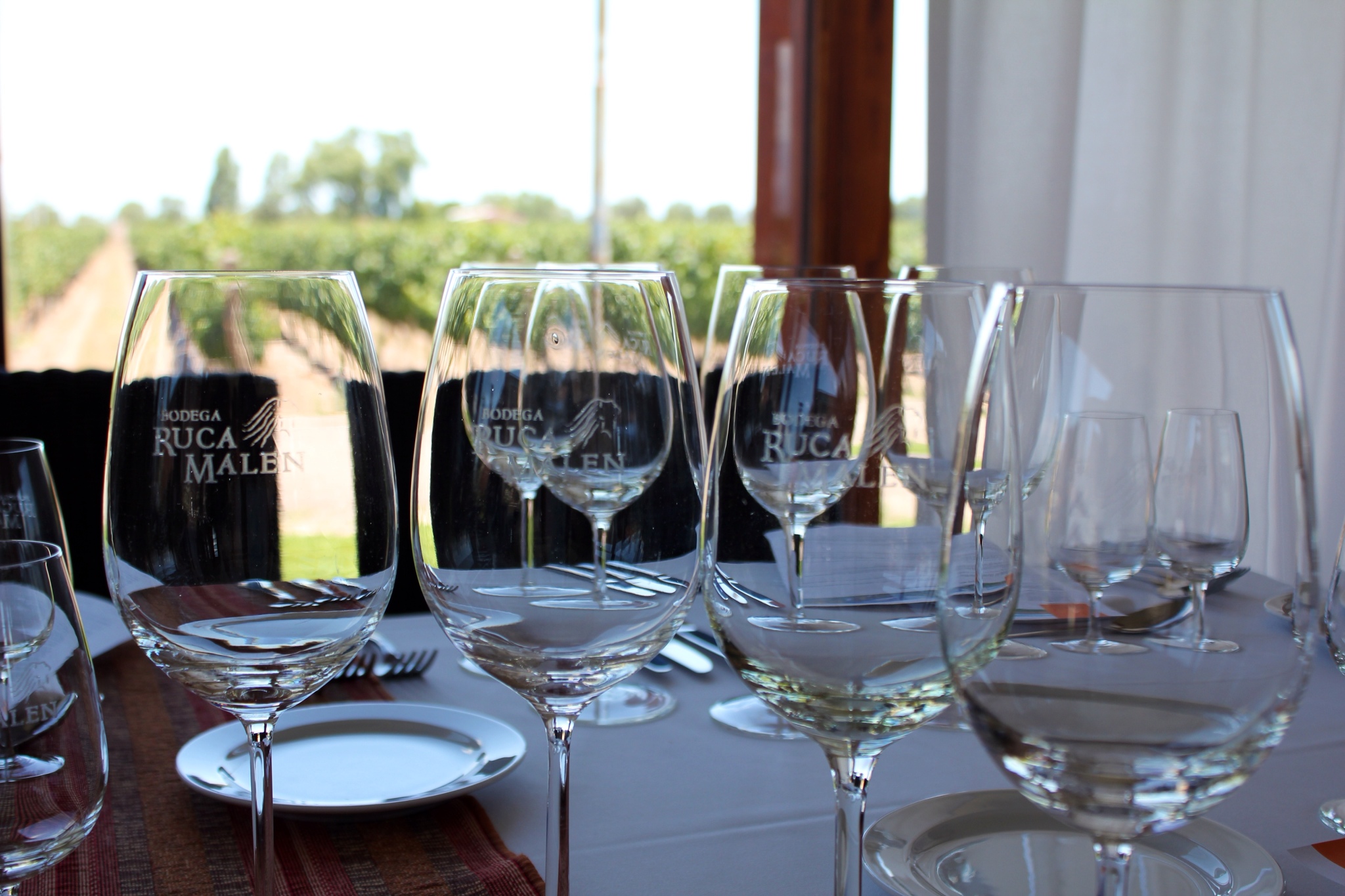
So many glasses!
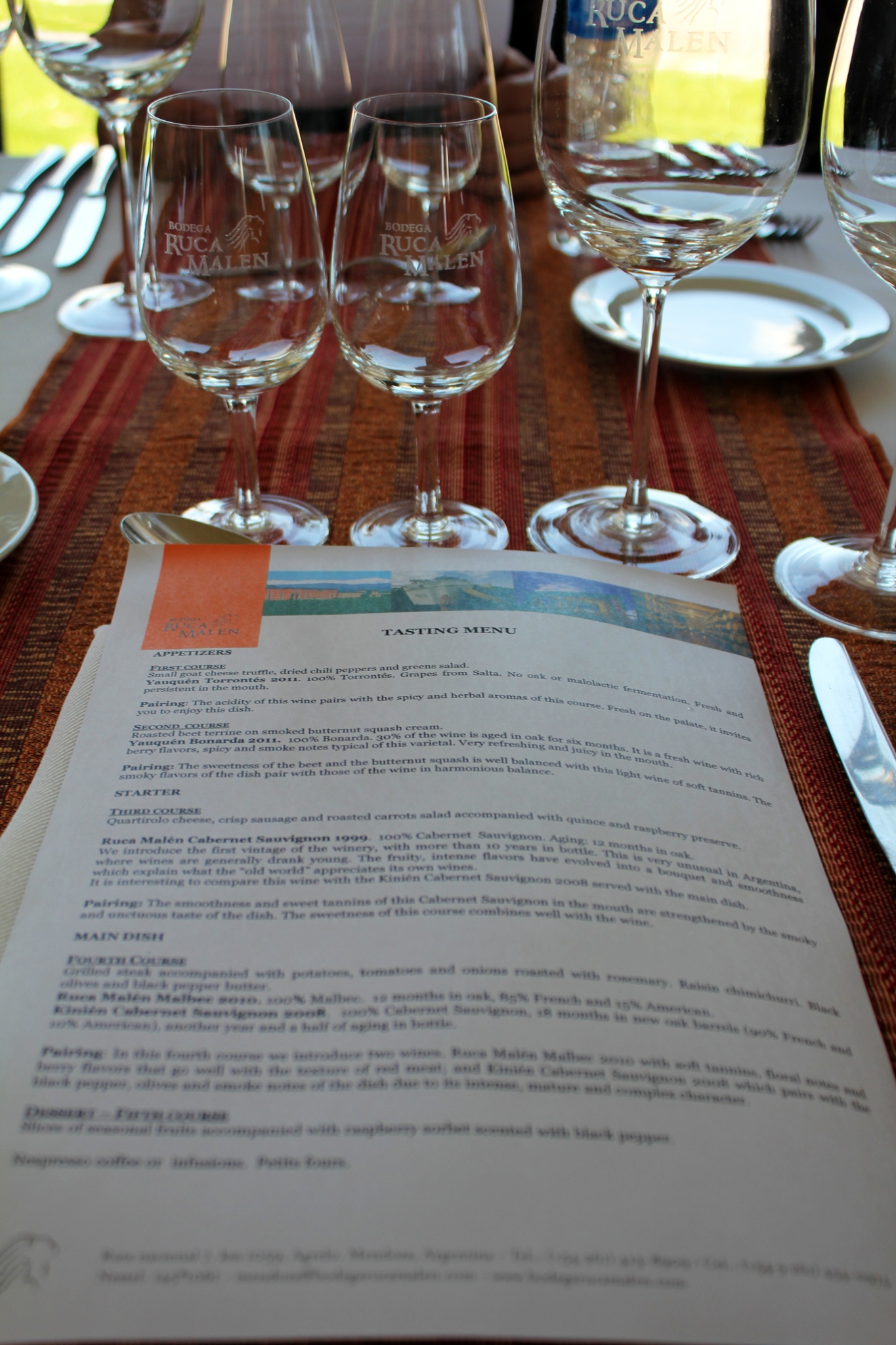
Extensive lunch menu

We made it home with plans to take a siesta and revive ourselves for dinner and a night on the town, but we never made it back out! Great day, great wine, highly recommended if (when) you come to Mendoza. Now we have four bottles of wine that we need to figure out how to get home!
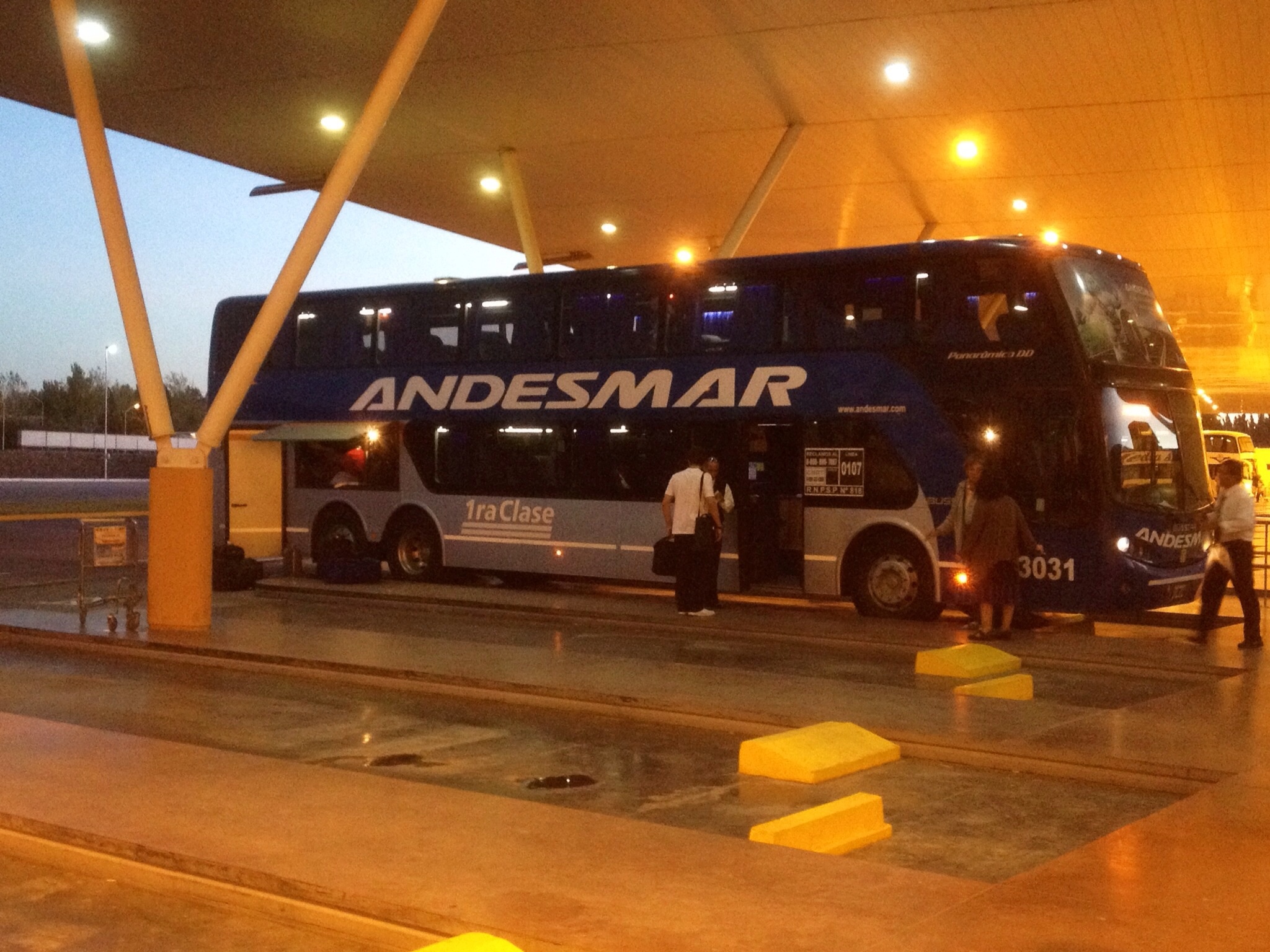
The bus to Mendoza. Not too shaby!
Mendoza is the first real city in Argentina where we have spent an appreciable amount of time. And what a great city it is! At the base of the Andes, this city is truly a desert. Through an impressive aqueduct system, the city is able to harness the water from melting snow in the Andes to create nothing less than an oasis. Every tree planted in the city is non-native, and the trees are one of my favorite things about this city! Every street is lined with huge sycamores that tower over the small streets and massive sidewalks. The shady sidewalks are at least twice as wide as the streets, and almost every restaurant or cafe has outdoor seating. The sidewalks are another point of interest: there is a huge variety of materials and designs used in the sidewalk. We are under the impression that the owners of each building are also in charge of designing the sidewalk in front of the building, leading to a beautifully eclectic mix of colors, patterns, and textures underfoot. Mendoza is very much an outdoor city; very pedestrian friendly and with more parks than I would have through possible in a small city!

Impressive aqueduct system. No, these are not tourist traps. Not intentionally at least!
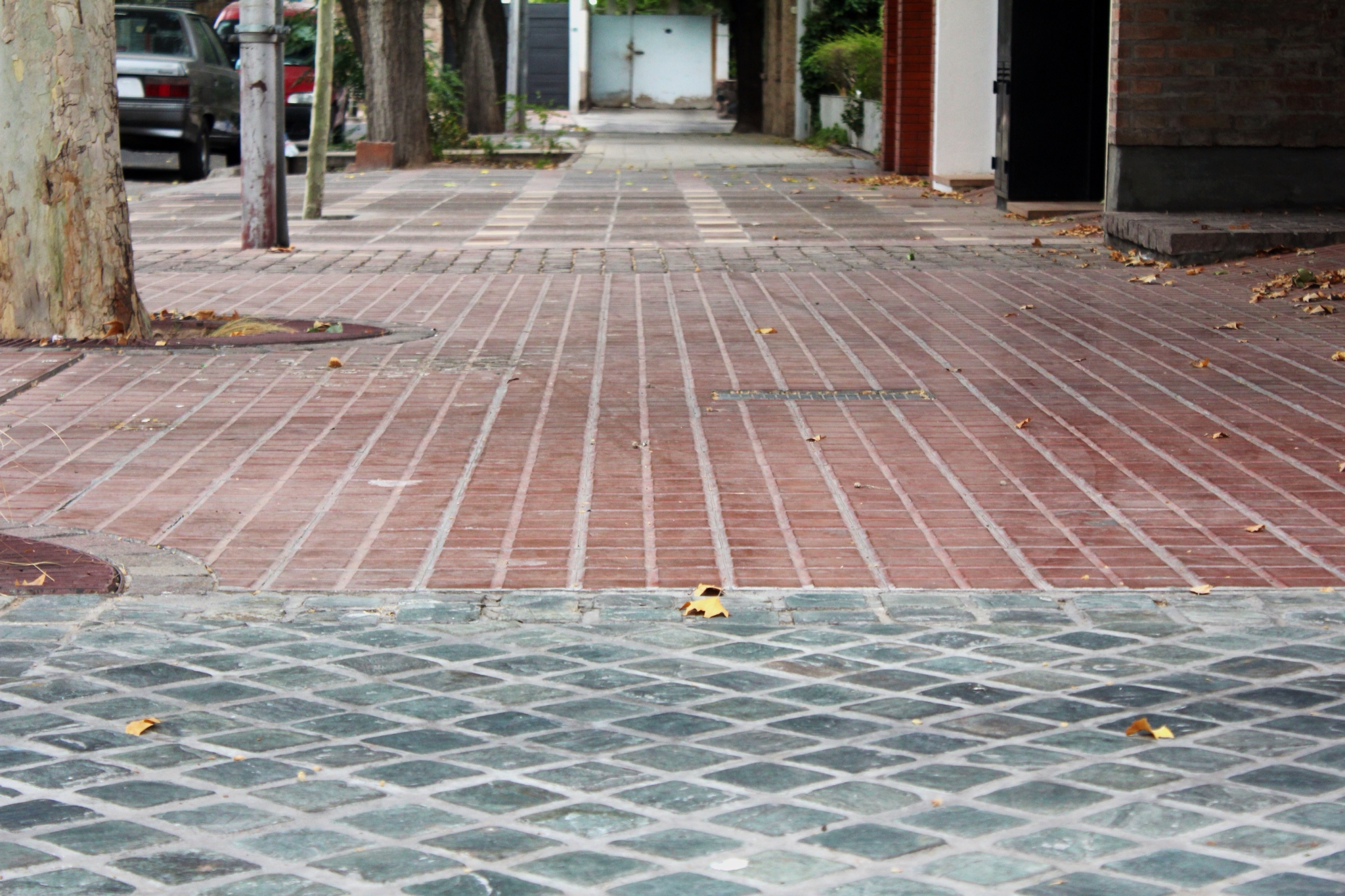
Mismatched sidewalks
Needless to say, we really enjoyed Mendoza. Outside this lovely shady city, 70% of Argentina's wine is produced. That's right, we made it to Argentine wine country! In the city, people sit on the shady patios of wine bars and restaurants to escape the midday heat, while outside the city people sit in air-conditioned tasting rooms and bodegas. It's like the Argentine version of Napa; but with siestas, more interesting wines, and a much more laid back vibe, I prefer Mendoza.
During our three days in Mendoza, we are staying in another apartment, just a few blocks from the biggest park in town and another few blocks from the popular restaurant / bar scene. And it's air conditioned, a necessity when it's well over 100 degrees out. The shady avenues and near-constant breeze off the Andes make the heat bearable, but it was definitely a shock coming from the chilly temperatures and wind in Patagonia!
Our first day in Mendoza we decided to get our city legs back and wander through the sites of Mendoza on foot. We found the (well-hidden) municipalities building with public rooftop garden and enjoyed the panoramic views. I think most people were surprised to see us there. The other patrons of the rooftop garden included a guard, two businessmen having lunch, and a Spanish-speaking family. Good thing no one asked us any questions!
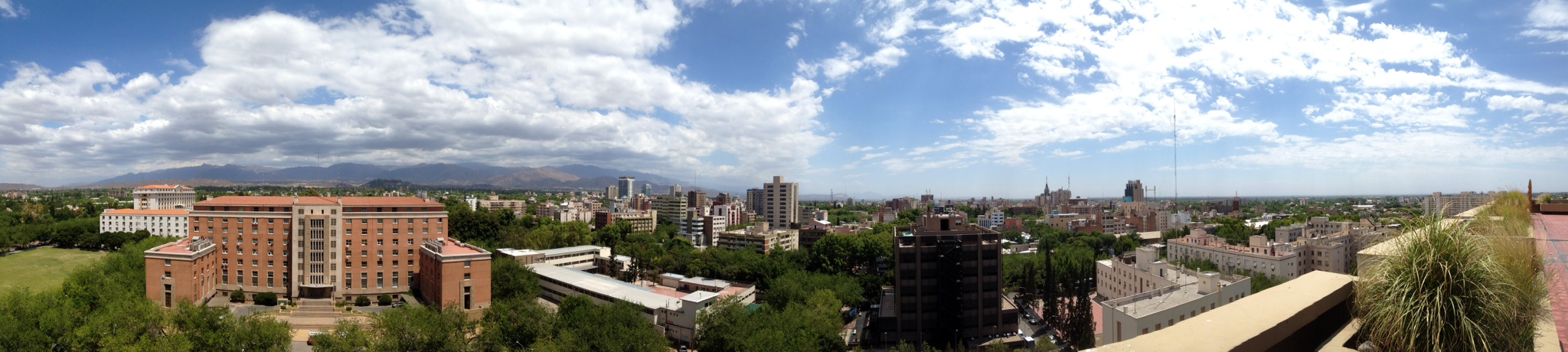
Rooftop garden view of Mendoza. So many trees
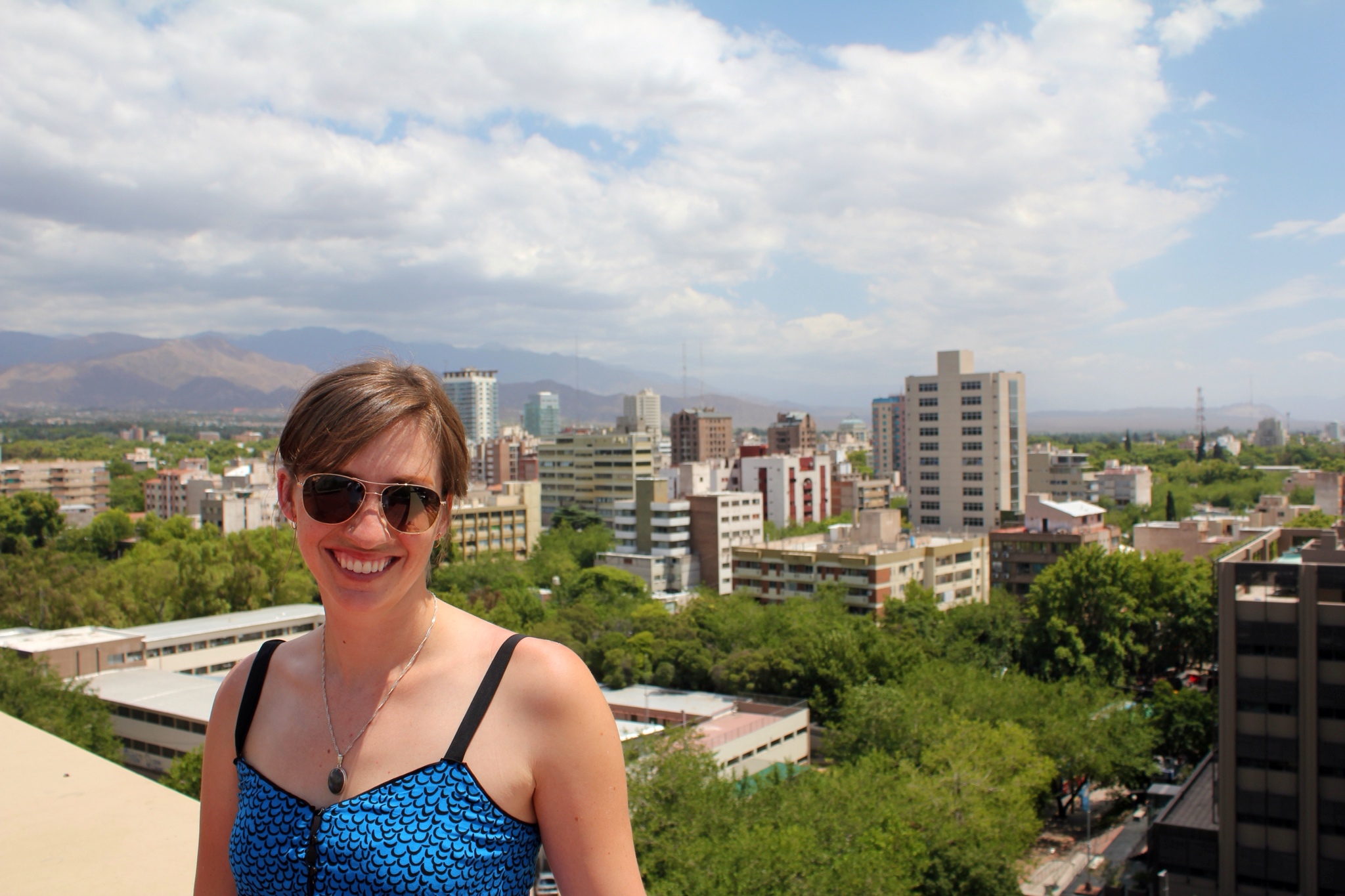
From there, we walked through downtown to each of the five plazas at the heart of the city. The plazas are arranged like the five dots on a five dice, with the largest and most impressive Plaza Independencia at the center. We enjoyed the foliage, the fountains, and the sculptures the plazas had to offer.

Resting in the plaza
We then made our way back through town to the massive Parque San Martin. This park is so big, it definitely rivals Golden Gate Park in San Francisco (minus the fog and the hills). We wandered around the edges of the park and enjoyed a nice stroll around the lake.
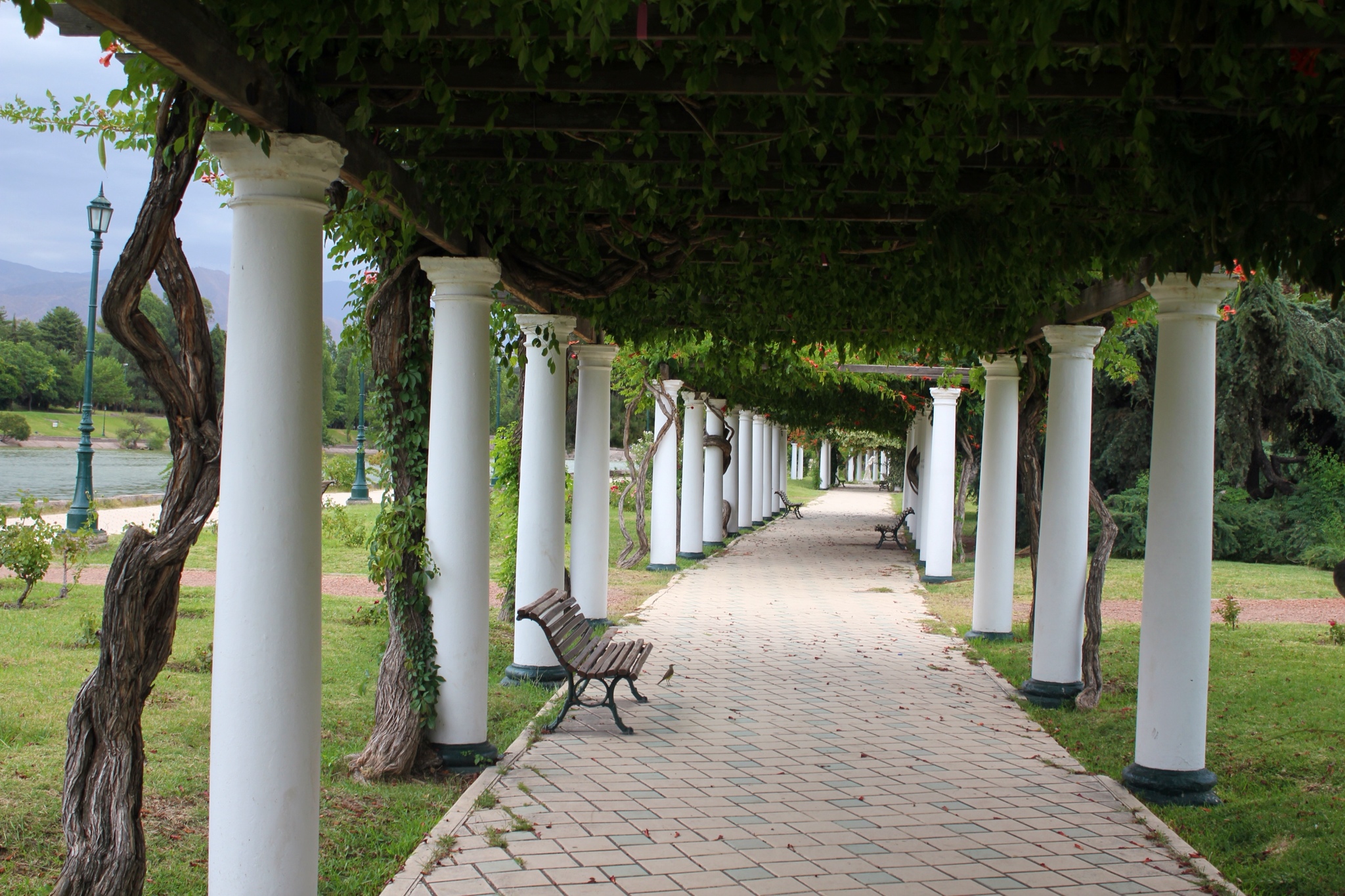
Parque San Martin
The rest of our time in Mendoza pretty revolved around wine tasting (more information in a later post on this), eating, and wandering more of the leafy avenues. We found our favorite brunch spot, and enjoyed medialunas under the yellow umbrellas more than once.
Mendoza is a great city, with lots of culinary adventures and more wine than anyone could possibly enjoy in three days (but we did try…). It was a great reintroduction to civilization and warm weather, and a good stepping stone to Buenos Aires!
As we leave Patagonia, we embark on the next section of our trip: the cities. In the next week, we will visit Mendoza and Buenos Aires, the two big city destinations on our trip. So long, beautiful mountain scenery and helloooo smog! Just kidding (well, sort of…). We've learned quite a few things while traveling in Patagonia, but we know Argentina has many, many more things available for show and tell! Lessons we will take with us include:
- empanadas are like heaven and should be thoroughly enjoyed
- eat lots of ice cream and chocolate; it solves problems
- the weather is usually just as bad as it looks
- 18-hour bus journeys are nowhere near as terrible as they sound
- indulge in fresh vegetables when you can (this does not include potatoes, as they are everywhere)
- drink lots of lots of local wine (side note: it is very difficult to order a glass of wine; they serve wine by the bottle here!)
- sunscreen is your friend
- when in doubt, order beef, trout, or lamb and you will be happy
- enjoy; just enjoy everything this amazing place has to offer!
The landscapes in Patagonia are as picturesque and beautiful as you can imagine. And the landscape is so vast: there is so much empty space down here that it is very easy to feel like you are alone in the middle of nowhere. It's a wonderful thing!
San Martin de los Andes is a town that we could love. And trust me, I really wanted to love this town. Situated at the end of the Ruta de los Siete Lagos, right on the supposedly protected shores of Lago Lacar, the quaint ski / fly fishing town called to me. I wanted to sit at one of the cafe bars on the lake front and soak up the sun, watch the kayakers and sailers in the lake. I wanted to wander through the boutique shops and buy souvenirs. I wanted to play with the dogs on the wide, cobble stone sidewalks under the trees. Instead, we fought the rain and the wind for a little while, then retied to our very subpar hotel.
After our siesta, during which the weather had gotten worse, not better, we decided to brave the storm. Mostly, we decided to brave the storm because we were hungry. I also wanted to prove that the town was as charming as I wanted it to be! While you could see the charm through the puddles and howling wind, it just wasn't the same. After a mediocre dinner and wonderful ice cream, we returned to our hotel to watch a movie and listen to the storm. However, we couldn't hear the storm over the loud conversations and footsteps easily heard through the paper thin walls and we couldn't see the movie through the glare of the floodlight shining through our curtain-less window. Yeah…
Anyway, you win some you lose some. Our night in San Martin was somewhat of a loss, but I can honestly say I would like to give this cute town another shot. Just from a different hotel, with different weather conditions! Our hotel's single redeeming quality were the large picture windows overlooking the lake, located about 50 meters from the hotel. It could be a nice spot!
In the morning, the rain had cleared up but the wind howled even more violently. We thought it couldn't be that bad, so after breakfast at the hotel we ventured out to the lake front to snap a few pictures and enjoy the scenery. You would think we would have learned our lesson, but no. The wind was as violent as it looked, and it was freezing. So we snapped a few pictures and ran for the cover of Corbin.

Lago Lacar from San Martin
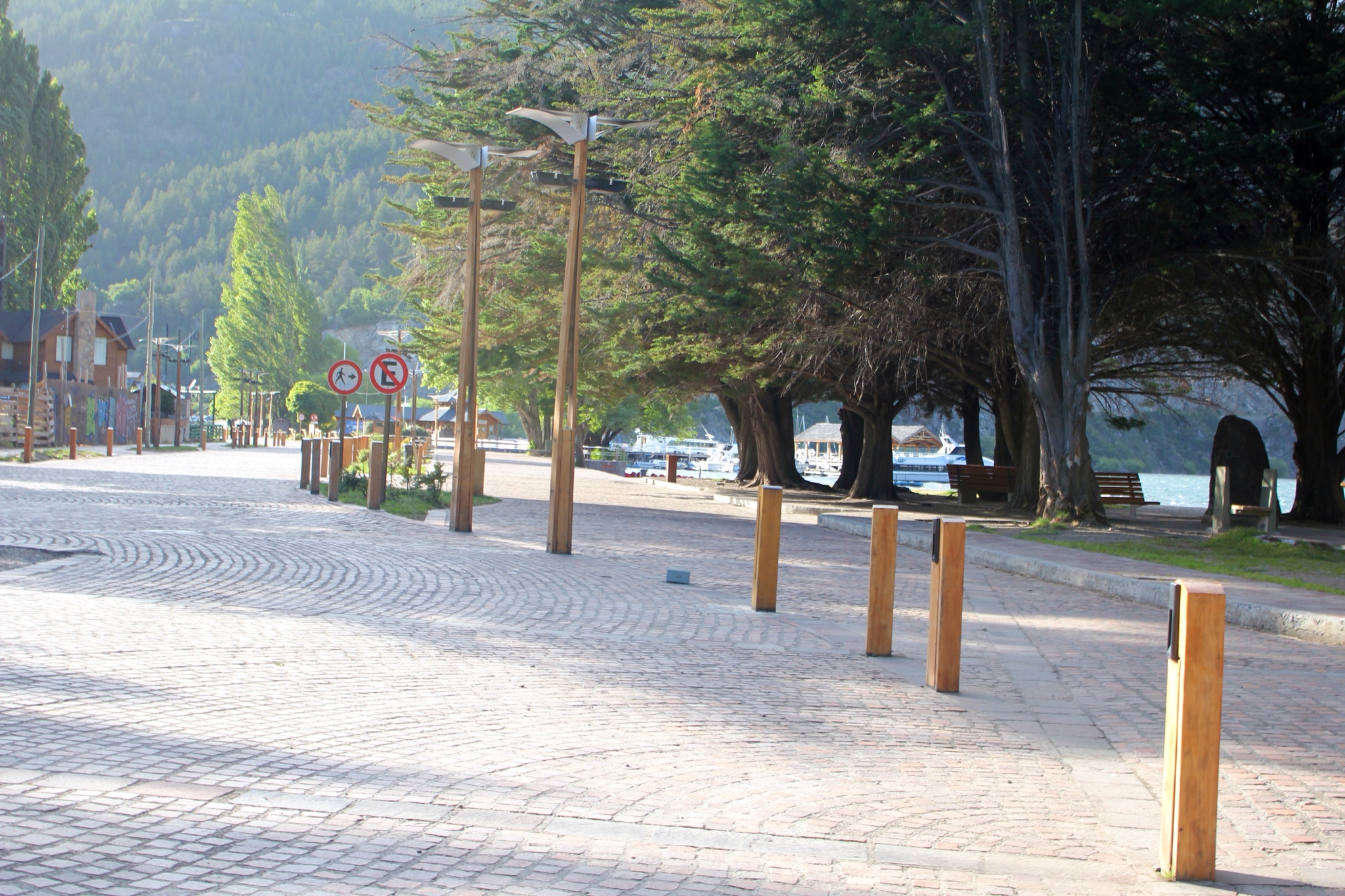
Most of what we saw in San Martin, we saw this morning through the car windows. And it is a very lovely town. After driving around the blocks a few times, we decided to hit the road back to Bariloche.

My fearless chauffeur!
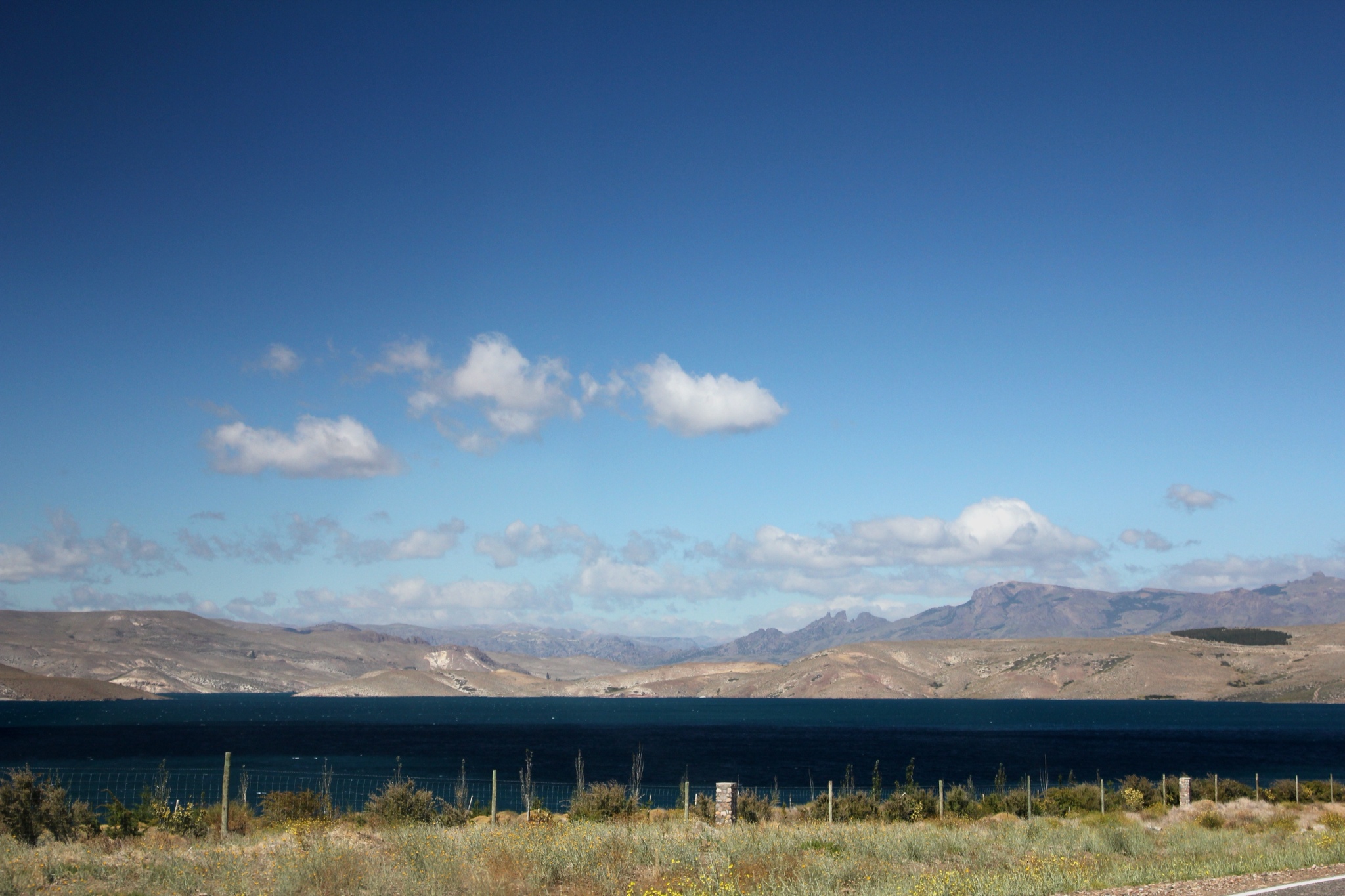
There are multiple ways to drive from Bariloche to San Martin. Yesterday, we took the most direct, most scenic way. This is consequently the longest way, due to the questionable road conditions. Today, we took the shortest in time but longest in distance way back to Bariloche, on a paved road skirting the backside of the Andes. The scenery on the drive was very pretty, but very different from the day before. The wide, meandering rivers and dry, desert-like scenery were beautiful; slightly reminiscent although less impressive than the eastern Sierras in California and Nevada.



We made it back to Bariloche without incident, settled into our last meal before the 18-hour bus ride from Bariloche to Mendoza. Yes, 18 hours. Luckily for us, this was no ordinary bus. The seats reclined to an almost horizontal position, making sleeping and relaxing very easy. We caught up on some blogging, some ready, and some much needed sleep.
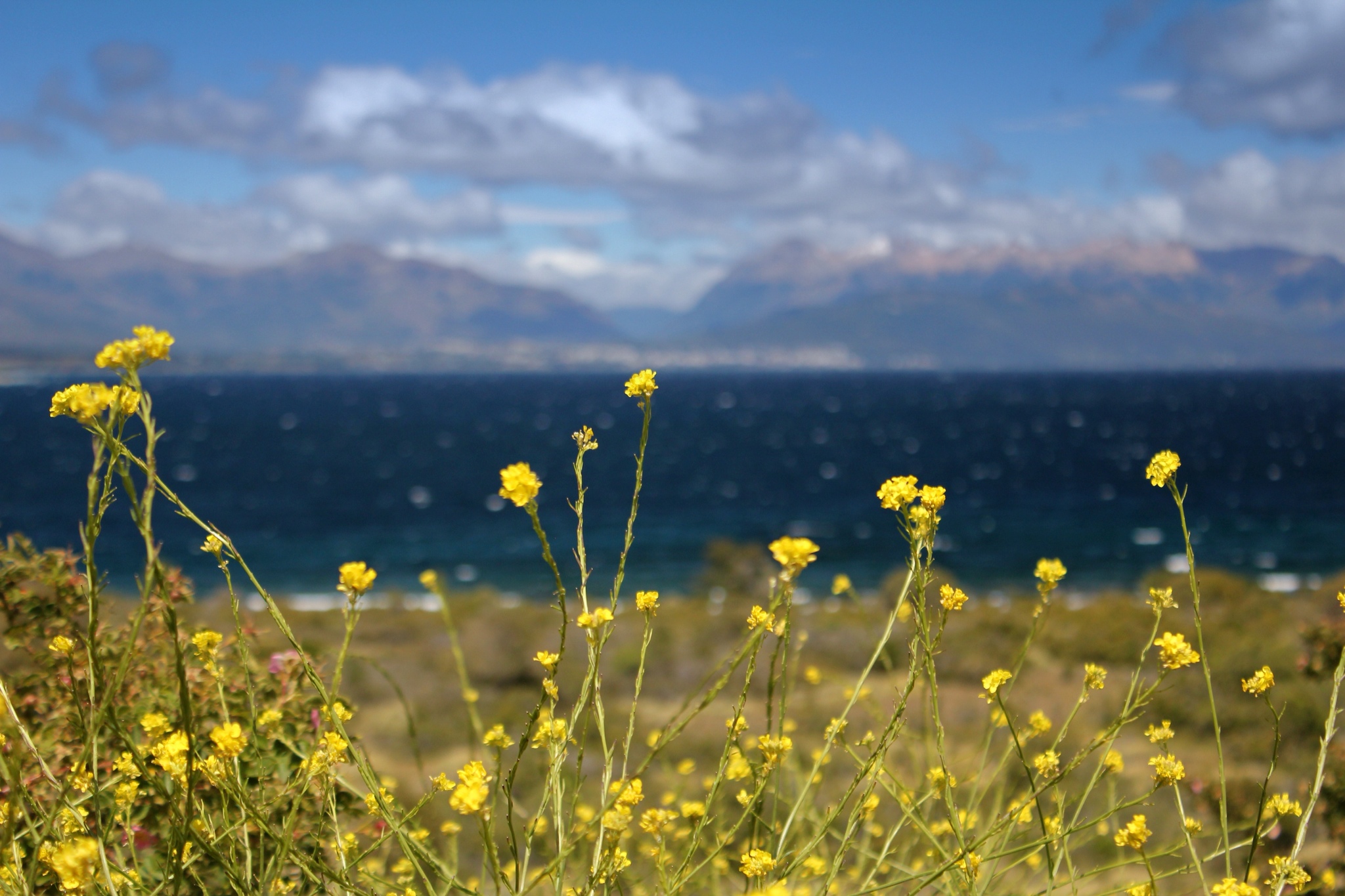

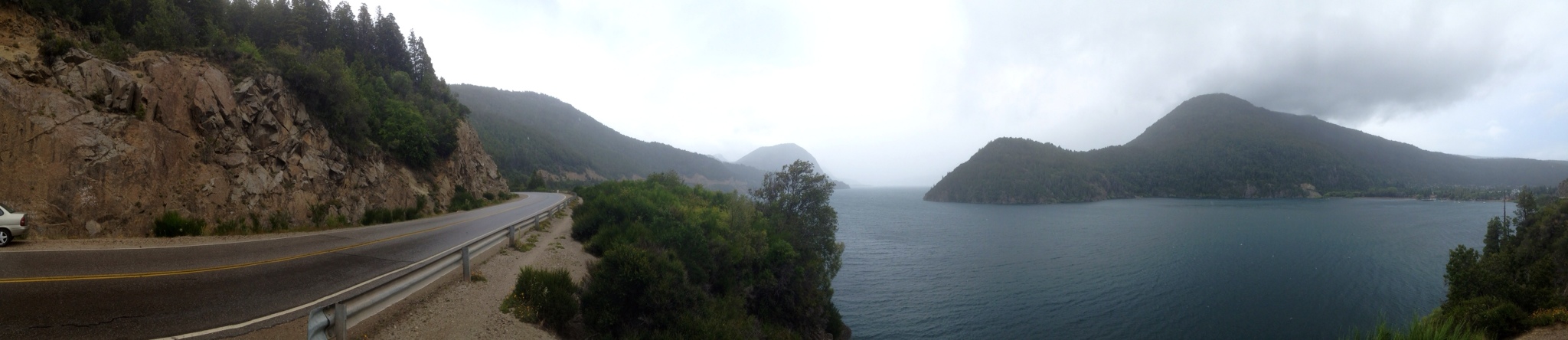
Today we left Bariloche to drive the scenic and very popular Ruta de los Siete Lagos (Seven Lakes Drive) from Villa Angostura to San Martin de los Andes. About half of the road is gravel, half nicely paved. The drive passes seven beautiful alpine lakes nestled in the Andes, blanketed with lush forests and bright wildflowers. We were both very excited to see all of the wonderful eye candy this drive has to offer, and we also looked forward to the small town of San Martin at the end of the drive (rumored to be a quainter, quieter, less overwhelming version of Bariloche).
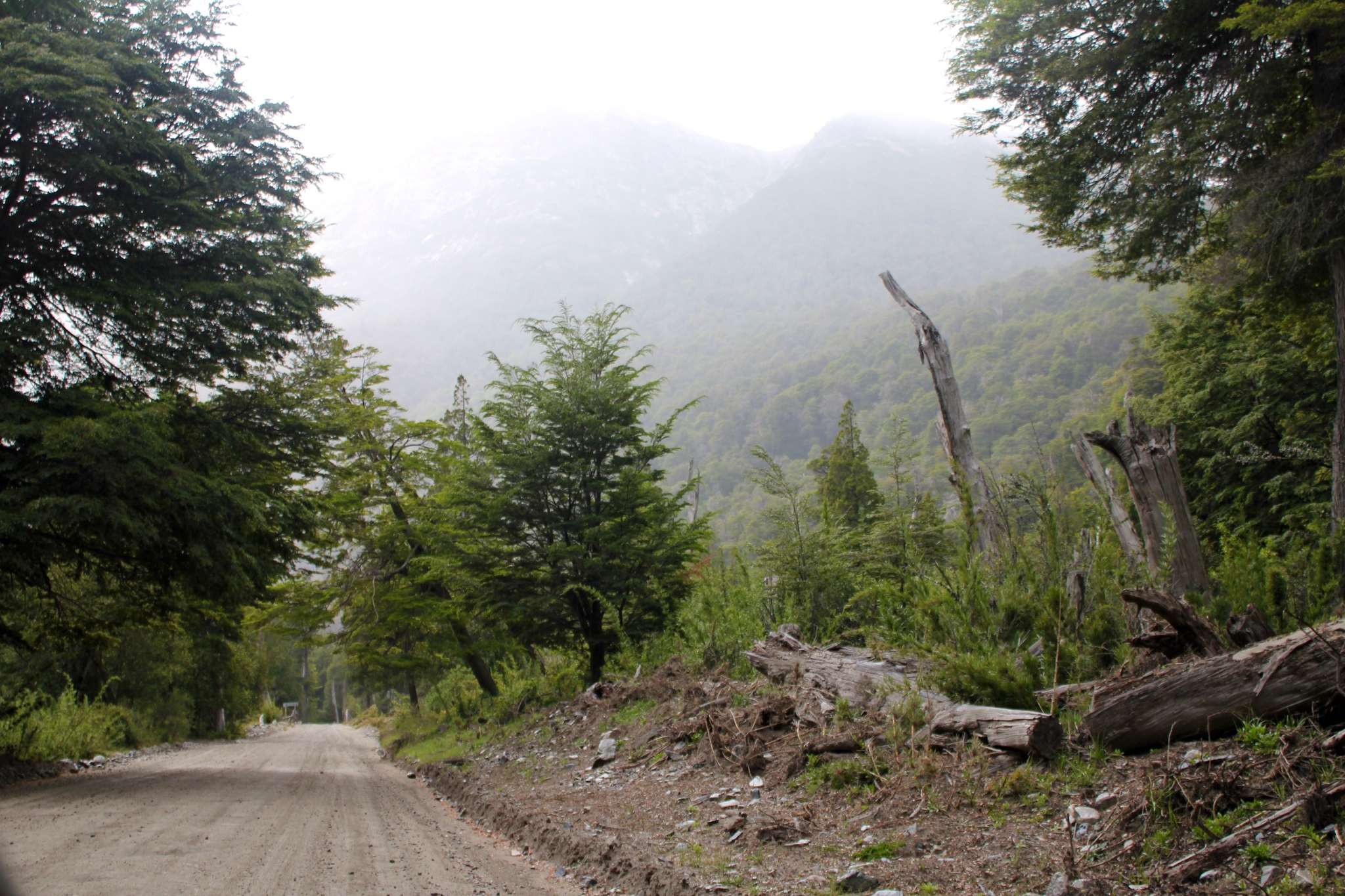
Part of the unpaved Ruta de Los Siete Lagos
We set an early alarm this morning, hoping to get on the road before the forecasted storm rolled in. We woke up to a beautiful rainbow arching through the ominous sky, into Lago Nahuel Huapi. This was a very nice site to see, but whatbdid it mean? Did the storm already pass and we were getting sun peeking through? Or was the sun just starting to be enveloped by the clouds? We would soon find out it was definitely the latter!
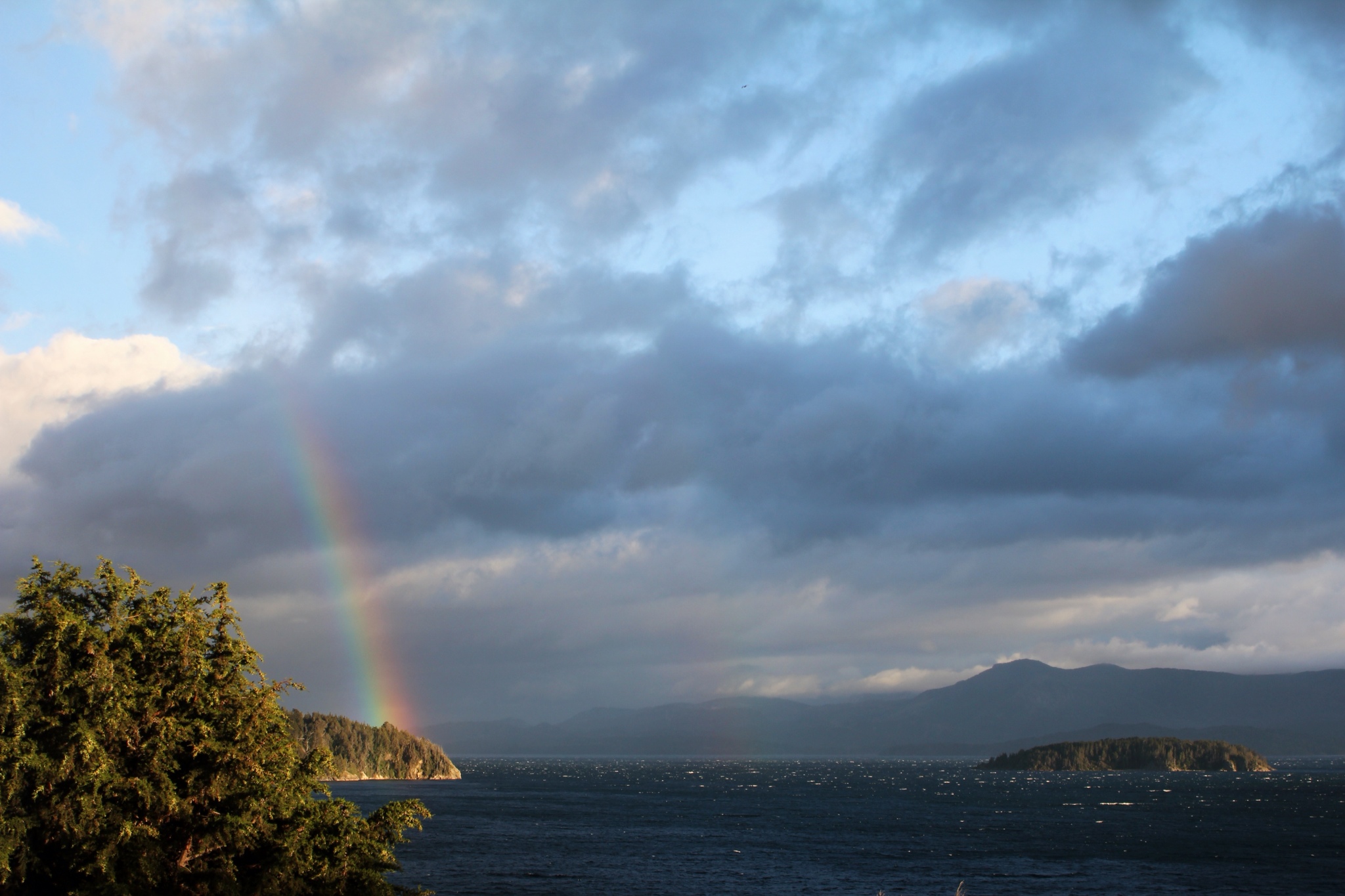
The rainbow from our picture window in Bariloche
With a full tank of gas, we set off with Corbin around the south-eastern portion of Lago Nahuel Huapi on the way up to Villa Angostura. We made it about two-thirds of the way there, drinking in the beautiful views of Bariloche, Nahuel Huapi, the surrounding mountains, and the never-ending rainbows. Then the rain hit. And when it rains, it pours! We made it into Villa Angostura and ducked into a cafe for coffee, hoping that the crazy rain would subside if given a little time. And it did, for awhile…
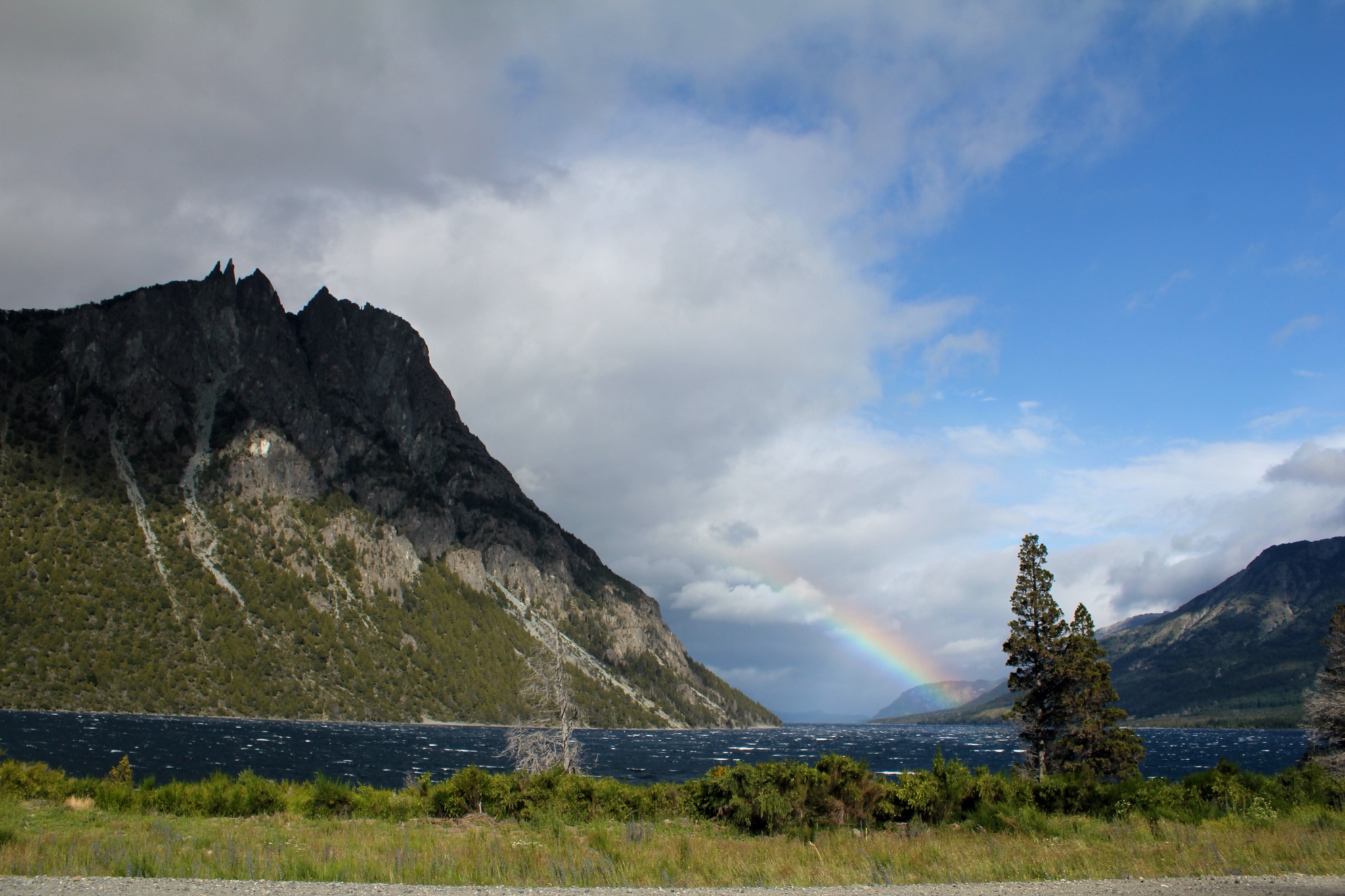
Chasing rainbows 🙂
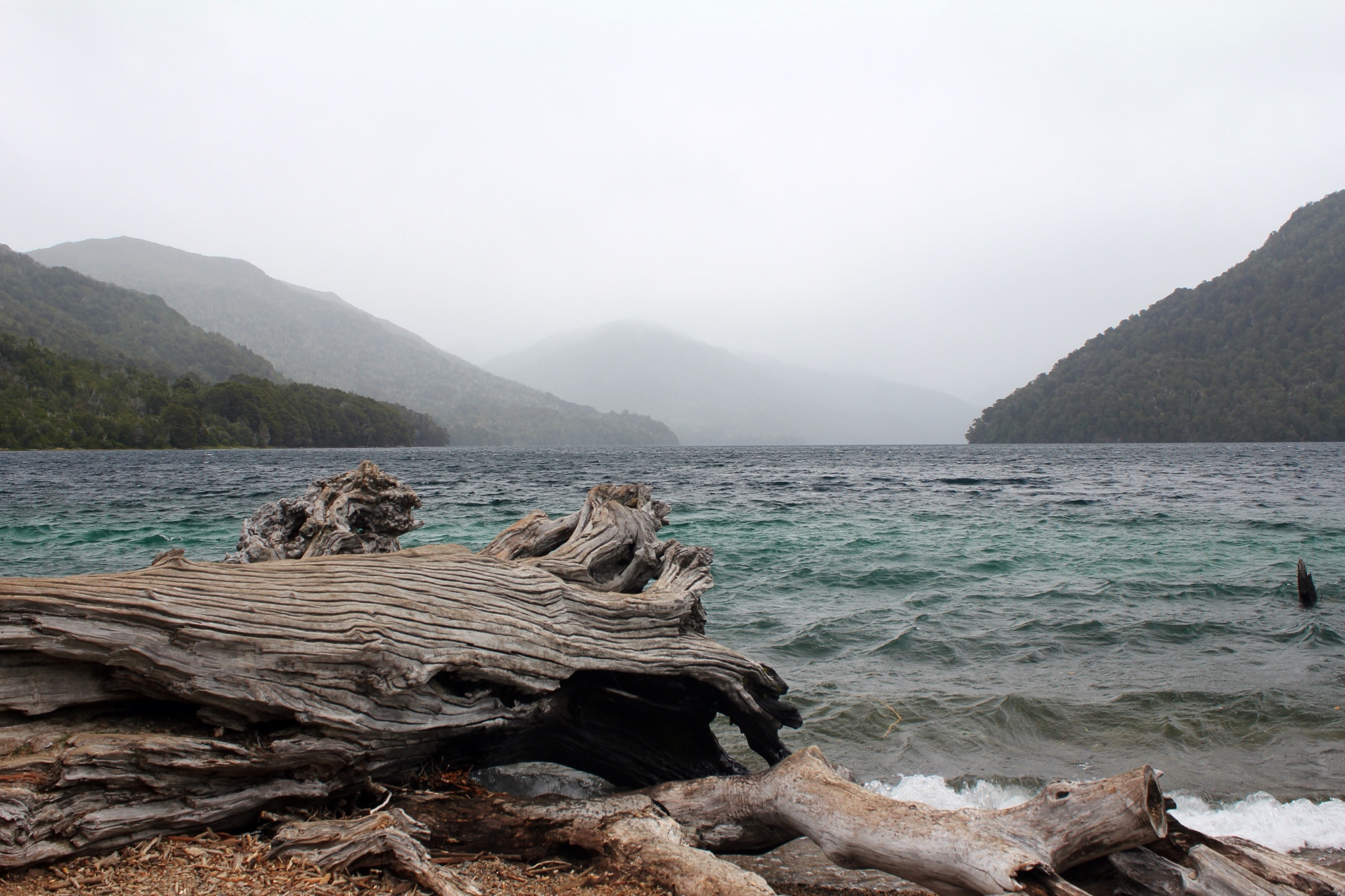
The drive from Villa Angostura to San Martin really is stunning. The views make even the bumpy gravel road and psycho tour bus drivers seem irrelevant. We just wish that we had had a little more sun and a little less rain and wind to make the drive and the exploring more enjoyable. There are lots of short hikes around each of the seven lakes on this drive, but after the first lake, the rain and wind were so bad that we couldn't get up the nerve to wander around the lakes. So we did most of our sightseeing and enjoying from the warm, dry, windless interior of Corbin.
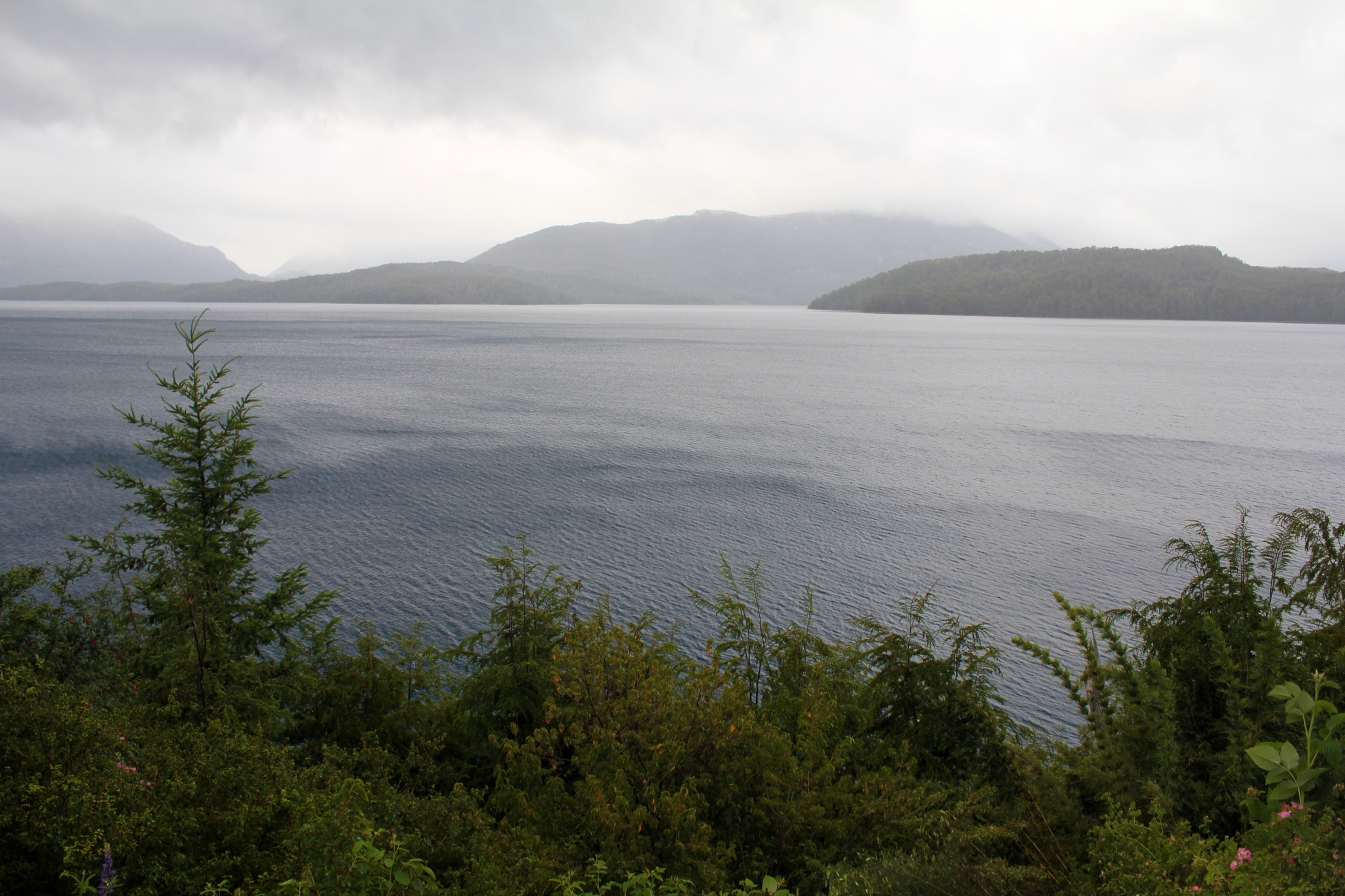
The storm coming in
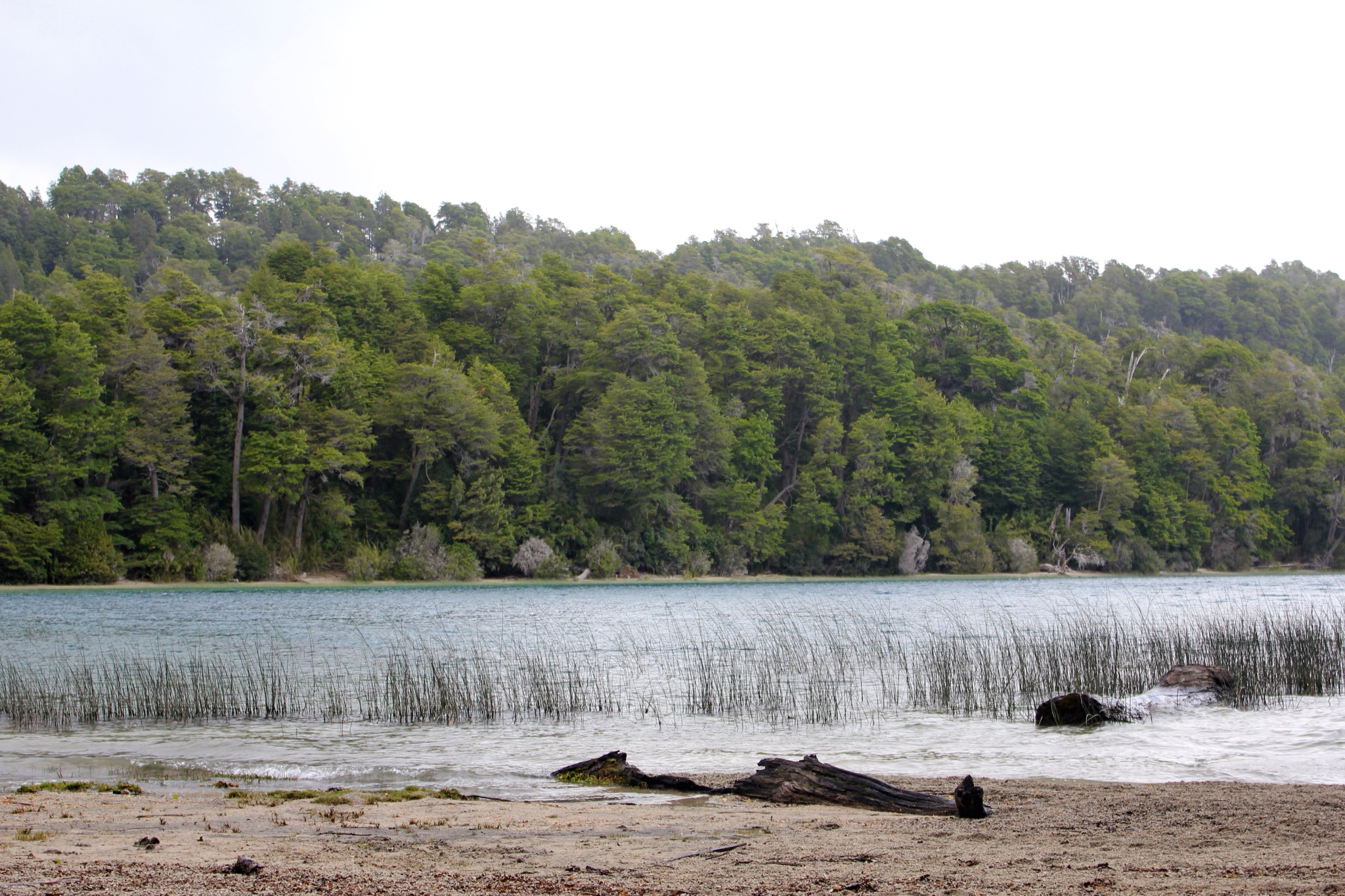
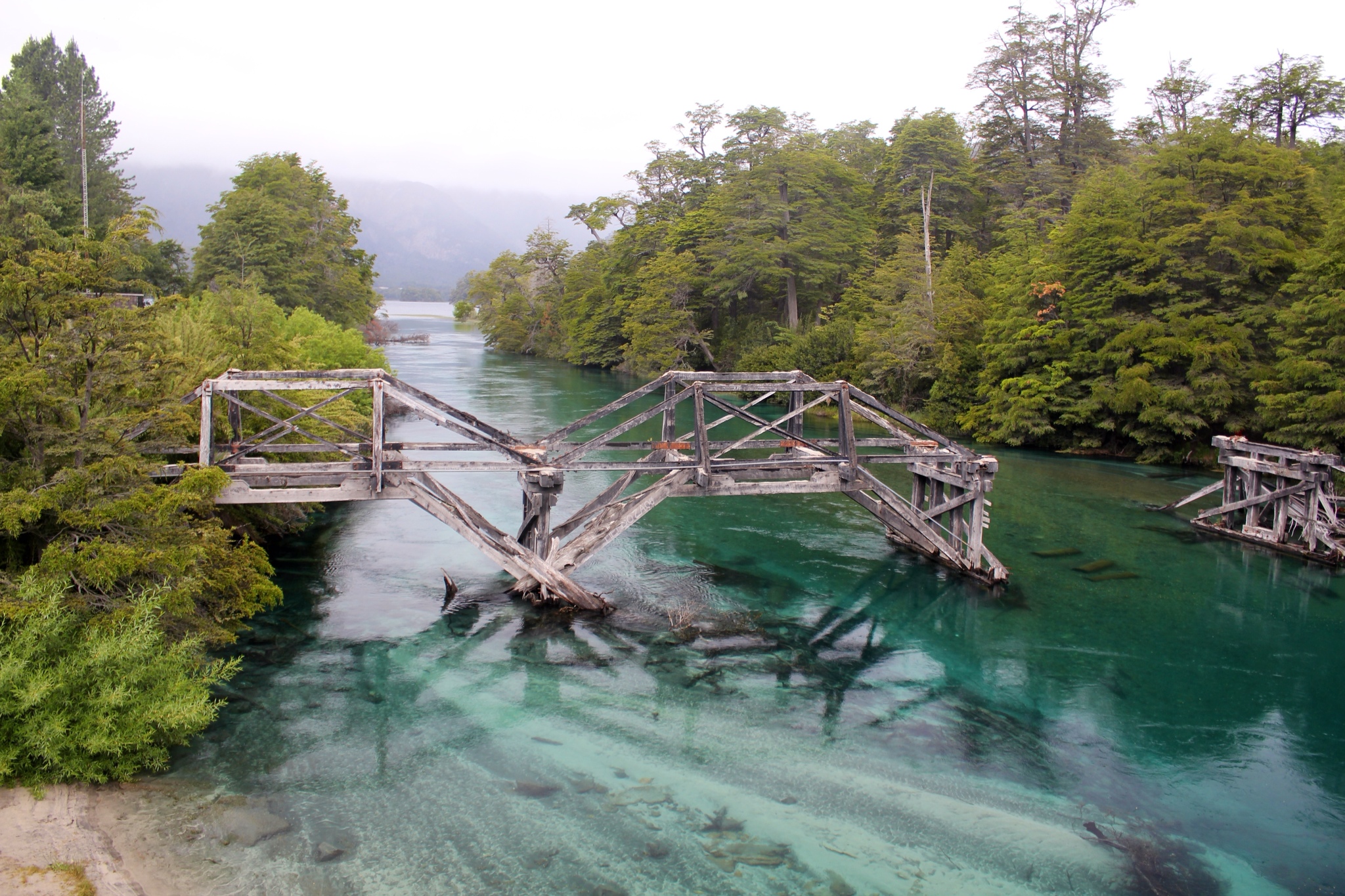
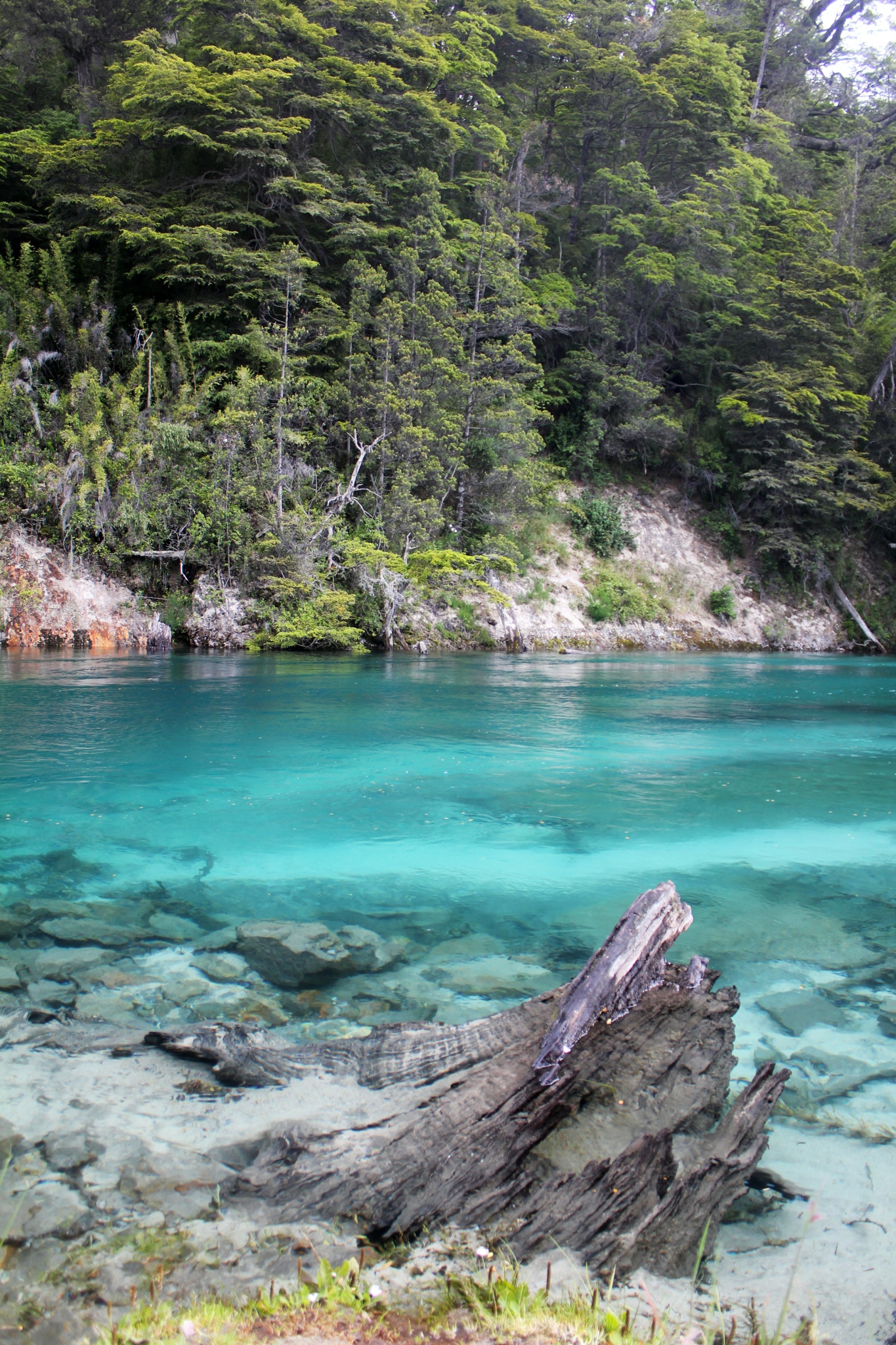
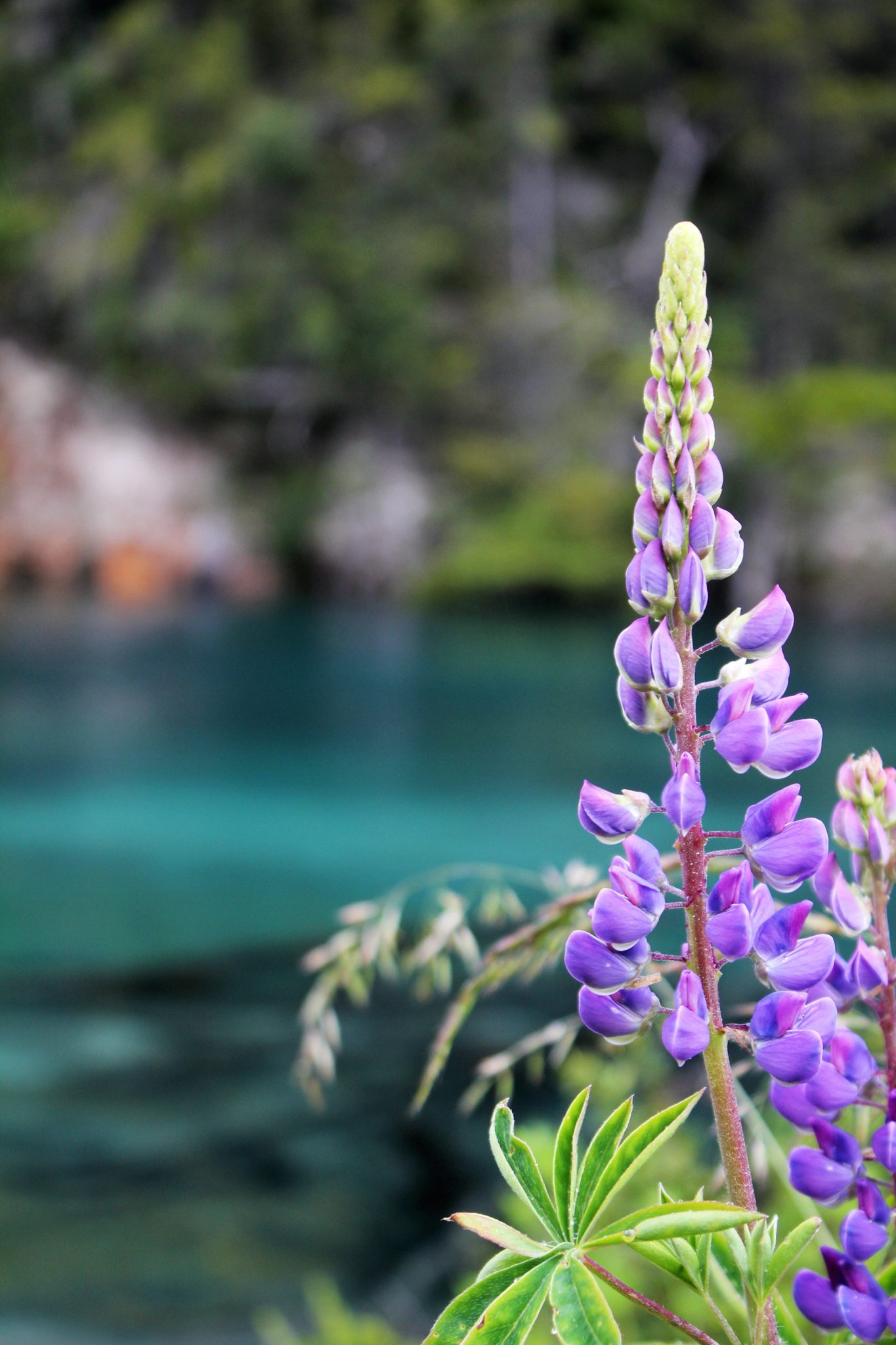
There are massive lupines everywhere!

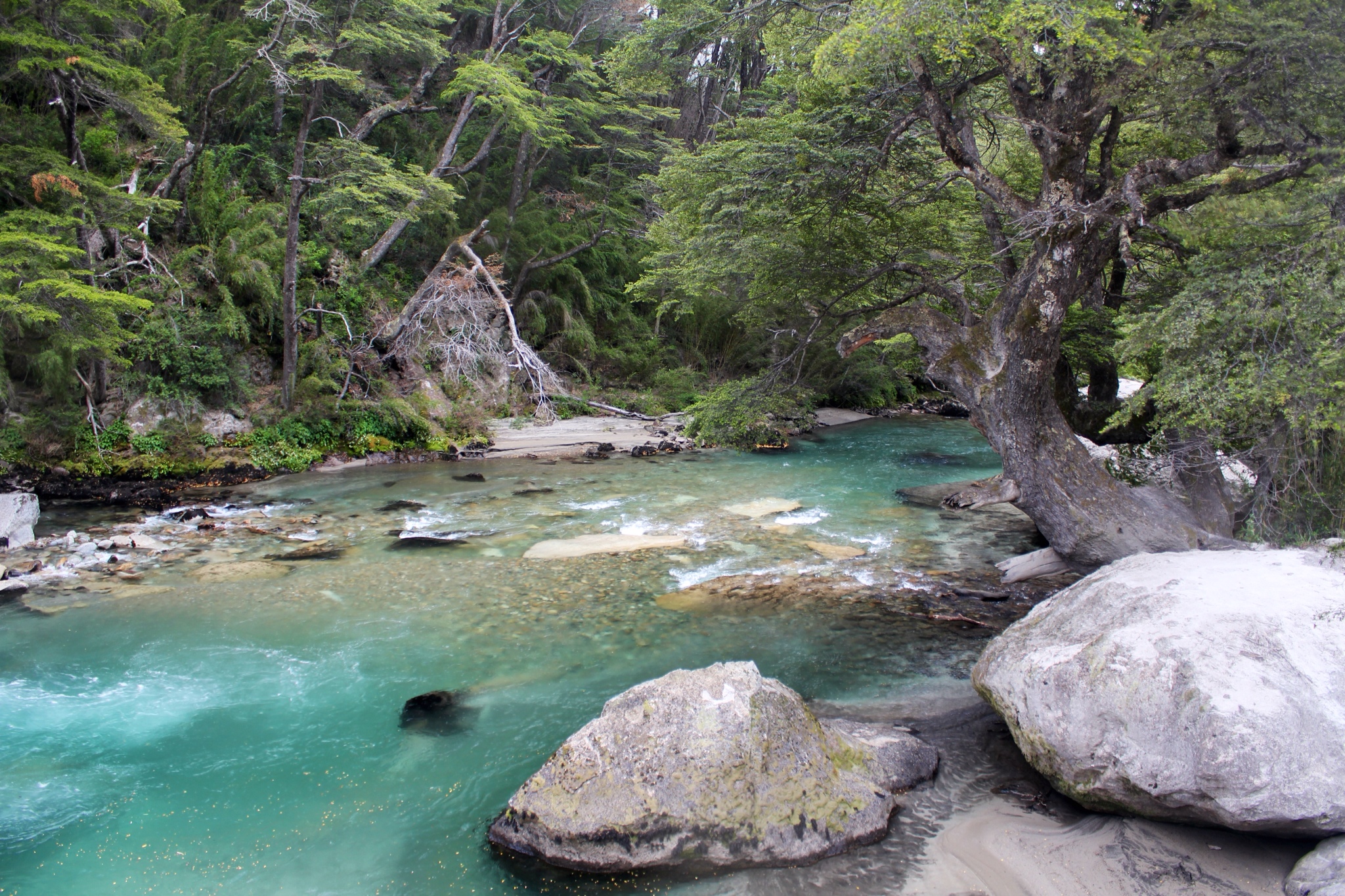
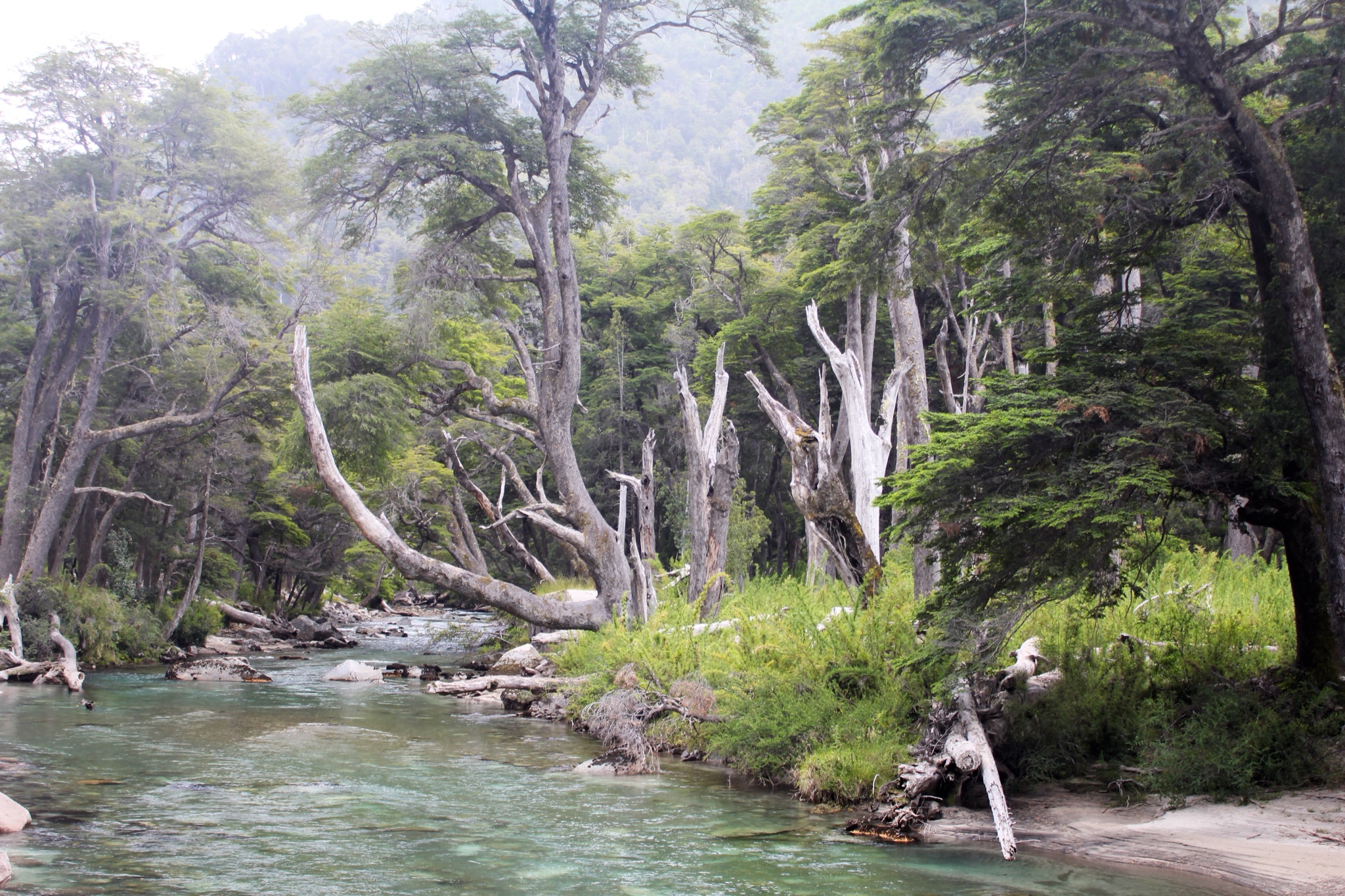
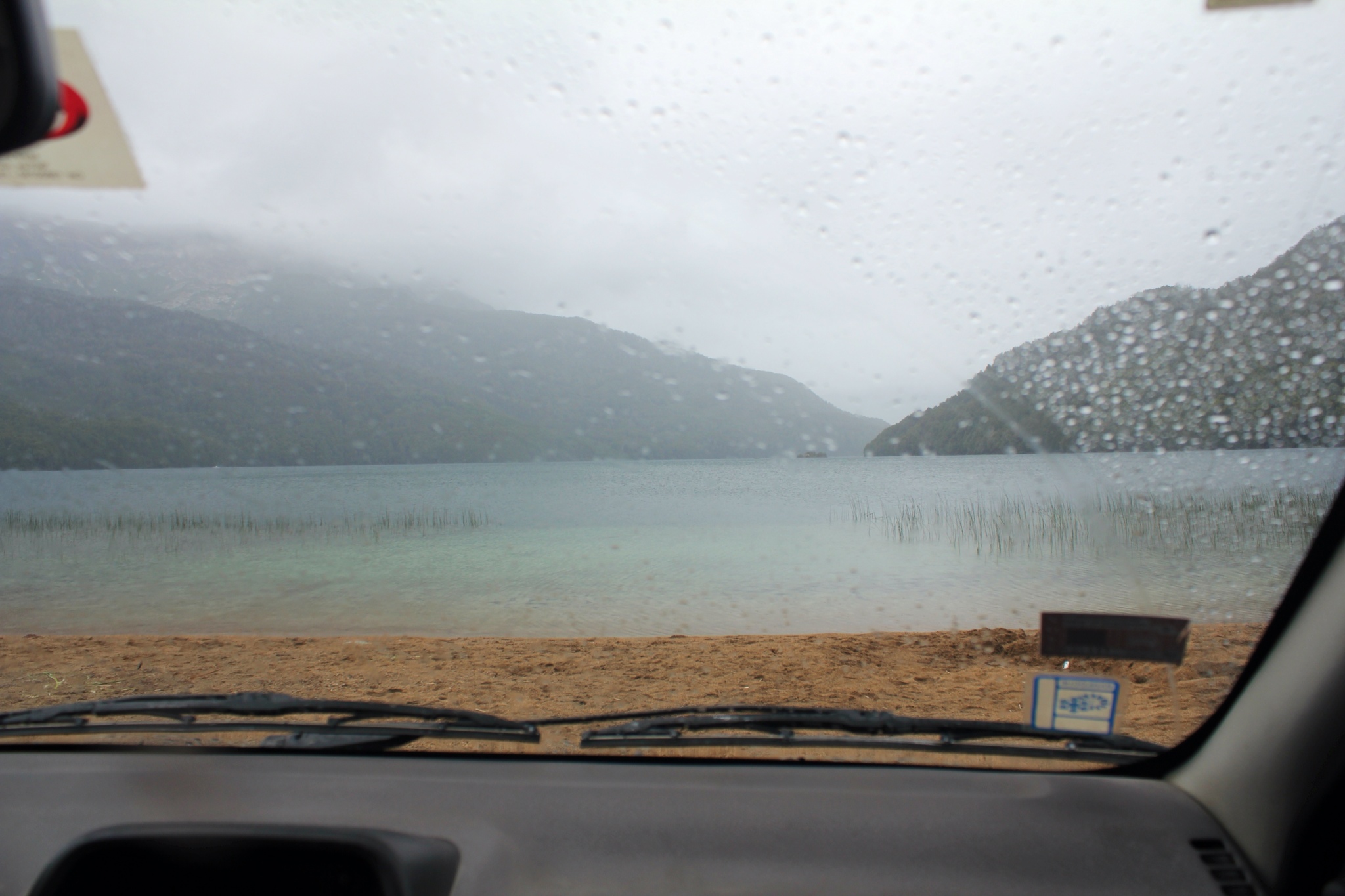
Lunch inside Corbin. At least we had a view...
It would seem that the Patagonian weather finally got the best of us today. We still very much enjoyed the drive and the beautiful views, but we can't help but think how much prettier the scenery would be with blue skies instead of grey. So we completed Ruta de los Siete Lagos, but it was slightly bittersweet. I guess we will just have to come back some day to enjoy the drive in all of its glory.
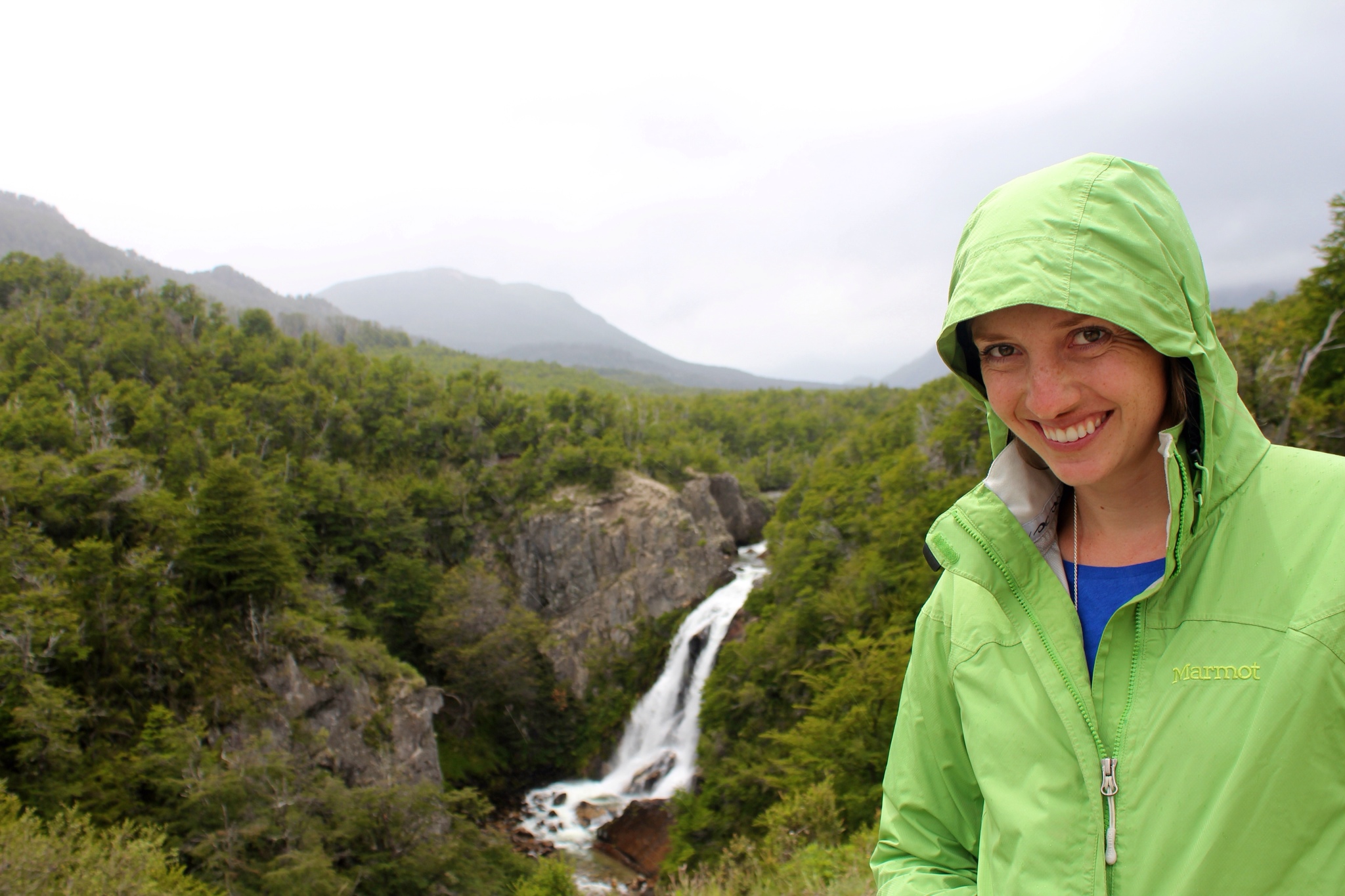
The drive ended with a wonderful view of San Martin and Lago Lacar. After our exhausting day of driving and battling the elements, we checked into our place and settled in for a siesta.
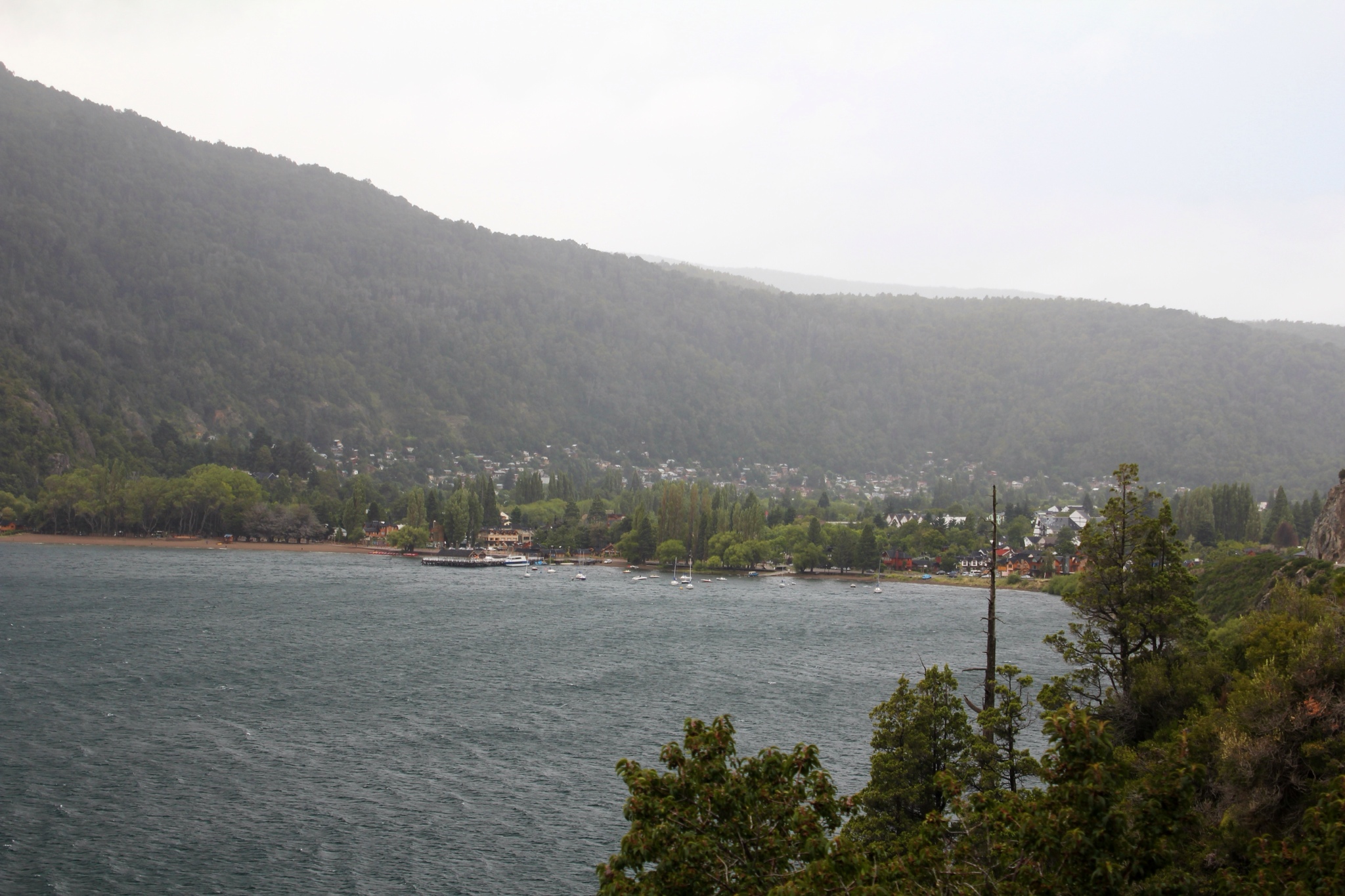
San Martin and Lago Lacar
I have yet to dedicate a blog post solely to food. Well, that's all about to change! Our host in Bariloche told us about La Salamadra, a small restaurant less than a kilometer from our apartment. On our last night in Bariloche, we went for it. And it was the BEST meal we have had in Argentina, hands down. We went right when they opened (the tourist time slot for dinner, 8 pm), and another group of English-speaking people yelled to us from the parking lot that it was closed. I was heartbroken!
As we turned around, they all started laughing and told us it was a joke. So we went in and were told we could eat as long as we were out by 10. Sounded easy enough… We didn't event look at the menu. Renada, one of the owners, told us what she would order and we said “we'll have that”. With our glasses full of the house “jug” wine, we enjoyed empanadas carne, fresh mushroom bruschetta, and the most perfectly cooked ojo de bife (ribeye steak). The food was superb, the atmosphere cozy, the company jovial, and the hosts phenomenal. I can't say enough good things about La Salamadra!
We talked with the other English-speakers in the restaurant, and learned some good insights about Argentine culture and politics. Alec, Norie, and friends (whose names I can't remember… So sorry if you ever read this!) discovered that we were on our honeymoon and promptly ordered us a bottle of champagne. It was very kind of them and very, very delicious! Alec, Noried, and Renada all gave us a long list of bodegas and restaurants to try in Mendoza and Buenos Aires. We can't wait to visit some of them!
La Salamandra and the people we met during this fabulous dinner will never be forgotten. We enjoyed our food, company, and beverages so much that we struggled to make it out by 10, before the next group came in! Sadly, we were so enthralled with our culinary experience that we didnt take any pictures… But there are plenty on google if you are curious 🙂
After our questionable first adventure with Corbin, we hoped things would go a little more smoothly on our drive around Circuito Chico. Circuito Chico is a 30-ish km road that skirts the Brazo Campanario of Lago Nahuel Huapi, through Llao-Llao, past Bahia Lopez, and around Lago Perito Moreno Oeste y Este. Basically, it's a drive with constant scenery and incredible views of the Lake District. We had originally planned to do the Circuit on rented bikes, but after seeing the bikes and the road, I think Corbin was a much better choice!
Our first stop on the Circuit was Cerro Campanario, a chairlift up a small mountain / large hill with 360 degree views. And a very nice cafe at the summit! As luck would have it, we arrived at the chairlift just as the first round of tourist buses were leaving, so we didn't have to wait in line and the top was pretty near empty. The views are spectacular. The morning gave us a cloudless sky (thank you very much, wind) and vivid colors. With Lago Perito Moreno Oeste y Este and Brazo Campanario in the foreground, Lago Nahuel Huapi looked arguably more beautiful. After taking in the views from the observation decks and being subjected to as much wind as we could stand, we ducked into the cafe. Due to the serious lack of people at the summit, we plunked down at a window table and ordered Irish coffee and empanadas (obsessed, I told you). Also, you should know: whenever you get “crema” in your coffee (whether it's coffee or Irish coffee), it's not cream. It's not whipped cream. It's ice cream. And yes, you should order it. Every time. This is the life 🙂
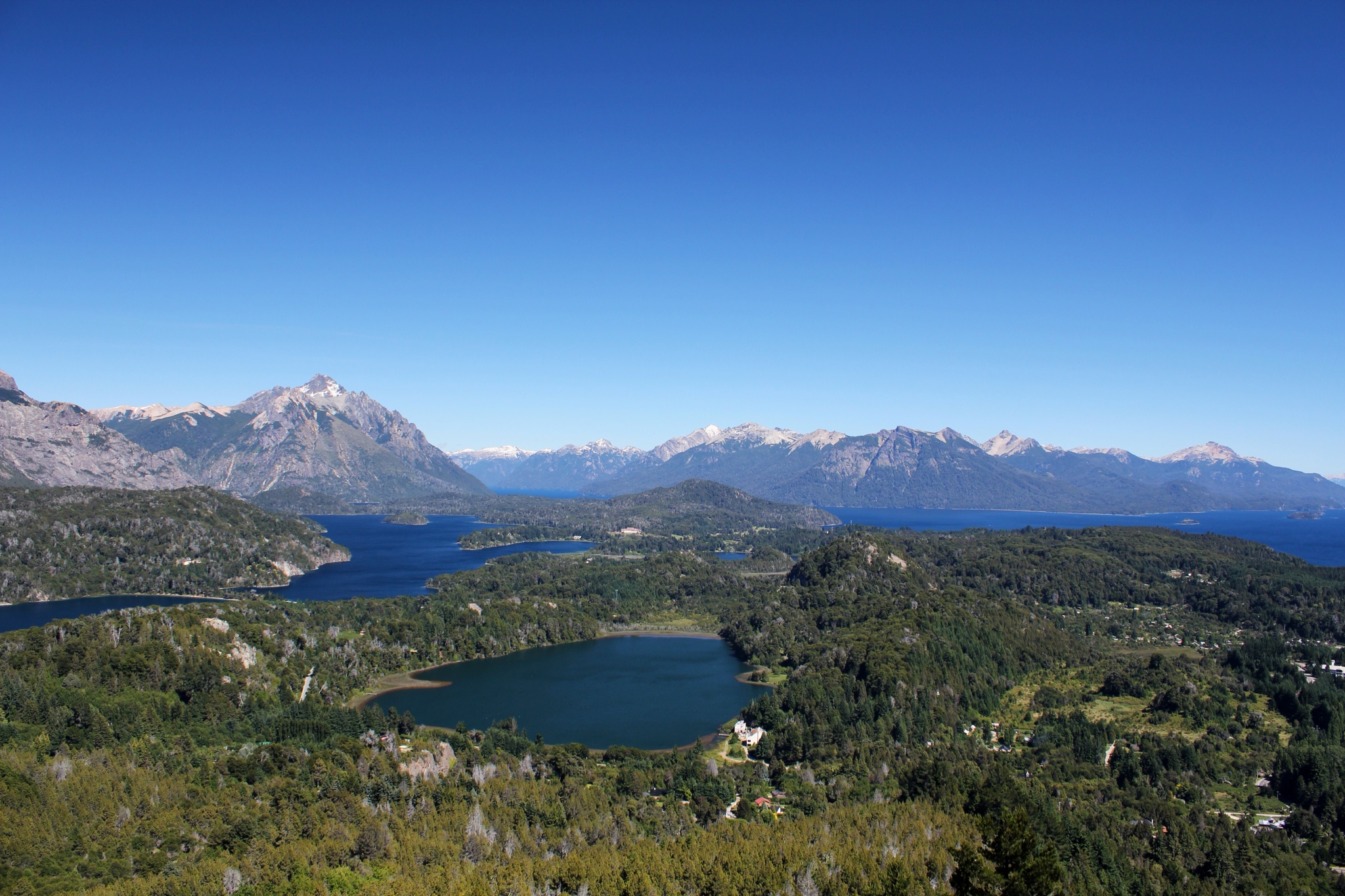
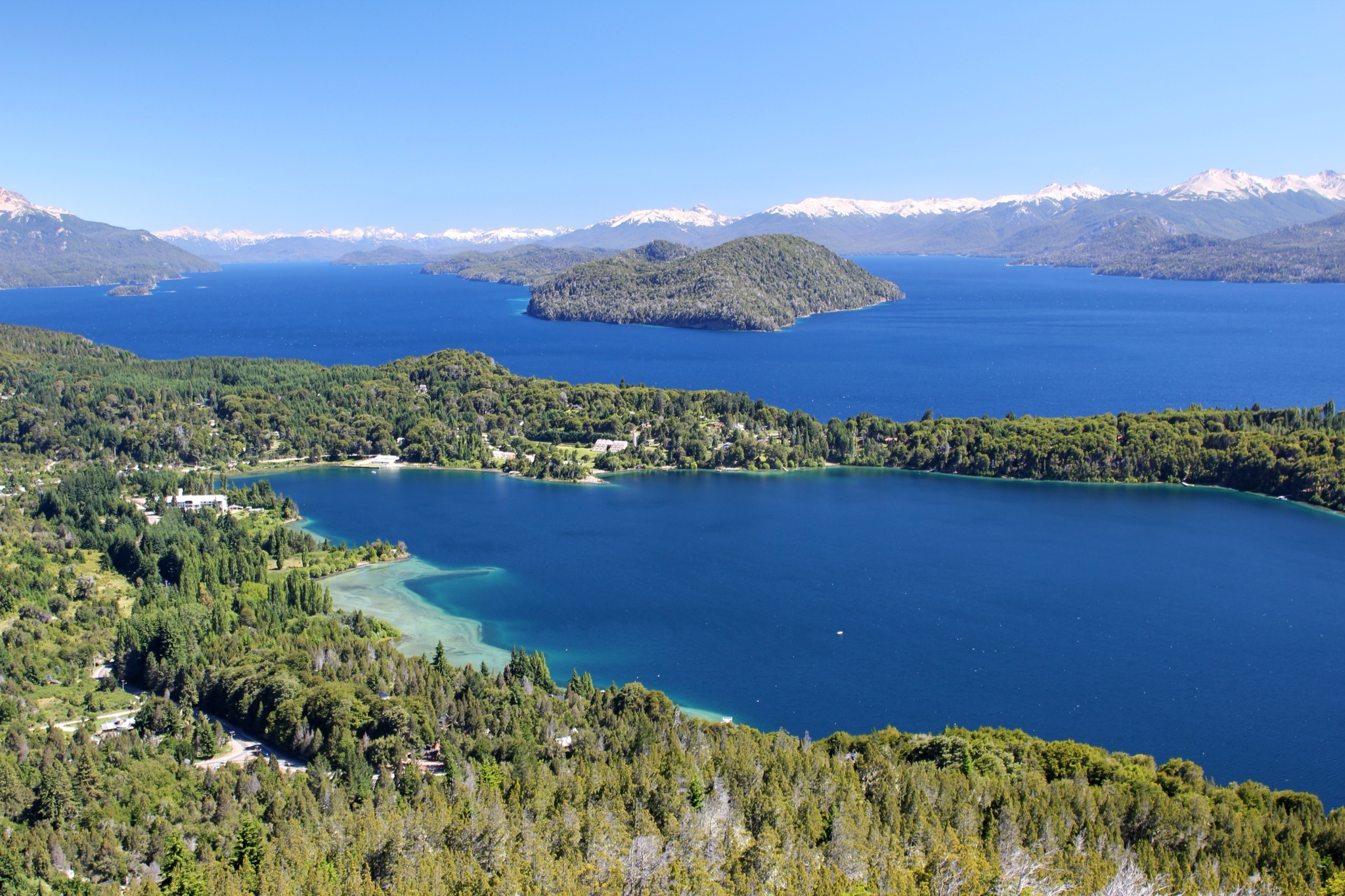
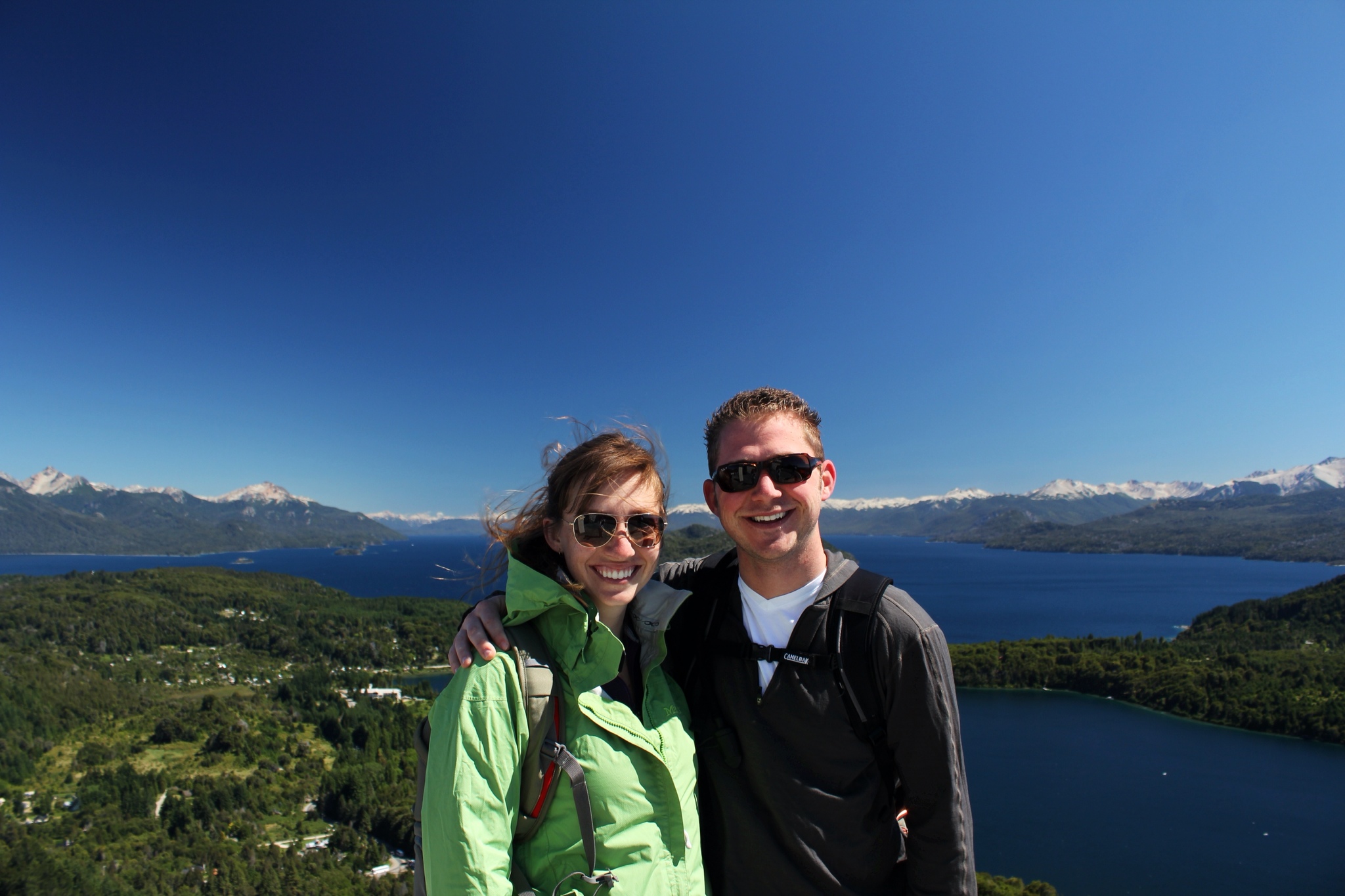
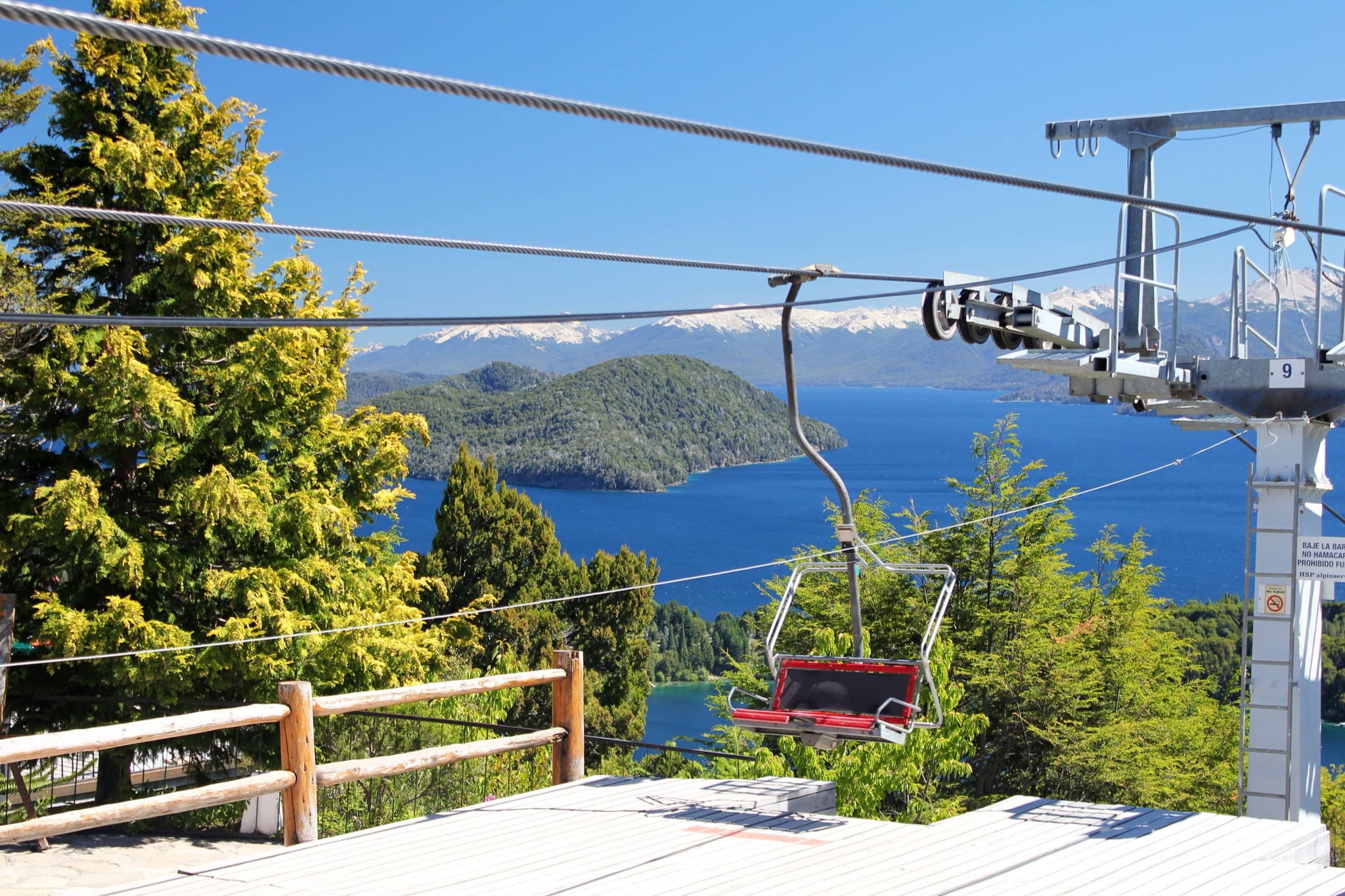
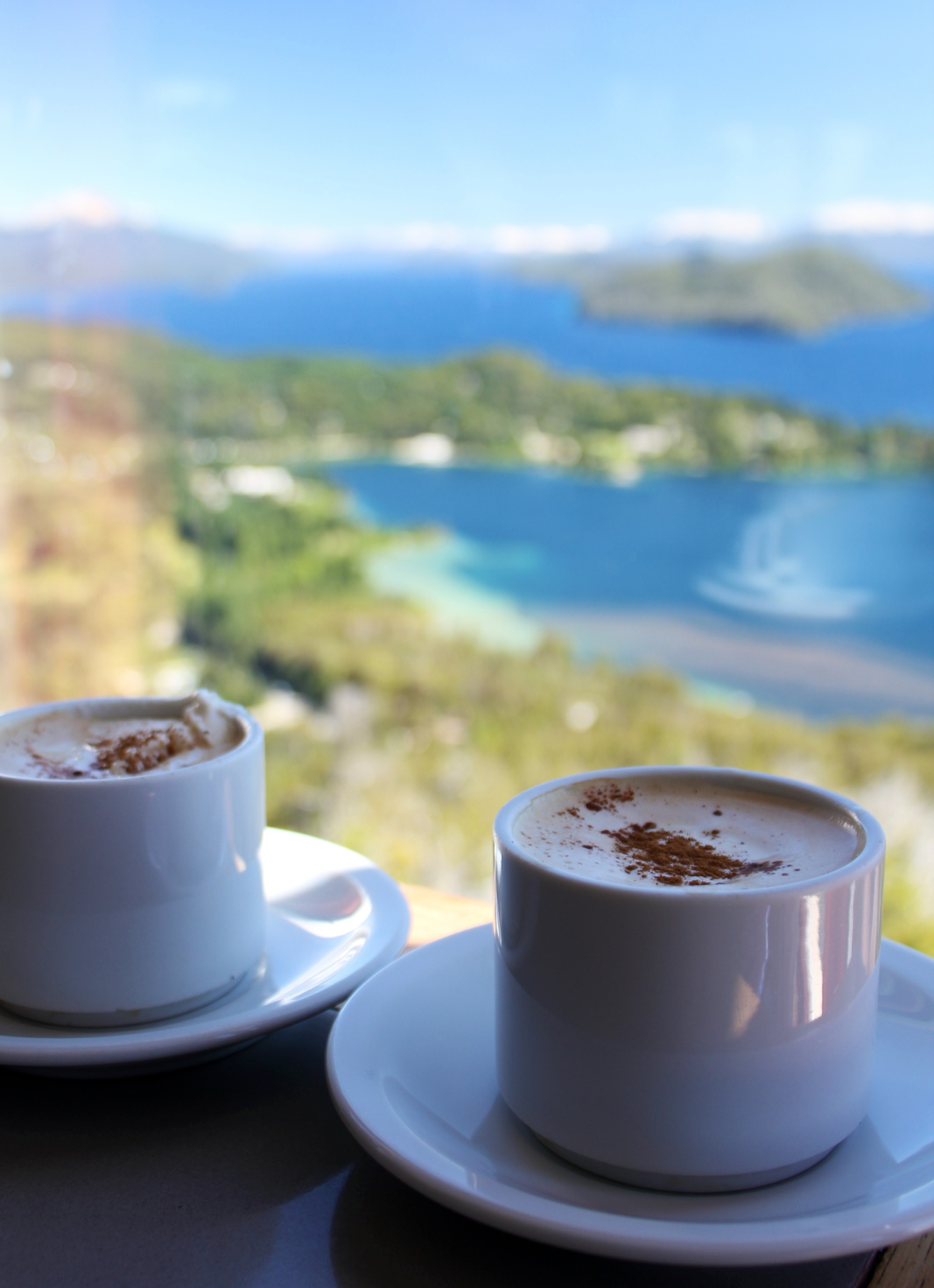
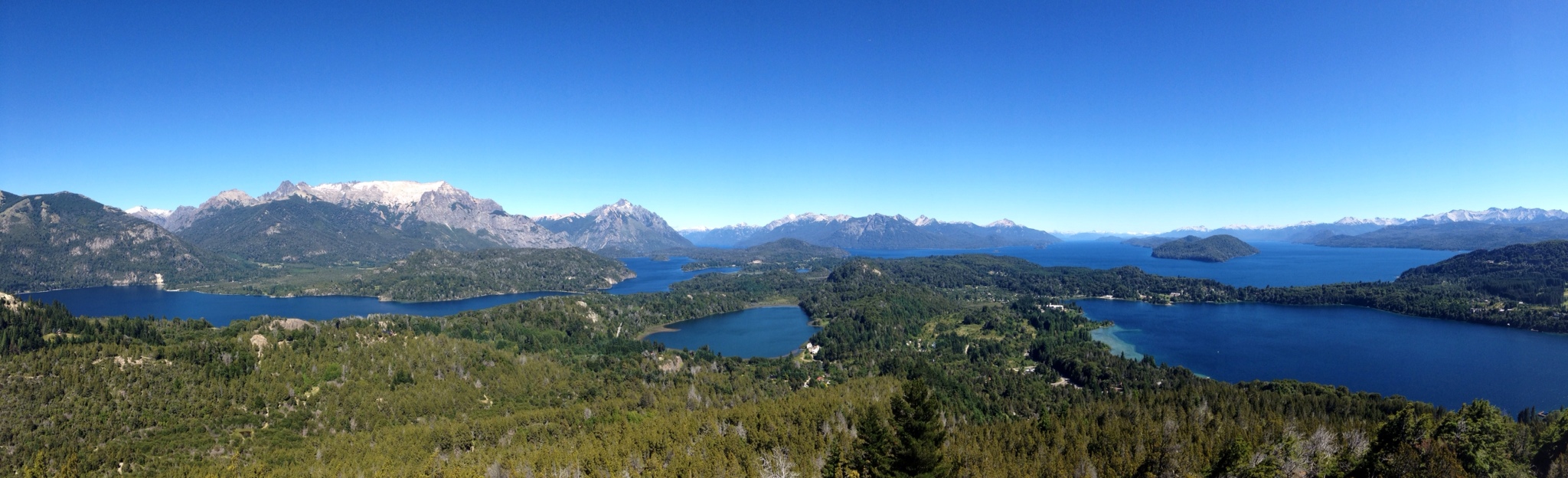
The ride back down the chairlift occurred simultaneously with the arrival of the next tour buses, evidenced by the endless number of screaming teenage girls going up the chairlift. Thank goodness for more epic good timing!
On the road again, we continued along to the famous Hotel Llao-Llao, built in the 1930s on a peninsula of the same name with 360 degree views. It's supposed to be a beautiful place to admire the views, and the architecture and decor inside are supposedly equally stunning. If they let you in… We had been warned that the doorman at the hotel could turn guests away at will, but we thought if we wore clean clothes and big smiles and said the right words (“Miramos solamente, por favor”), we would be let in. WRONG. Apparently clean t-shirts and shorts and big white American smiles don't cut it. Oh well, their loss!
We continued along the drive, drinking in the beautiful scenery, until Bahia Lopez. Here we stopped, thinking the bay would offer some refuge from the wind and some good photo ops. We were right on one point: great photo ops! However, I think the wind was worse here than elsewhere…
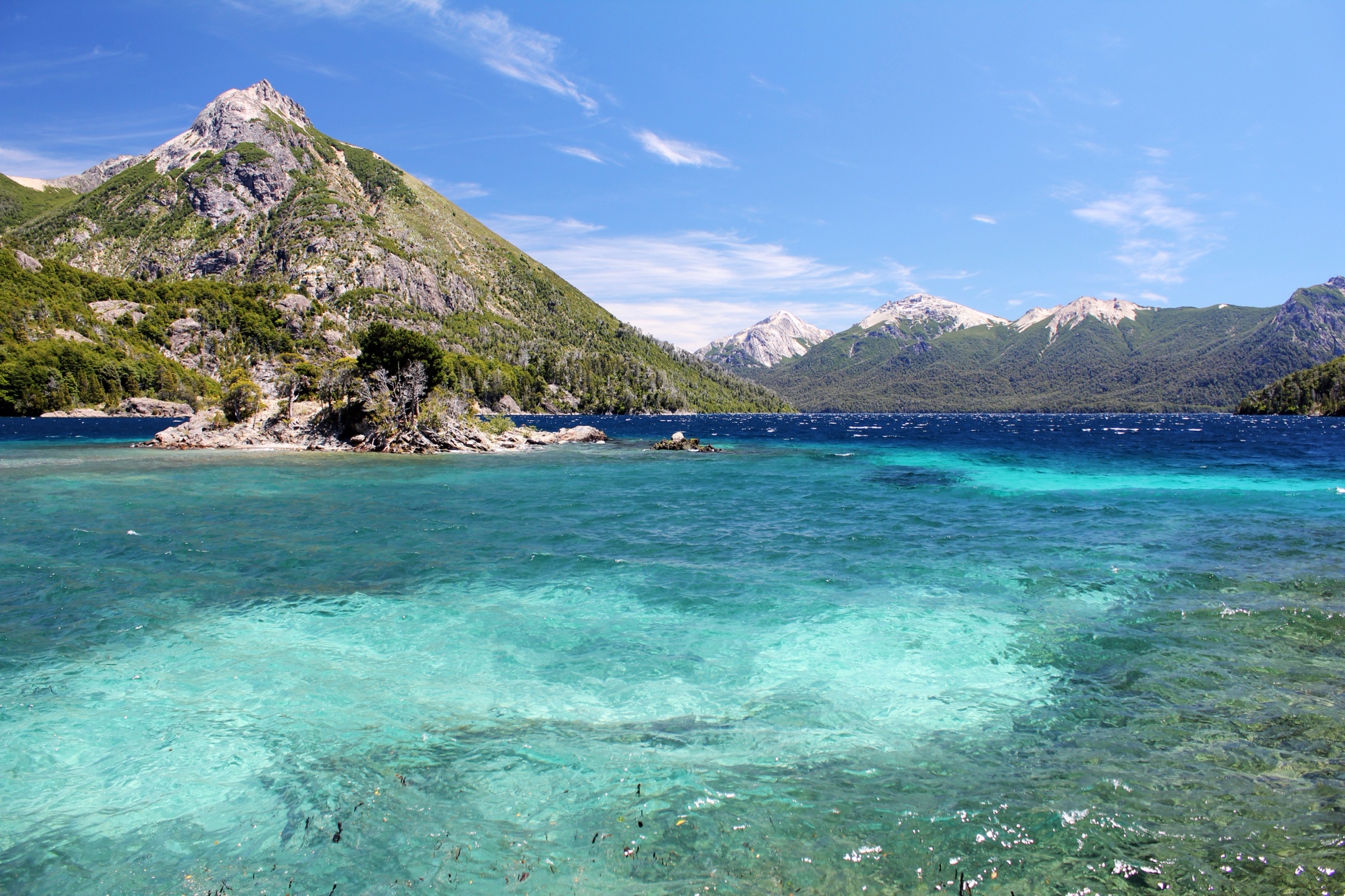
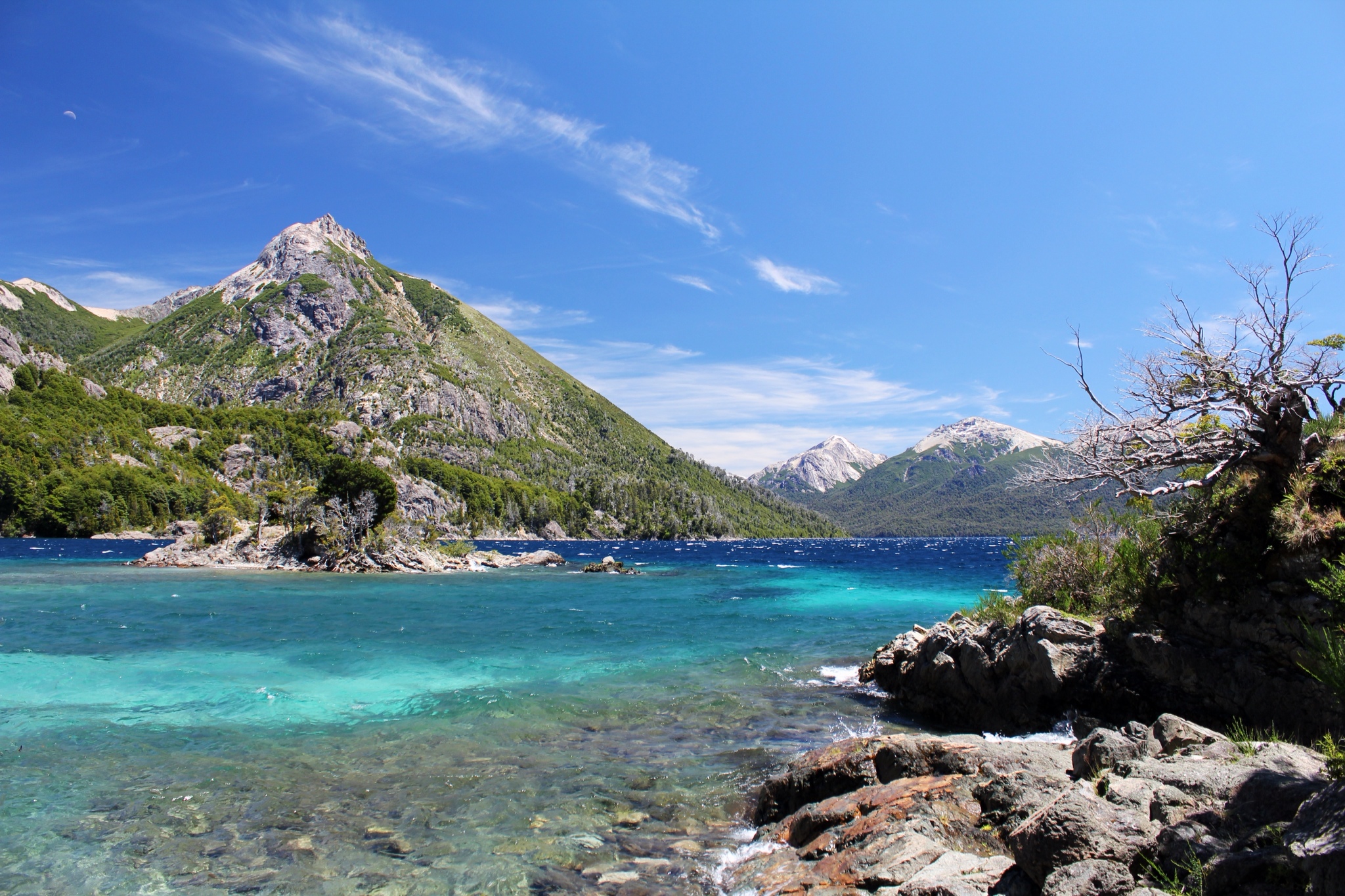
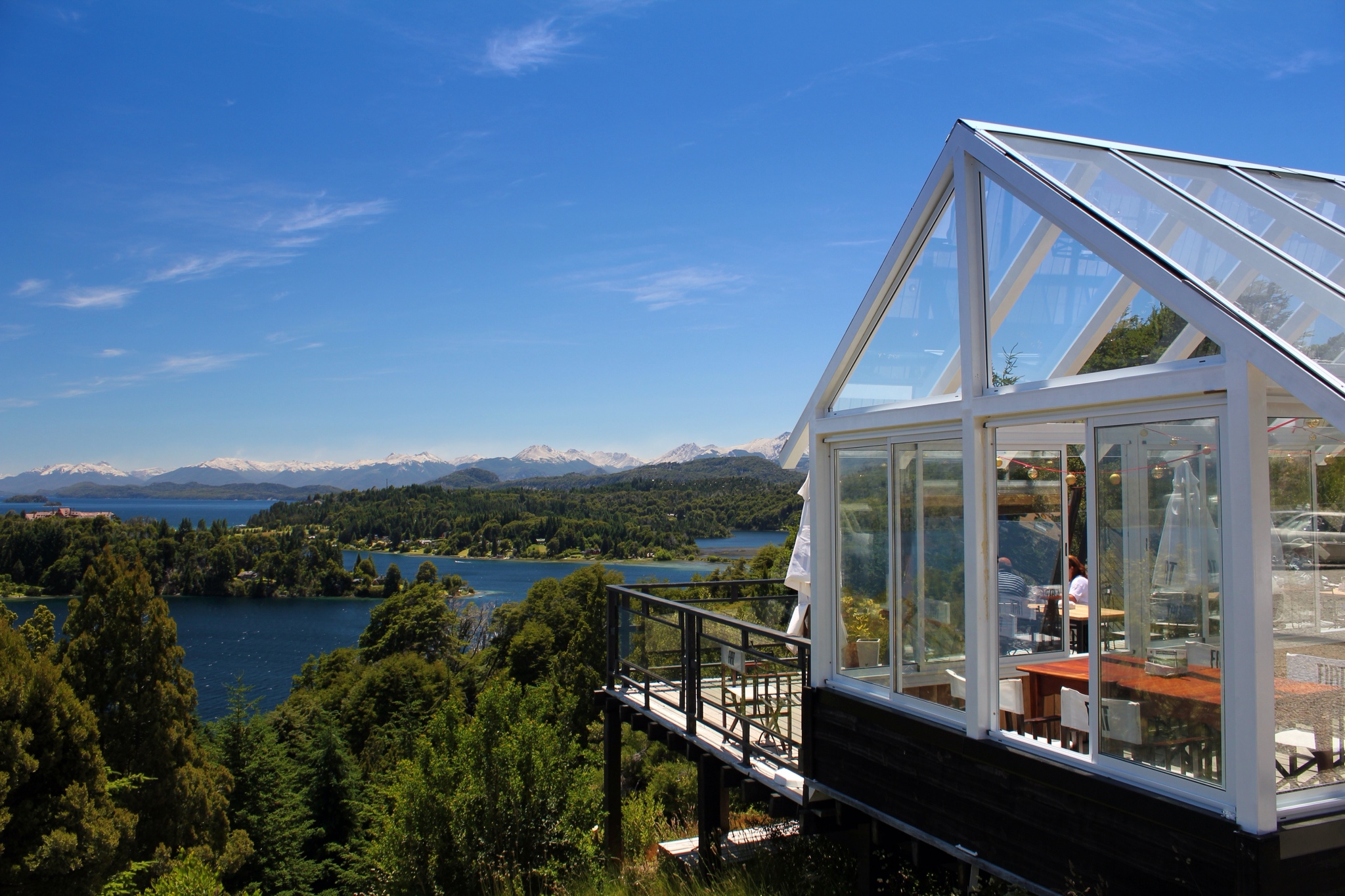
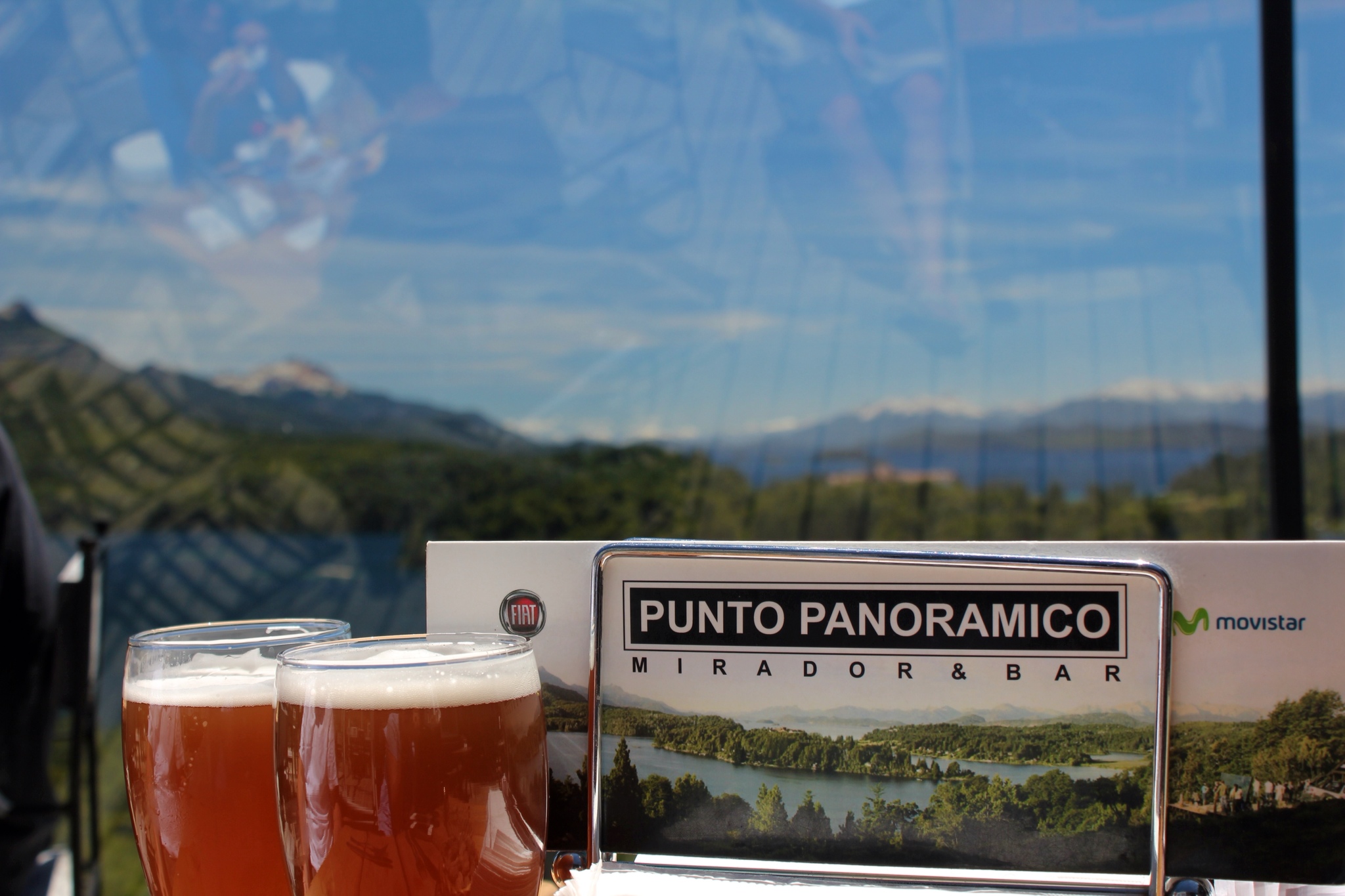
After Bahia Lopez, the circuit climbs quite a bit. At the summit of the circuit (which made me really happy we didn't bike), was a look out and a small restaurant. Punto Panaramico provided what it promised: a birds-eye panoramic view. So we had more empanadas (and a delectable waffle with dulce de leche) and local draft beers for lunch. I really believe if we didn't walk so much on this trip, we would have already gained 20 pounds each. Weaknesses: beer, wine, empanadas, dulce de leche, ice cream, chocolate… the Argentines definitely have a penchant for sweets, and we are taking full advantage!
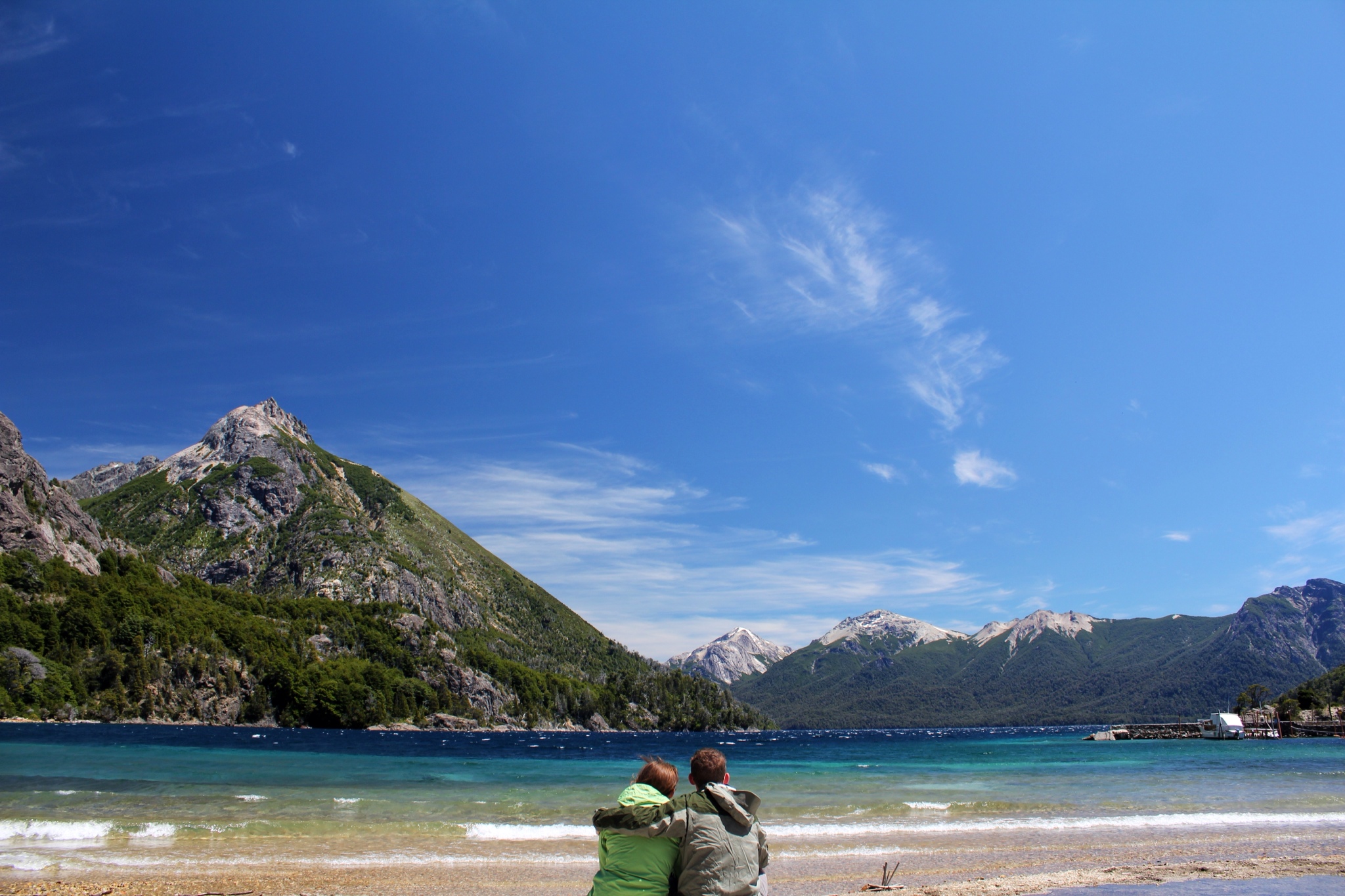
The drive took us around the edges of the Lagos Perito Morenos. We stopped at a locals-only beach (oops.. it was unmarked and looked nice!), thinking we might take a dip in the lake. After dipping our toes in, we thought better of that idea as we did not want to get pneumonia.
When we had successfully completed the drive and enjoyed all the views it had to offer, we decided we needed to go back into town. We needed to conquer Bariloche! So we went. We parked uneventfully, changed our U.S. dollars (that get a markedly higher exchange rate than using ATMs), printed our bus tickets, and found Rapanui. Yes, we finally fell victim to the Chocolate Capital of South America and indulged ourselves. We went for the best of both worlds: 80% cacao ice cream. The Lake District (and all of Argentina, for that matter) is famous for chocolate and ice cream, and we combined the two. And it was the best ice cream and the best chocolate we've ever had!!!
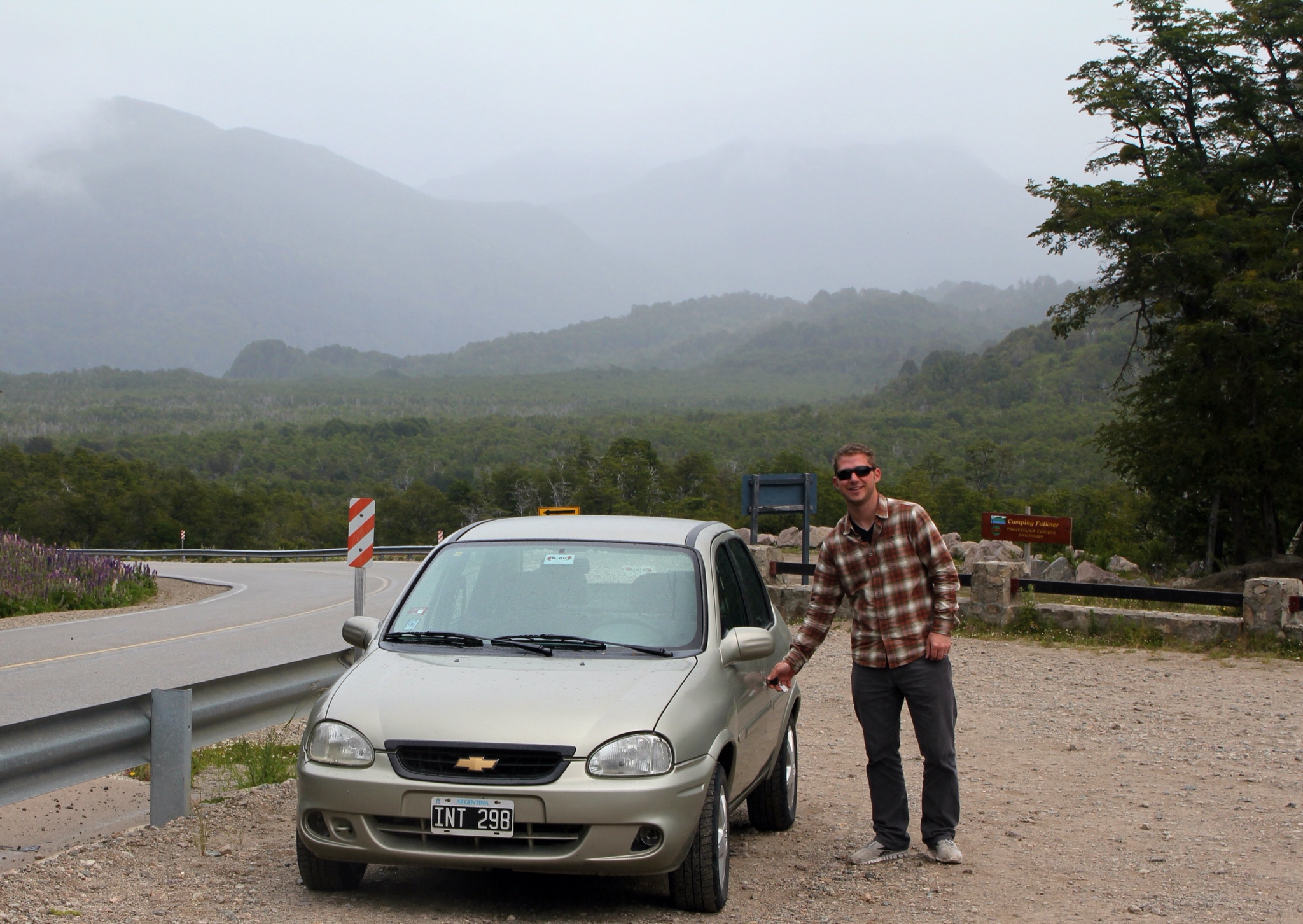
Without further ado, let us introduce to you our stalwart companion for the rest of our time in the Lake District: Corbin! In the last post, I mentioned that Bariloche is not very pedestrian friendly. Things are a little too spread out, and the roads are a little too sidewalk-less for us. Good thing we had planned ahead and rented a car!
Corbin, so aptly named because he is a Chevy Corsa (yeah, we'd never heard of it either), is a lovely shade of grey with just enough bumps and bruises on his exterior to make him feel well-loved. Justin is the only one allowed to drive Corbin (mainly because I can't drive a manual. I know, I'm lame), but I like to think that I navigated us through thick and thin. I really wish we had a before and after picture, because he was so nice and clean when we got him…
Anyway, the aftermath of getting Corbin is worth telling. Well maybe not, but you're going to be subjected to it anyway. Corbin was dropped off at our apartment at 8 pm, so we took him for a spin into town. After finding a suitable parking place (this involved more than one u-turn), we walked through downtown Bariloche. Let me just say this: You should definitely come to Bariloche. You should NOT come to town in Bariloche.
Downtown Bariloche is a sad remnant of what I'm sure used to be a great downtown. Due to local unrest, political riots, and depression, all monuments in downtown Bariloche have been defaced. There is spray paint everywhere. You can't walk more than ten steps without be hassled by someone for your money, your pity, or your stupidity. Also, it is painfully obvious that the tourism business grew a lot faster than town was prepared for: there are hostels, internet cafes, and El Touristo Chocolaterias (no joke) on every corner. Long story short, our trip to downtown Bariloche was so stressful and unpleasant, we didn't even take any pictures!
The goal of our trip to town was to buy bus tickets to Mendoza (our next stop) and to change in some U.S. dollars for Argentine pesos. Both failed miserably. All of the banks and cambios were closed, and the only way to buy a bus ticket to Mendoza was to go to the terminal (also closed by this point). So we left town, and tried to find somewhere to eat dinner. However, it was Friday night at 10 p.m.; prime eating hours. Everywhere we went had over an hour wait, if they would be able to seat us at all. So we went home, ordered take out empanadas again, and booked our bus tickets online.
Getting Corbin = awesome. The aftermath = not so awesome. But we survived!!
Pictures to come later. Like I said, downtown was too stressful, and Corbin's pictures fit better elsewhere. Sorry for the long rant without any pictures!
San Carlos de Bariloche, the next stop on our adventures, in known as the jumping off point for the Lake District in Argentina. The Lake District is in Northern Patagonia; a region full of crystal clear blue lakes, deep green forests, rocky beaches, white puffy clouds, and wind. Lots and lots of wind! Actually, we got pretty lucky with the weather our first few days in Bariloche: the sun was out, the temperatures pleasant, and the wind kept at bay.
We arrived pretty late, so after we found our lodging and had our “orientation” to Bariloche and its surroundings, we ordered food to go and ate in our lovely, lake view apartment. For the three nights we stays in Bariloche, we rented an apartment complete with a kitchen, living space, full bathroom, and bedroom. After the tiny rooms of southern Patagonia, we reveled in the luxury! And to top it all off, the massive picture window in the living room has a gorgeous view of Lago Nahuel Huapi, the largest lake in the Lake District. Over empanadas and Malbec, we admired the view, watched the sky change from blue to pink to black, and planned our activities for Bariloche.
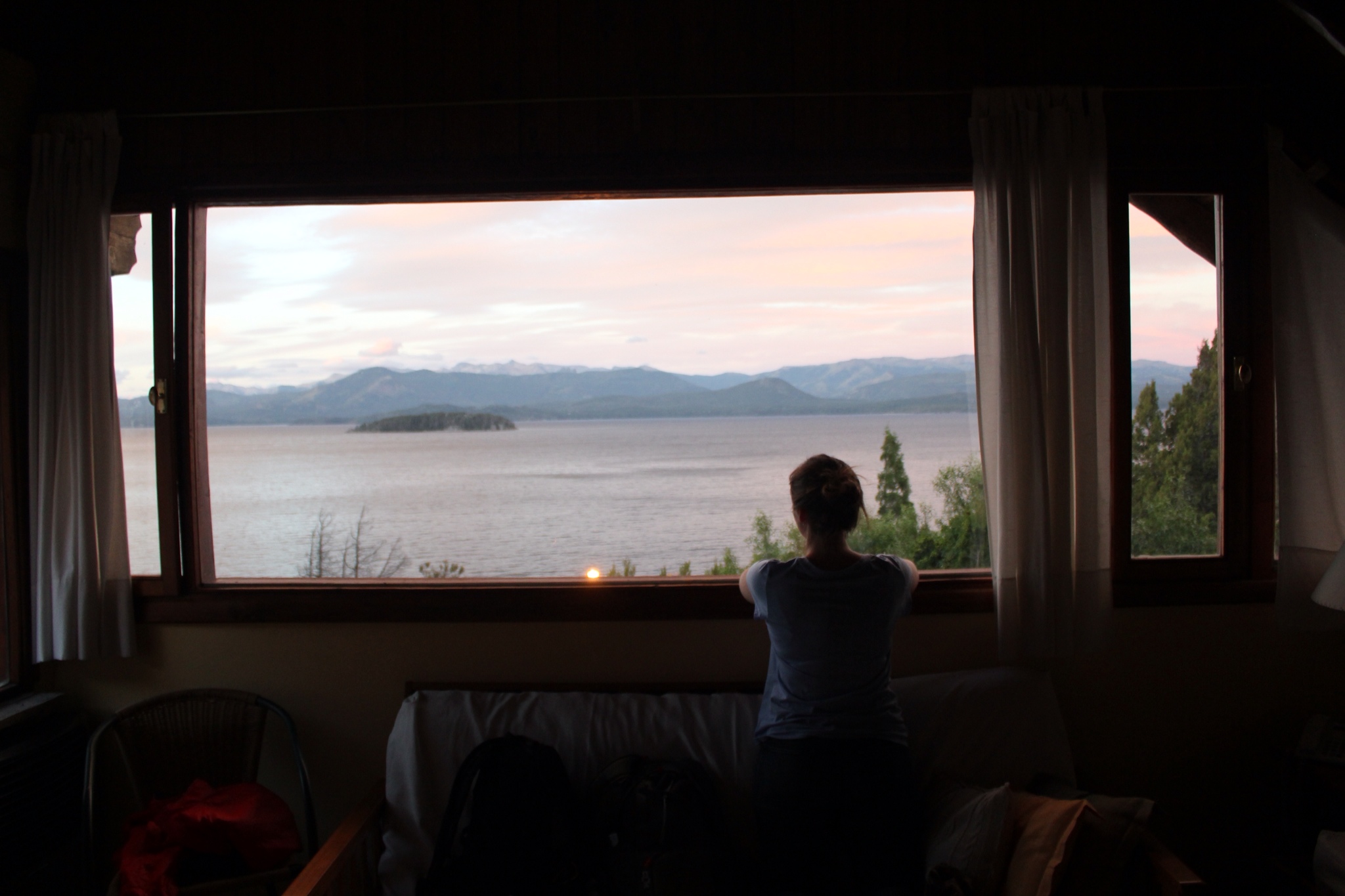
The view from our apartment
Side note: we are slowly becoming OBSESSED with empanadas. My New Years resolution is to learn how to make them.
The next day, we set off on foot to the nearby beach on Lago Nahuel Huapi, Playa Bonita. The beach was only about 1.5 km from our apartment, but we quickly learned that Bariloche is not nearly as pedestrian friendly as Calafate and Chalten. We reached the beach and found a cute cafe, sheltered from the wind with great views, and stopped in for a beer and salad (probably the first greens we've had the whole trip; Argentina is definitely and meat and potatoes kind of country!). We sipped and admired, watching the blue waters become lighter and greener as they arrived gently at the rocky beach. Behind our plexiglass wind shield, it was absolutely lovely.
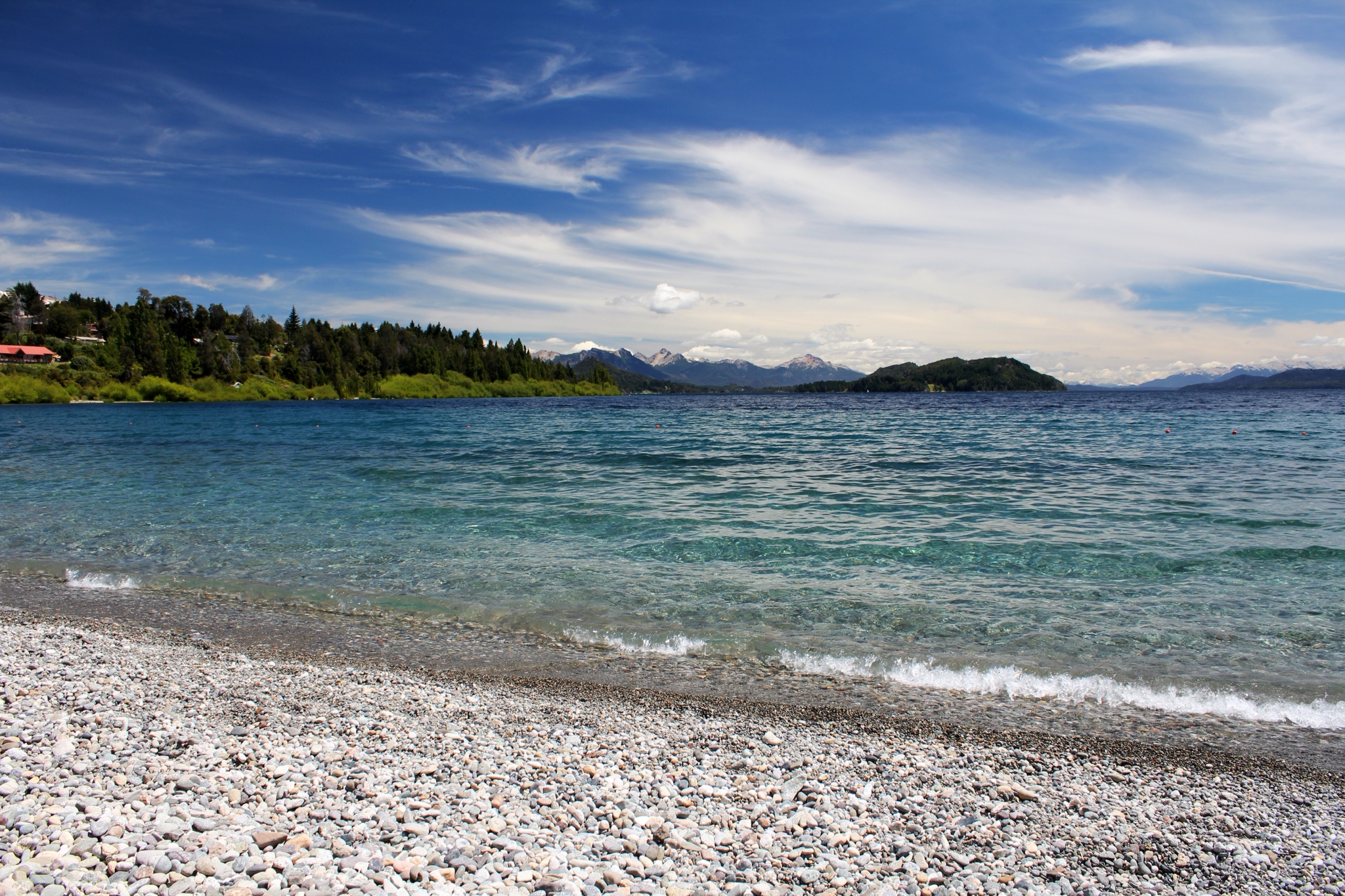
Playa Bonita
Buzzed and well-nourished, we set off on the second adventure of the day. Despite our previously mentioned experience with the not-so-pedestrian-friendly streets of Bariloche, we decided to walk from Playa Bonita to the Cerro Otto gondola. Cerro Otto is a mid-size mountain situated in the middle of town: this translates to the views from Cerro Otto are amazing, because you can see the entire lake and town, but it doesn't take two hours to get there. The ride to get to the top of Cerro Otto was worth the views, but the hike from the top was even better. From the top of Cerro Otto, a trail winds along a ridge through beech forests with views of the lakes and mountains surrounding Lago Nahuel Huapi. We reached Piedra de Habsburgo, a large rock with wonderful views that reminds me of hamburgers (sound it out…). From the Piedra, we had stunning views of Lago Gutierrez and the surrounding hoity-toity houses, golf courses, and polo fields. The trail back to Cerro Otto wound around the opposite side of the ridge line, providing constant views of Lago Nahuel Huapi.
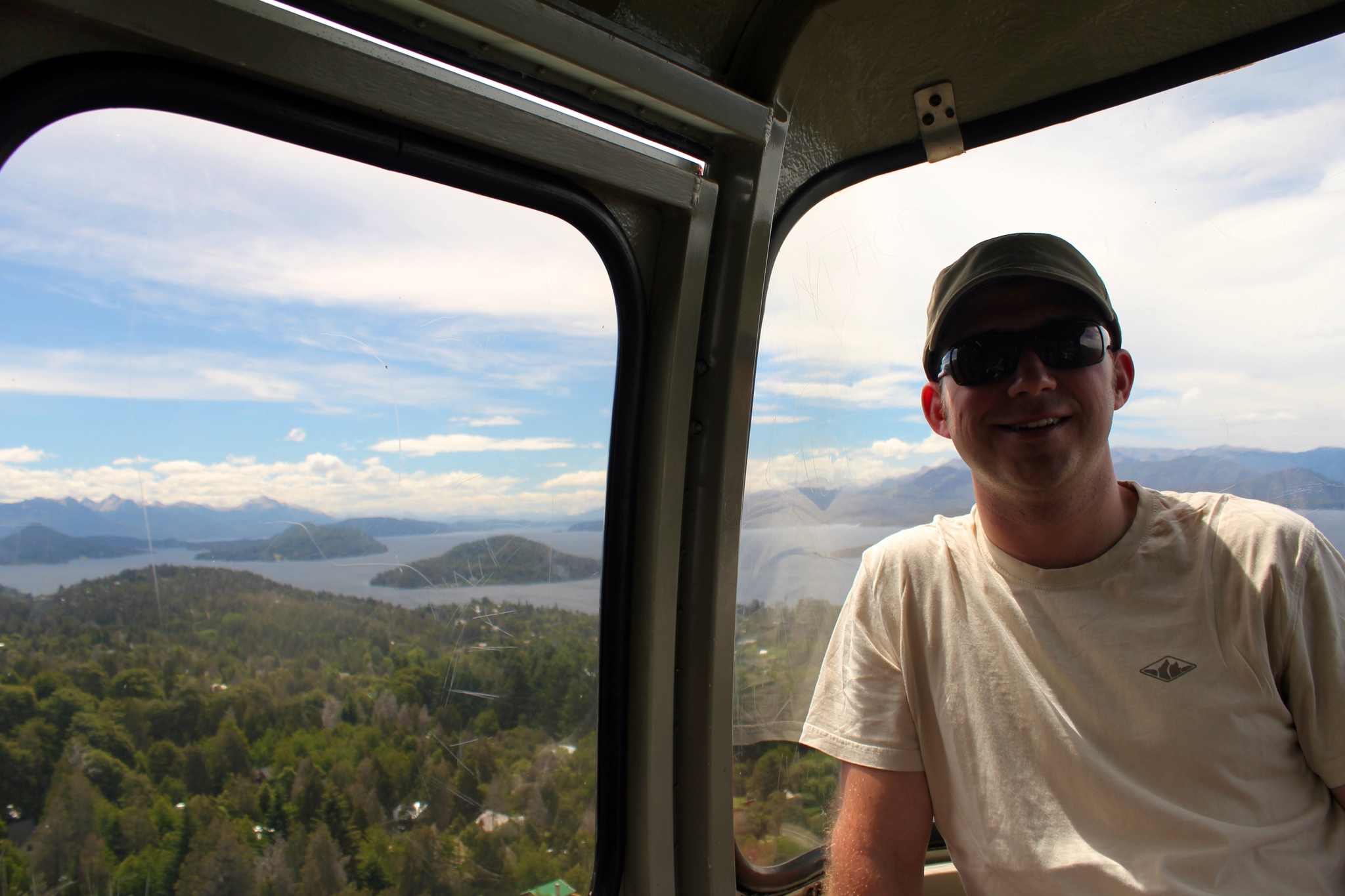
Justin in the gondola
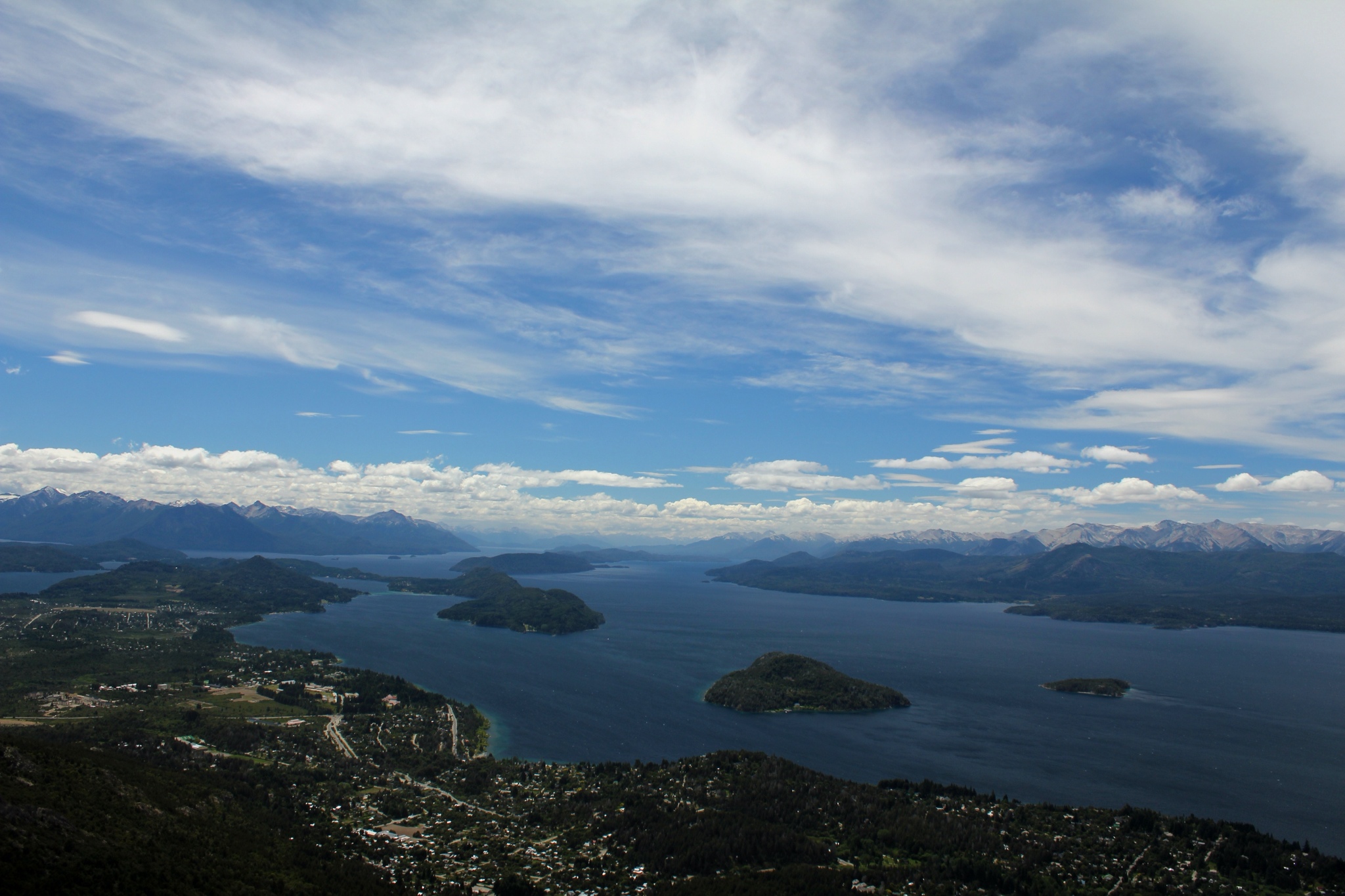
View of Lago Nahuel Huapi from Cerro Otto
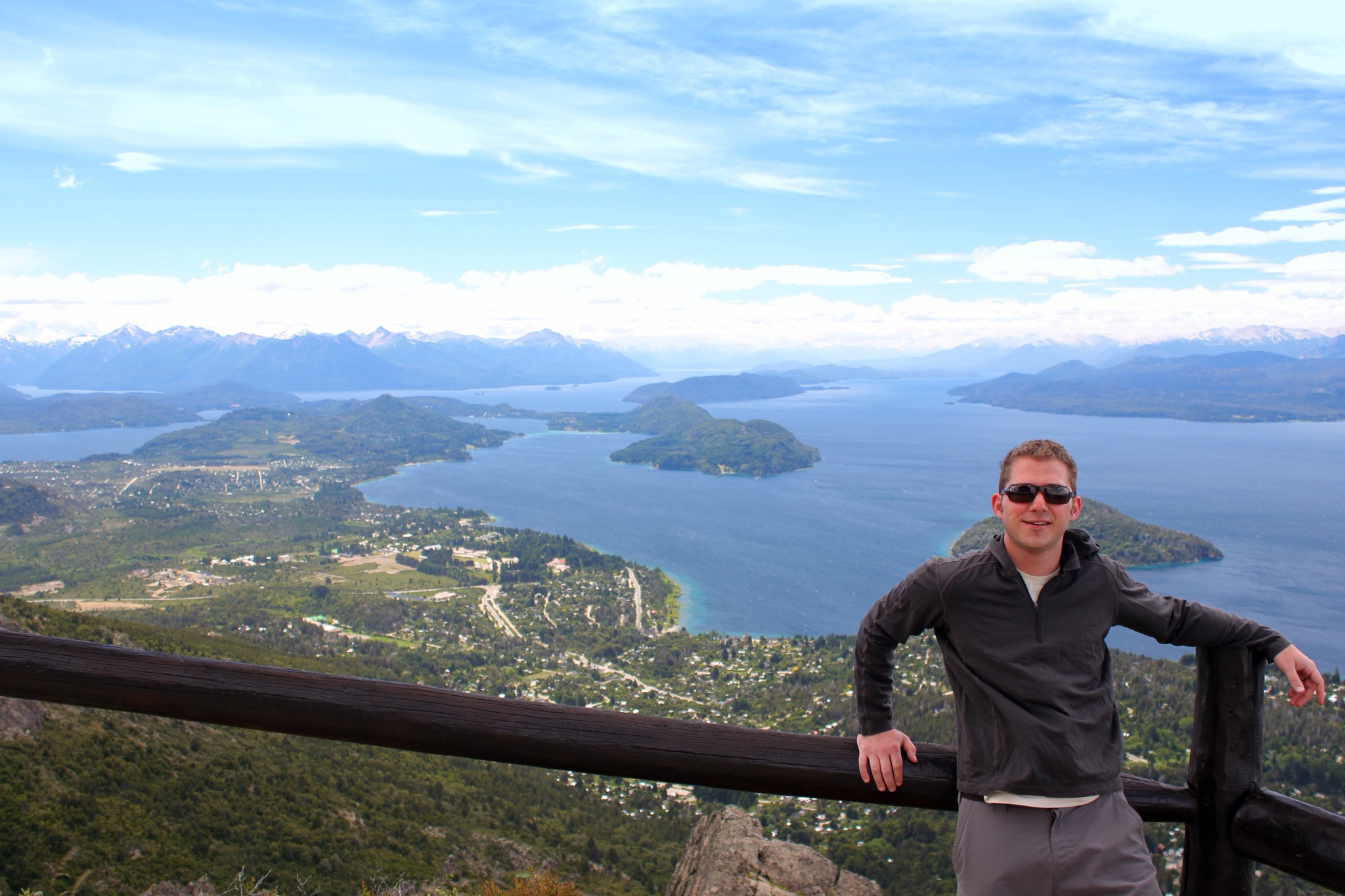

Kay with Lago Gutierrez
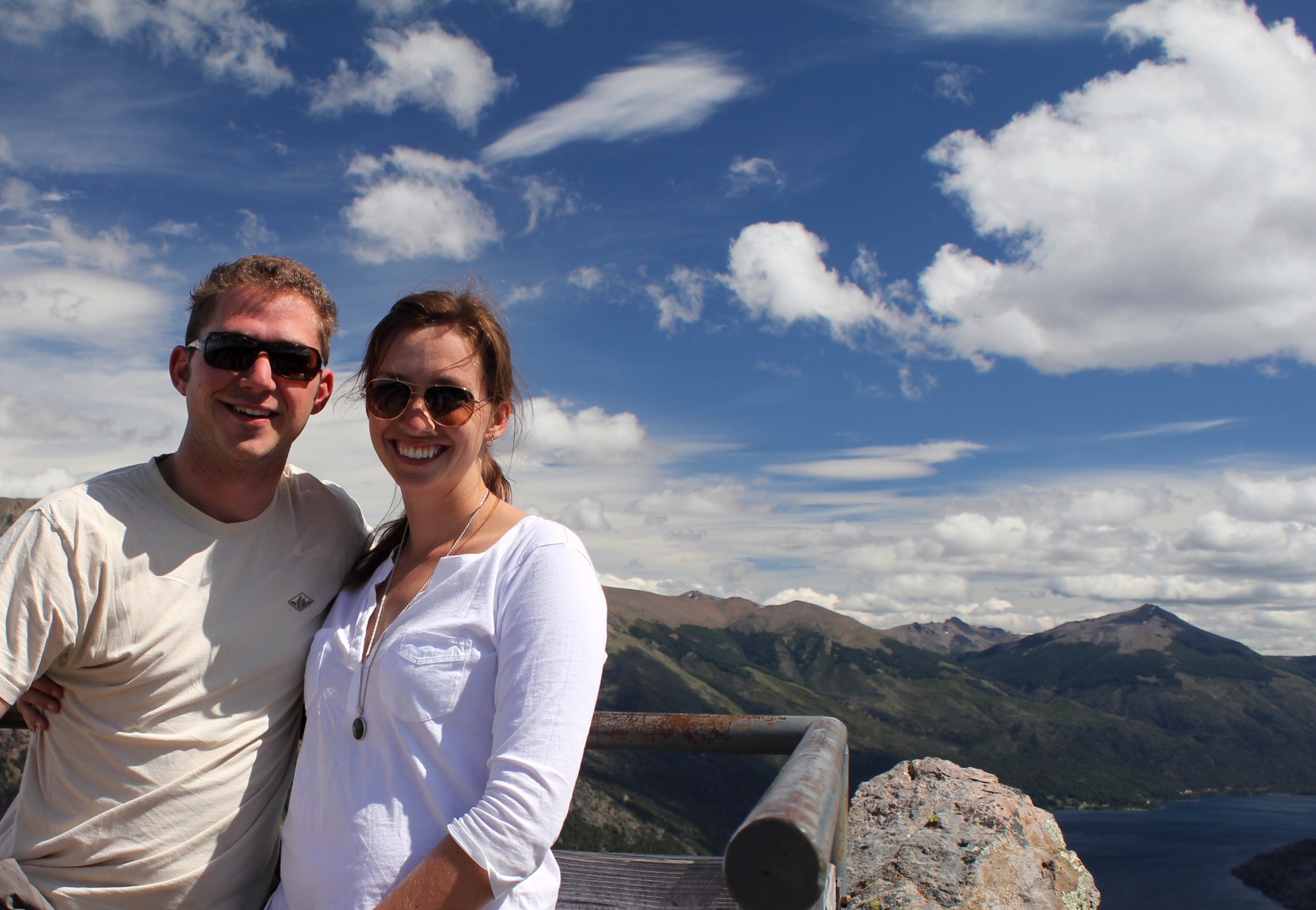
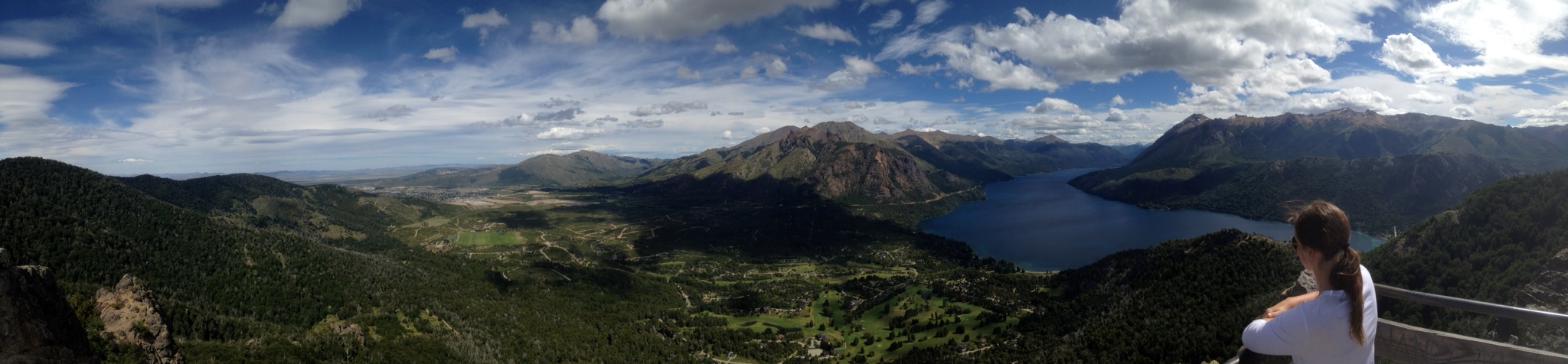
It seems that you can find a beautiful view from anywhere you go in Bariloche, and the town is almost built around this fact. There are numerous chair lifts to the tops of mountains and hills (some ski mountains in the winter season, some purely touristy) to enjoy the views. It would be difficult and take some serious determination (and maybe some lying) for anyone to say that this area is not beautiful. We were both reminded of Lake Tahoe. It may be best to describe Lago Nahual Huapi and the surrounding area as Tahoe on steroids: the lakes are bigger and more numerous, the mountains taller and steeper, the beaches more rocky, the weather more unstable, the wind stronger. The common factor, other than the gorgeous alpine landscape, is the color scheme. It's almost like everything is hyper-saturated: the blues bluer, the greens greener. I highly recommend the Lake District, just don't go into town if you can avoid it! (More on this in a later post…)

 The JustinKays Chronicles